

In US Vs China news, the Trump administration has unveiled a strategy to counter foreign AI distillation, the technique by which adversaries extract the learned capabilities of advanced American AI models to replicate them without access to the original training data or compute, naming the Commerce Department’s Bureau of Industry and Security as the enforcement arm and designating China as the primary target.
The Office of Science and Technology Policy reported that foreign actors are deploying tens of thousands of proxies and jailbreaking techniques in coordinated campaigns to systematically harvest knowledge from US frontier models, according to a White House memo released in April 2026.
The policy shift moves the US Vs China AI war beyond the hardware layer, where chip export controls on NVIDIA’s H100 and A100 processors have dominated headlines, and into the software stack itself, placing model weights at the center of national security calculus for the first time.
For investors in AI infrastructure, open-source model developers, and semiconductor firms, the regulatory perimeter just expanded significantly.
America is leading the AI race and our foreign adversaries know it. The Trump Administration will not allow China to subvert American interests by stealing AI. pic.twitter.com/El76mljxKY
— The White House (@WhiteHouse) April 23, 2026
How the Export Control Push Targets AI Distillation and Why It Shifts the Tech War’s Battleground
AI distillation involves using a high-capability “teacher” model to generate synthetic training data for a smaller “student” model, enabling advanced reasoning at a fraction of the cost. This technique can reduce the compute burden by up to 100x, allowing countries like China to benefit from US AI research without needing advanced GPUs.
The Bureau of Industry and Security is evaluating restrictions on the use of closed-source model weights and new reporting requirements for high-compute frontier models. Retired General Paul Nakasone noted possible enforcement tools, though no timeline has been set.
The strategy aims to maintain a technological advantage over state-backed Chinese AI by closing the distillation loophole. The April 2026 announcement follows the White House AI Action Plan from July 2025, which aimed to prevent adversaries from leveraging US innovation.
Federal agencies are expected to initiate intelligence-sharing with US AI companies shortly, and specific export controls are anticipated soon. If restrictions on releasing model weights are codified, it could limit top-tier open releases and concentrate AI capabilities among a few dominant firms, raising compliance costs and compressing the timeline for much-needed regulatory clarity on AI safety and oversight.
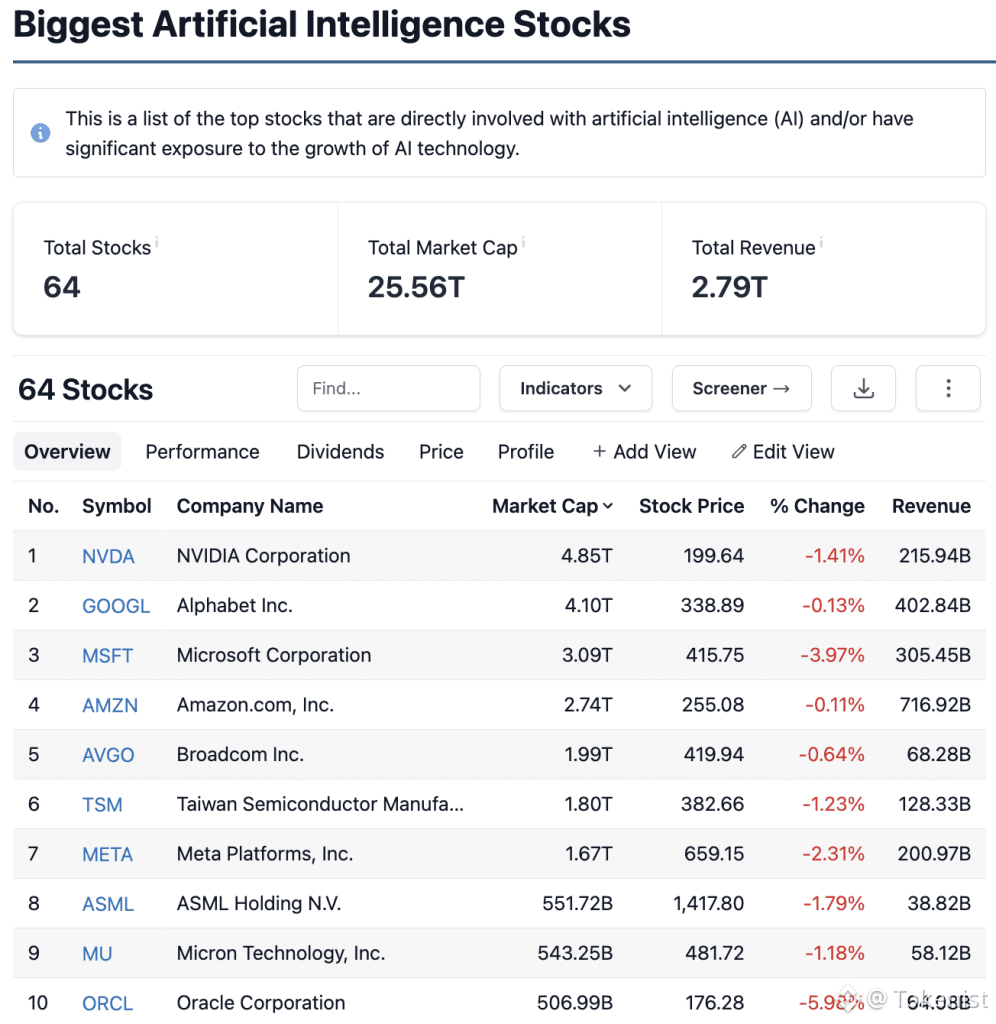 SOURCE: StockAnalysis US Vs China: How Export Controls on AI Models Affect NVIDIA, Meta, Microsoft, and the Broader AI Stack
NVIDIA Corporation (NVDA) is in a complex position regarding recent chip export restrictions aimed at high-performance datacenter GPUs. While the new controls on model weights don’t impose additional hardware restrictions, if these limits successfully curb Chinese AI capabilities, demand for NVIDIA’s products in the US and allied nations could increase, leading to a neutral to modestly positive impact on the company.
Meta Platforms (META) faces the highest regulatory risk among major US AI firms. Its Llama models, which allow broad commercial use, could be affected by weight-restriction rules. If such restrictions are enforced, Meta must choose between limiting its open-source strategy and navigating compliance challenges.
Microsoft Corporation (MSFT) is somewhat shielded by its integration with OpenAI, as its proprietary models are already under its control. However, it may face new reporting requirements related to Azure AI services. Alphabet (GOOGL), relying on proprietary weights, has similar but limited compliance risks without major business disruptions.
Historically, US-China tech competition has shown that regulatory frameworks tend to tighten over time, a trend the new distillation rules aim to prevent.
NVDA Stock Brief: Price Action and Key Metrics
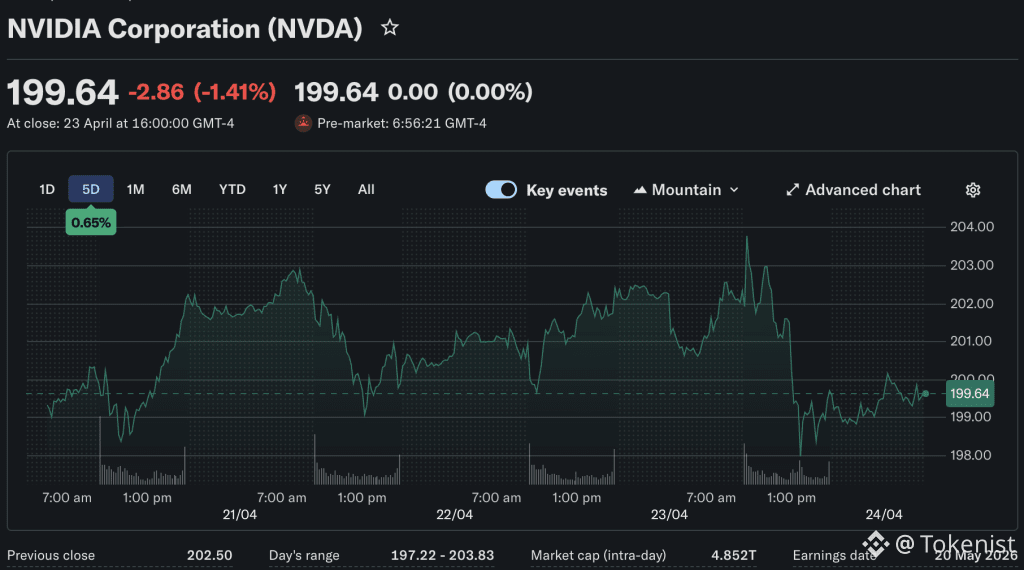 SOURCE: Yahoo Finance
NVIDIA (NVDA) was trading at approximately $199 as of late April 2026, up roughly +7% year-to-date, while the S&P 500 has declined approximately -7% over the same period. The 52-week range spans $160 to $210, with the stock sitting in the lower half of that band amid persistent overhang from successive export control announcements.
Market capitalization stands at $4.85 trillion. Trailing P/E is approximately 37x; forward P/E is near 25x on consensus fiscal 2026 estimates. Analysts at Bank of America, led by Vivek Arya, maintain a Buy rating with a $200 price target, citing NVIDIA’s datacenter revenue trajectory and Blackwell architecture ramp as catalysts that export control uncertainty has obscured but not eliminated, adding another layer to the US Vs China AI war.
What Investors Should Watch as AI Distillation Export Controls Evolve the US Vs China AI War
Key signals to monitor include the Commerce Department’s rulemaking timeline, as the BIS has yet to announce proposed model-weight restrictions by late April 2026. When the notice is released, it will clarify compliance obligations, affected model types, and penalties, impacting META, MSFT, GOOGL, and NVDA.
Next, watch for insights from Meta’s late April 2026 earnings release on its Llama strategy amid regulatory changes. Signals such as pre-emptive weight restrictions or geographic licensing controls could indicate rising compliance costs not accounted for in estimates.
Additionally, observe AI lab outputs from China’s DeepSeek and Baidu, as their ability to close the gap with US benchmarks will test the effectiveness of US distillation controls.
Lastly, the administration’s efforts to establish best practices with private industry lack a set timeline, and the transition from voluntary frameworks to mandatory requirements will affect compliance costs. The key unresolved question is whether distillation controls can be effectively enforced at the API access layer, which will significantly shape the US-China AI competition.
The author does not hold or have a position in any securities discussed in the article. All stock prices were quoted at the time of writing.
The post US Vs China: USA Targets ‘AI Distillation’ – What It Means for China and Big Tech appeared first on Tokenist.