
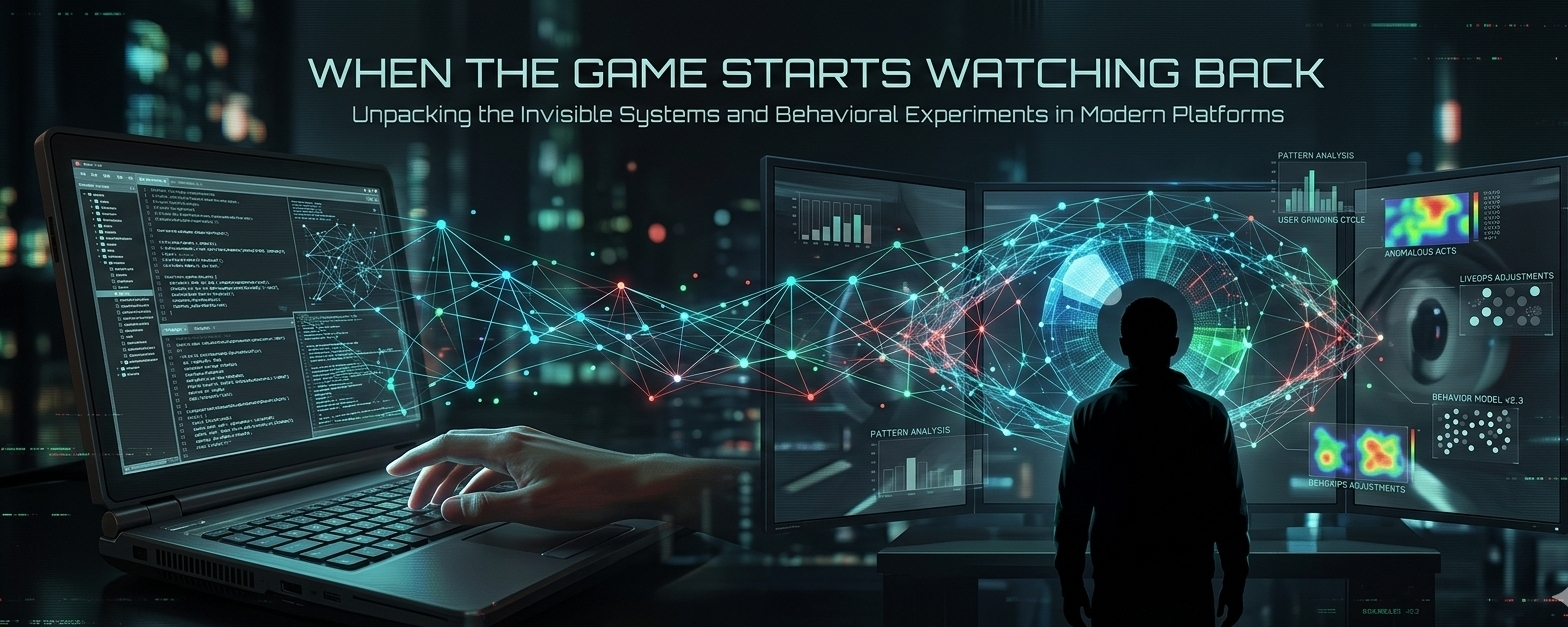


I opened @Pixels again, expecting the same thing I’ve seen before.
A loop. A system. Something predictable.
And to be fair, that part hasn’t changed much. The surface still feels familiar—simple actions, clear progression, nothing that immediately stands out. But the more I paid attention, the more I felt like the visible layer might not be the real focus here.
It almost feels like the game is just… a testing ground.
That might sound harsh, but I don’t mean it negatively. If anything, it made me more curious. Because when I looked into how the system actually works—especially this Stacked layer—it started to feel less like a game feature and more like an experiment in observing behavior.
Not in a vague way. In a very deliberate one.
It seems to track how people act over time—patterns, habits, inconsistencies. And I get why that exists. Botting is a real problem. Fake activity can distort everything. But the solution here isn’t just blocking or filtering. It’s interpreting.
And that’s where I start to hesitate a bit.
Because interpretation sounds smart… until you realize how messy human behavior actually is. People don’t act consistently. Sometimes they grind mechanically. Sometimes they log in randomly. Sometimes they stop for no reason at all.
So when a system tries to label behavior as “real” or “artificial,” I can’t help but wonder—how often does it get it wrong?
Maybe not often. But even a small margin matters.
Then there’s the LiveOps side of it—the ability to adjust things in real time. On paper, that sounds efficient. No need for updates, no waiting, everything can shift instantly. But the more I think about it, the more it feels like something slightly uncomfortable.
Not because it’s bad… but because it’s invisible.
If the system is constantly adjusting behind the scenes, then as a player, I’m never really interacting with a fixed environment. It’s always changing, always adapting. And I don’t fully know based on what.
That lack of clarity doesn’t break the system—but it does make it harder to trust blindly.
Another thing I keep circling back to is this idea of expansion. If Stacked becomes something that other games plug into, then it stops being just about Pixels. It becomes infrastructure.
And that’s where things get complicated.
Different games have different player behaviors. What looks normal in one might look suspicious in another. So I’m not entirely convinced a single behavioral model can scale cleanly across multiple environments without losing context.
Maybe it adapts. Maybe it learns.
Or maybe it just generalizes.
And then there’s the bigger question—what is all of this actually trying to achieve?
At first glance, it looks like it’s solving botting. But that feels too narrow. The system seems more focused on understanding engagement itself—what keeps people coming back, what patterns matter, what signals indicate something meaningful.
That’s a bigger problem.
But also a harder one.
Because once you start shaping engagement based on observed behavior, the system doesn’t just respond anymore—it influences. Quietly, gradually, without announcing it.
And I’m not fully sure where that line sits.
Maybe that’s why I can’t form a clean opinion on it yet.
There’s something thoughtful in the design. You can tell it’s been shaped by real problems, not just ideas. But at the same time, there are parts that feel unresolved… or at least not fully transparent.
And maybe that’s intentional.
Or maybe it’s just still evolving.
Either way, I keep coming back to the same feeling—it’s not entirely clear what I’m interacting with.
A game?
A system?
Or something that’s still trying to figure itself out?$PIXEL
