
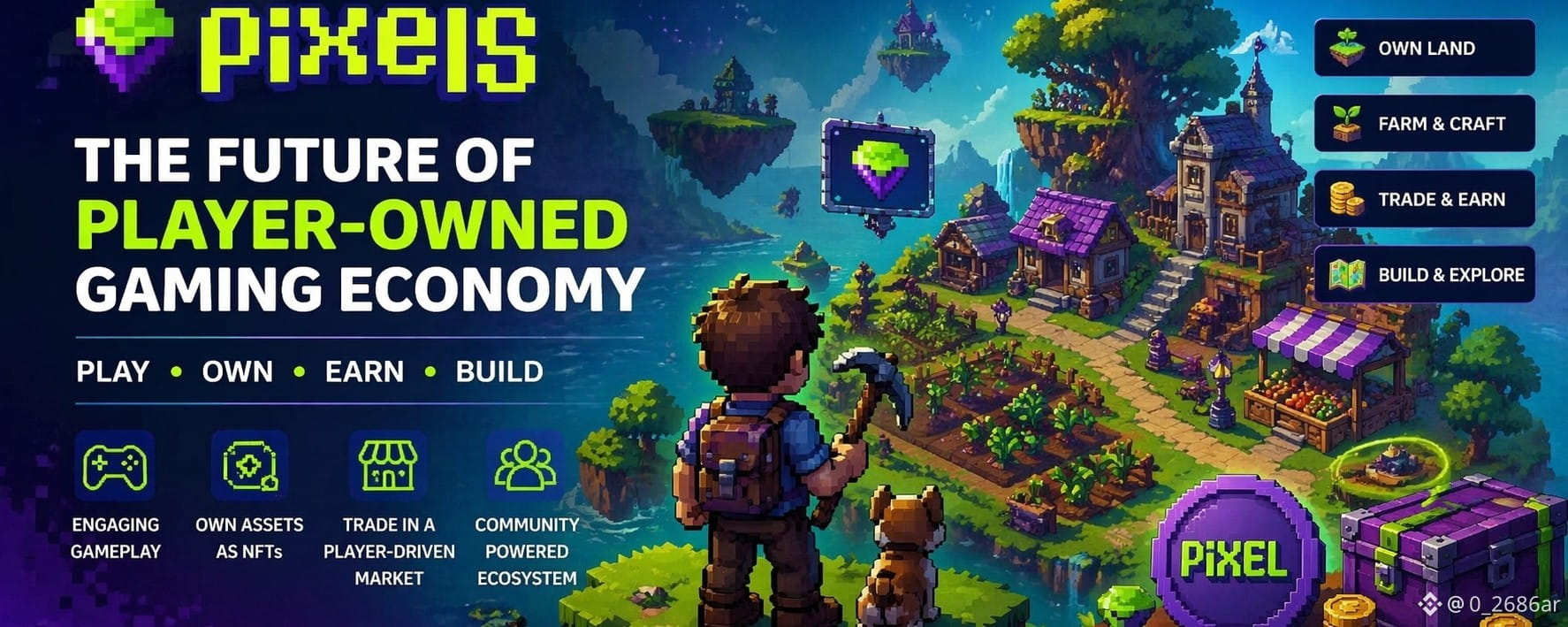
@Pixels is rapidly emerging as one of the most interesting projects in the Web3 gaming space, not just because it is a play-to-earn game, but because it is building a complete and functional ecosystem. Unlike traditional games where players spend time and money without owning anything valuable, Pixels introduces a system where in-game assets have real utility and ownership through blockchain technology. This shift is what makes the Pixels ecosystem worth analyzing in depth.
At the core of the Pixels ecosystem is player ownership. Every asset in the game, whether it is land, crops, or resources, can be tokenized. This means players are not just playing for entertainment but are actively participating in a digital economy. Land ownership plays a key role, as players can buy NFT plots and develop them into productive farms. These farms generate resources that can be sold or used within the game, creating a loop of production and earning.
Another important component of the ecosystem is its economy. Pixels is designed around a player-driven marketplace where supply and demand are controlled by user activity rather than centralized rules. Players can trade items, resources, and assets freely, which creates real economic behavior similar to real-world markets. This adds depth to the game and encourages strategic thinking rather than just casual gameplay.
The integration of tokens within the ecosystem further strengthens its structure. The in-game currency allows transactions, rewards, and incentives to flow smoothly between players. Unlike many projects that rely purely on speculation, Pixels focuses on utility. Tokens are not just for holding; they are actively used within gameplay, which helps sustain long-term engagement and reduces the risk of the ecosystem collapsing due to lack of use.
Community also plays a major role in the Pixels ecosystem. Since it is built on Web3 principles, players are not just users but contributors. Their activity directly impacts the economy, development, and growth of the platform. This creates a sense of ownership and involvement that is rarely seen in traditional gaming environments.
Another strength of Pixels is its accessibility. The game is designed to be simple and easy to understand, which lowers the barrier for new users entering the Web3 space. Many blockchain games struggle because they are too complex, but Pixels focuses on combining fun gameplay with blockchain benefits in a user-friendly way. This balance is essential for mass adoption.
In conclusion, the Pixels ecosystem is more than just a gaming environment. It is a digital economy where players can create, trade, and earn while maintaining ownership of their assets. By combining NFTs, tokenization, and player-driven markets, Pixels is positioning itself as a strong contender in the future of Web3 gaming. If it continues to grow and maintain its utility-focused approach, it could play a significant role in reshaping how gaming economies function in the coming years.