
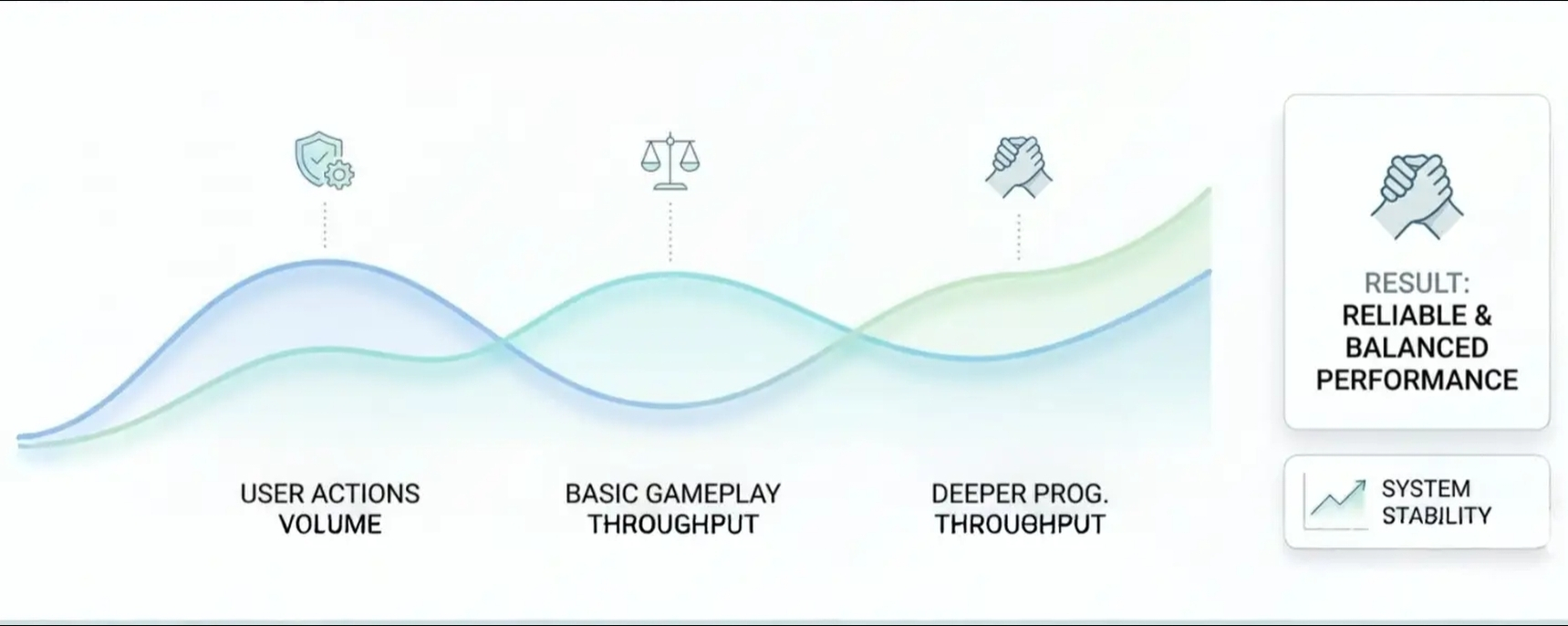
There was a moment when I tapped through a simple action and just paused. Not because anything broke, but because the response felt slightly delayed just enough to make me wonder if it had actually gone through. I remember sitting there for a second, unsure whether to retry or wait. It was a small thing, but it made me notice how fragile timing can feel in these systems.
After experiencing that a few times, what I noticed is that most crypto platforms don’t really fail under pressure they shift. When more activity comes in, the system quietly starts adjusting how things move. Some actions go through instantly, others take a bit longer. From the outside, it feels uneven. But underneath, it’s usually the system trying to stay stable.
From a system perspective, that’s where things get interesting. Every action isn’t just a click it becomes something that needs to be processed, verified, and aligned with everything else happening at the same time. And when too many of these actions arrive together, the system has to decide how to handle them without losing control.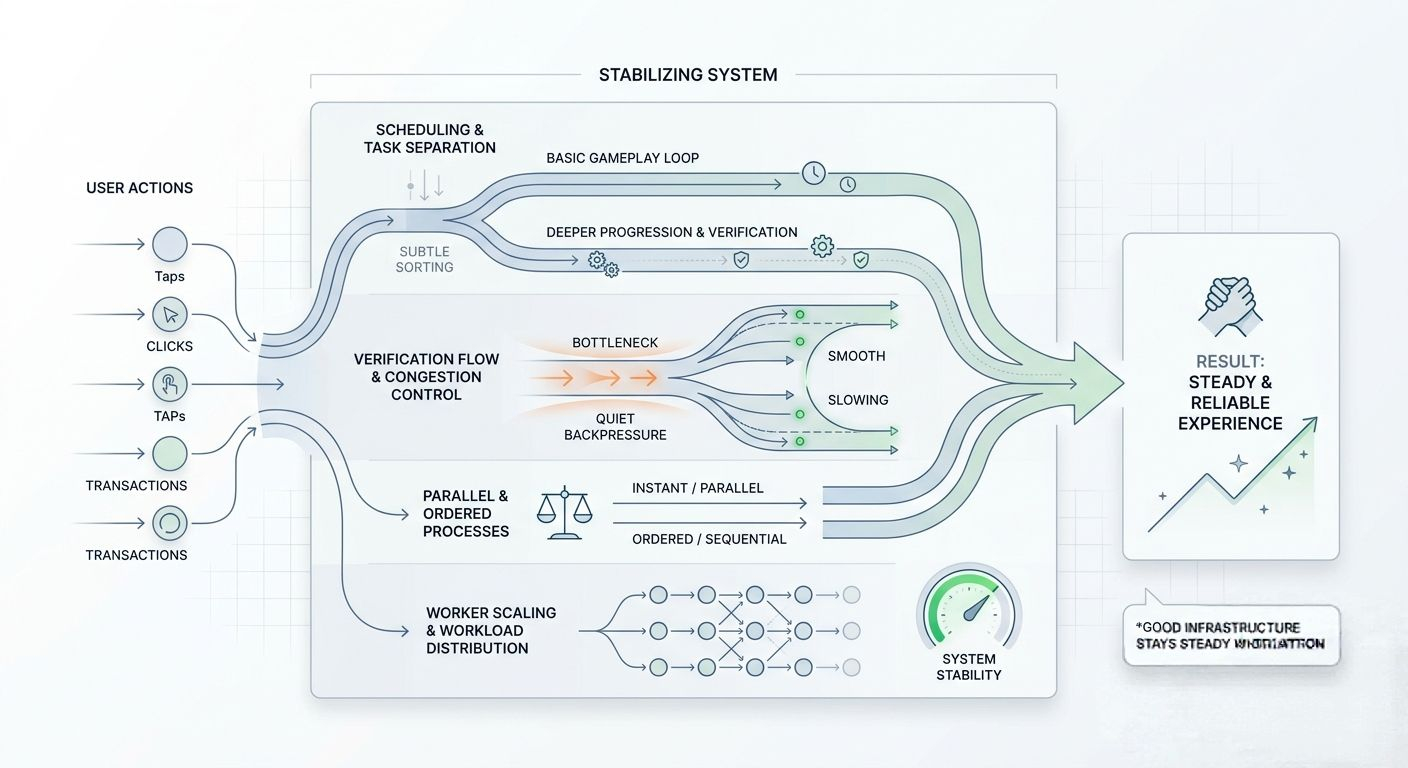
I often think about it like traffic in a busy city. When the roads are empty, everything feels smooth and effortless. But as more cars enter, the system doesn’t break it introduces structure. Signals slow some lanes, others move faster. It’s not perfect, but it keeps things from turning chaotic.
When I look at how @Pixels approaches this, what caught my attention is how it sits right in that space between gameplay and system design. On the surface, it still feels simple. You interact, you progress, nothing feels heavy. But the more I pay attention, the more I get the sense that something deeper is quietly organizing how everything moves.
What interests me more is how that structure shows up without being obvious.
Scheduling, for example, doesn’t feel random. Some actions are instant, others feel slightly paced. It’s subtle, but it feels intentional like the system is spacing things out so everything doesn’t collide at once.
Task separation also stands out. The basic gameplay loop stays smooth even when things get busy. But when you move into deeper progression, it feels like you’ve stepped into another layer. That separation helps keep the core experience stable.
Verification flow is another thing I keep noticing. Some actions feel immediate, while others take a bit more time, as if they’re going through extra checks. In my experience watching systems, that’s usually how platforms avoid everything becoming heavy at once.
Then there’s congestion control. What matters in practice is not avoiding pressure, but handling it quietly. Systems that last don’t try to process everything instantly. They slow certain parts just enough to keep everything else moving. That backpressure is easy to miss, but it’s what keeps things from falling apart.
Worker scaling and workload distribution also play a role, but only when tasks are actually spread out. If everything still runs through one path, adding capacity doesn’t change much. What makes a difference is how evenly the system handles activity.
And then there’s the balance between parallel actions and ordered processes. Simple interactions can happen side by side without any issue. But structured progression needs some order to stay consistent. Balancing both is where systems either feel smooth or start to feel unpredictable.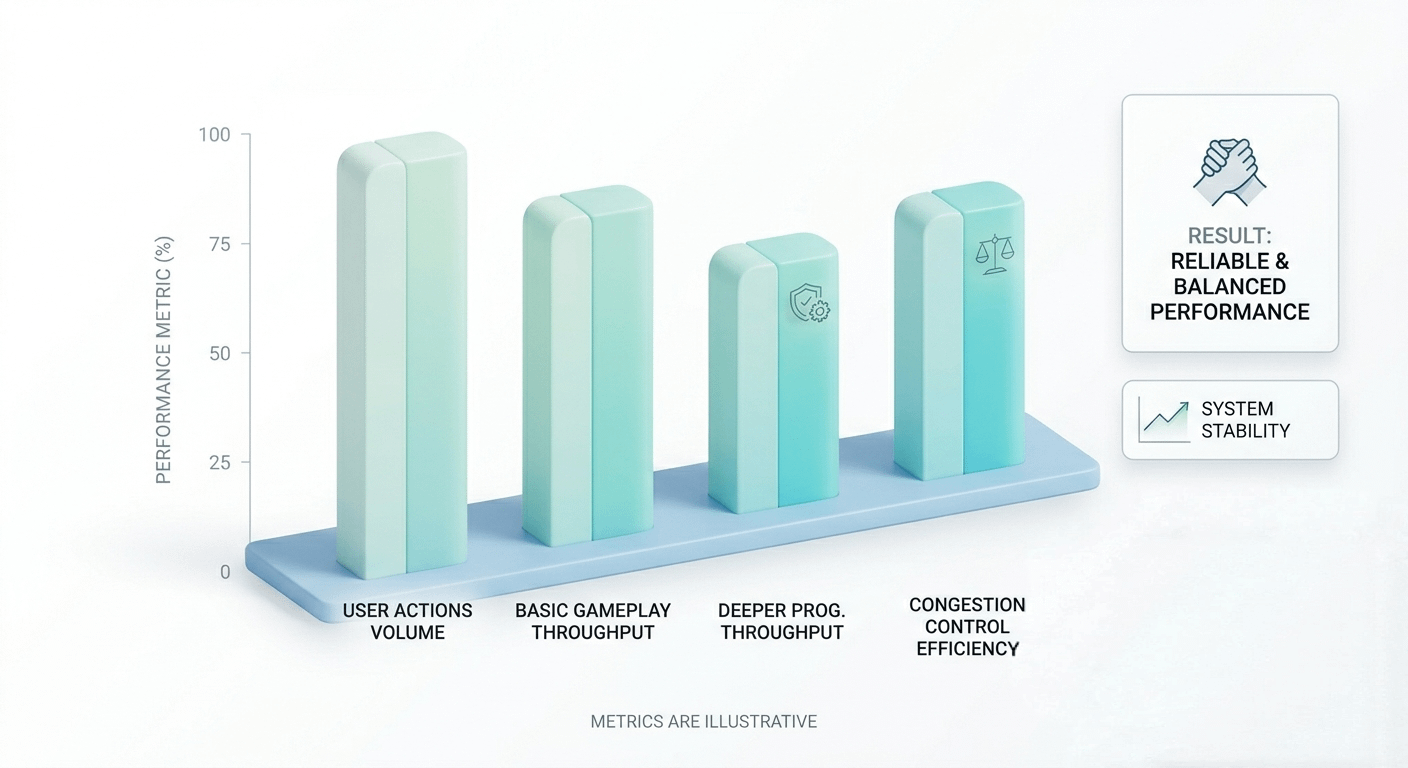
What stands out to me is that Pixels doesn’t try to hide this complexity it just manages it quietly. You still feel like you’re just playing. But underneath, there’s a system making sure everything doesn’t pile up at once.
Over time, that changed how I think about these experiences. It’s not about making everything instant. It’s about making everything still feel stable when things get busy.
A reliable system isn’t the one that looks perfect when it’s quiet. It’s the one that still feels steady when everything starts moving at once. Good infrastructure doesn’t try to stand out it just keeps everything working in a way that still makes sense.