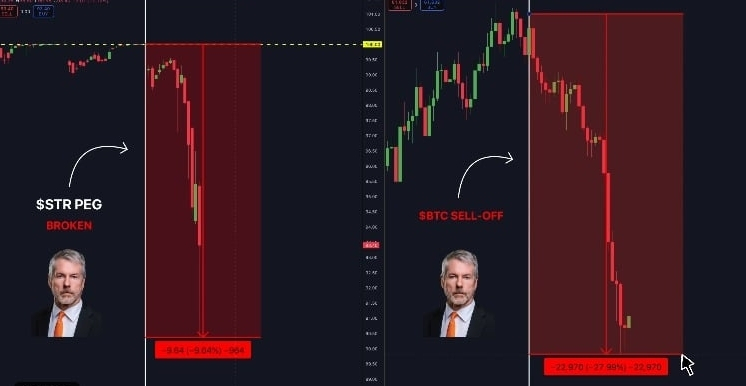
Bitcoin has been under pressure for months and many traders are now looking at one issue that was largely ignored during the rally. How much of the market demand came from one large buyer.
A major talking point appeared after STRC dropped below the $100 level. The product was created to help raise capital that could be used for more Bitcoin purchases. When it traded below that level many traders started asking whether the flow of new money into Bitcoin could slow down.
The concern is simple. A large part of the buying activity this year came from one company that continued adding Bitcoin to its balance sheet. As long as new capital was flowing in the company could keep buying. Once that process slowed the market lost an important source of demand.
Some analysts believe this change had a direct effect on market sentiment. They argue that fewer purchases from a major buyer removed support that traders had become used to seeing. At the same time Bitcoin was already dealing with weak price action which added more pressure across the market.
The discussion became even louder after reports that some Bitcoin had to be sold to cover dividend payments. The amount was small compared with total holdings but it was enough to spark debate. Traders often react strongly when a well known long term holder becomes a seller even if only for a short period.
Not everyone agrees with the bearish view.
Supporters of Bitcoin argue that the network is far bigger than any single company or investor. Their view is that Bitcoin has survived many market cycles and has never depended on one source of demand. They believe short term buying and selling by one player may affect sentiment but cannot decide the long term direction of the asset.
This argument has gained support from market observers who believe Bitcoin should be able to withstand the actions of any individual holder. If a relatively small share of total supply can determine the future of the network then the asset would have a much bigger problem than a temporary price decline.
For now the market is watching closely. If large scale Bitcoin buying returns confidence could improve and some of the recent concerns may fade. If buying remains slow traders may continue questioning where the next major source of demand will come from.
The bigger lesson is that markets often become dependent on narratives. For much of this year many investors viewed constant corporate Bitcoin purchases as a source of strength. Now that those purchases have slowed the market is being forced to find out how much demand exists without them.
Bitcoin remains one of the most watched assets in the world. The next phase will likely show whether recent weakness was mainly caused by a slowdown in one major buyer or whether broader market conditions are the real reason behind the decline.