
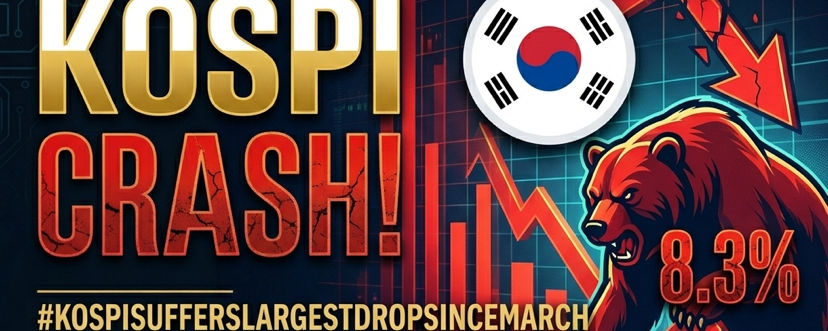
The traditional financial markets just sent a massive shockwave across the globe. South Korea’s KOSPI index completely decoupled from its recent highs, crashing 8.3% in a brutal single-day selloff.
Volatility got so extreme that circuit breakers were triggered, and trading was temporarily halted.
### 📉 The Tech Giant Bloodbath
As the tech-heavy engine of Asian markets, South Korea bore the absolute brunt of the global selloff. Over 95% of all stocks fell, heavily weighed down by the semiconductor sector:
Samsung Electronics: 🔻 -10.18% (Breaching the key 300,000 won psychological threshold)
SK Hynix: 🔻 -7.68% (Slipping below the 2 million won level)
The panic rippled across neighboring markets, with Japan's Nikkei dropping 3.85% and the Taiwan Capitalization Weighted Stock Index sliding 3.48%.
🔍 What Triggered the Crash?
A toxic mix of macroeconomic factors hit all at once:
1 AI Chip Outlook Disappointment: Broadcom’s conservative custom AI chip forecasts reignited global fears of an "AI bubble," deflating high-flying tech infrastructure valuations.
2 A "Too Hot" U.S. Jobs Report: The block-buster employment data for May completely shattered expectations, killing any remaining hopes for Federal Reserve rate cuts and forcing traders to price in potential rate hikes instead.
3 Geopolitical Uncertainty: Escalating tensions and disruptions from the ongoing Iran war continue to inject raw instability into global shipping routes and energy markets.
🧠 The Crypto Question: What Happens Next?
When traditional finance (TradFi) bleeds this heavily, digital assets rarely stay immune. In periods of extreme panic, institutional desks tend to sell whatever is liquid to cover margin calls and risk-off directives.
Is this a macro correction or a deeper trend?
Can $BTC and $ETH decouple as safe havens, or will the liquidity drag pull crypto support levels lower?
Drop your technical analysis and market thoughts in the comments below! 👇🔥
#KOSPI #MarketCrash #Bitcoin #Crypto #Binance