
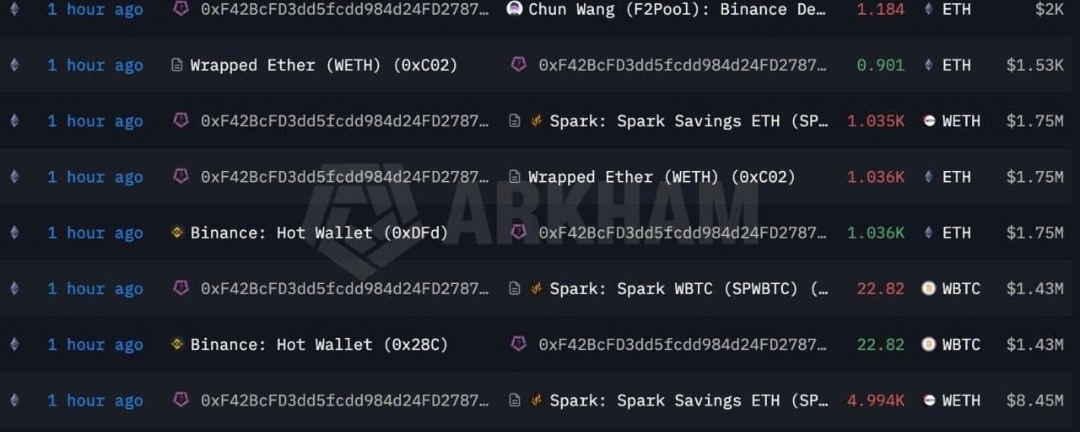

Investment firm K3 Capital withdrew 10,000 $ETH worth approximately $16.9 million from Binance, while a wallet linked to Chun Wang moved an additional 7,650 ETH valued at around $12.9 million off the exchange within the same two-hour period.
In total, over 17,650 ETH worth nearly $30 million was withdrawn from Binance in a matter of hours. This massive wave of on-chain movement caught the immediate attention of blockchain analytics platforms like Lookonchain, sparking widespread discussion across the crypto community regarding the near-term price trajectory of the second-largest cryptocurrency. Many analysts argue that such coordinated high-net-worth activity during a broader market drawdown indicates that institutional players and industry veterans view the current price drop as a prime buying opportunity rather than a reason to panic.
Large exchange outflows are often viewed as a bullish signal, as they suggest investors may be moving assets into long-term storage or custody rather than preparing to sell. When digital assets are taken off centralized trading platforms, it effectively reduces the immediate liquid supply available on the open market, creating potential for a supply shock if demand suddenly spikes. While a single transaction doesn't confirm a broader trend, continued whale accumulation could signal growing confidence in Ethereum at current price levels. Furthermore, sub-surface data reveals that these funds aren't just sitting idle; for instance, wallets associated with Chun Wang, the co-founder of F2Pool, have frequently integrated these withdrawn assets directly into decentralized finance protocols like Spark to maximize yield, highlighting a highly sophisticated and multi-layered capital deployment strategy.
Nearly $30 million in ETH was withdrawn from Binance by major holders, adding to signs that whales are quietly accumulating during the market downturn. This sustained pattern of aggressive accumulation underscores a deep-seated institutional belief in the long-term utility of the Ethereum network, even as macroeconomic headwinds and retail panic continue to fuel localized liquidations. As long as these influential network participants keep absorbing supply, the underlying support structure for the asset remains remarkably firm.
✅️ FOLLOW FOR MORE ✅️
