
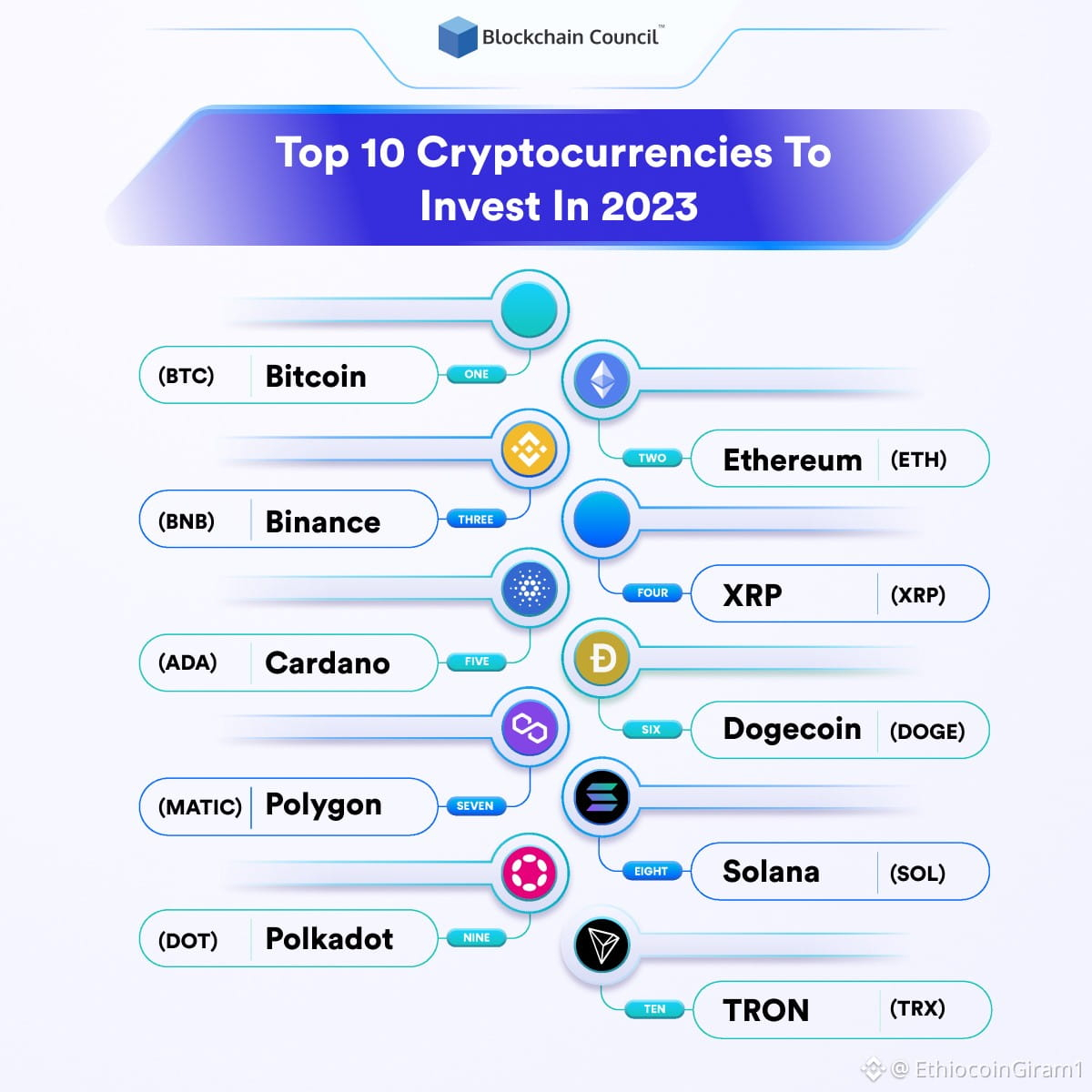
1. Bitcoin (BTC) – The original decentralized digital currency
Bitcoin kicked off the whole crypto movement. It let people send money without needing to trust a bank or middleman. Lately, it’s even added more tricks with things like Ordinals and BRC-20 tokens, so you can do NFTs and create new token standards—all on Bitcoin’s network.
2. Ethereum (ETH) – The smart contract pioneer
Ethereum made blockchains programmable. It’s the backbone for DeFi, NFTs, DAOs, and a bunch of decentralized apps. With upgrades like sharding and proof-of-stake, Ethereum keeps getting faster and more efficient.
3. Solana (SOL) – Fast and affordable transactions
Solana’s architecture is built for speed—blocks are created in a flash, and costs stay low. That makes it a hotspot for DeFi and NFT projects that need to scale without breaking the bank.
4. Polkadot (DOT) – Bridging blockchains together
Polkadot lets different blockchains (called “parachains”) talk to each other and share security. It’s a real fix for the old problem where blockchains couldn’t easily connect or scale.
5. Avalanche (AVAX) – Build-your-own blockchain
Avalanche uses a layered design with customizable “subnets.” Projects can set their own rules but still tap into shared security, so you get flexibility without sacrificing safety.
6. Chainlink (LINK) – Bringing real-world data to blockchains
Chainlink connects smart contracts to real-world info—prices, weather, you name it. That’s a big deal for DeFi and Web3, since it lets apps react to actual events, not just what’s on-chain.
7. Algorand (ALGO) – Fast, secure, fork-free
Algorand uses pure proof-of-stake for instant transaction finality and security. No forking, no waiting around—just quick, reliable transactions.
8. The Graph (GRT) – Google for blockchain data
The Graph lets developers search and index blockchain data in a decentralized way. For complex apps, analytics, or AI, this is a must-have.
9. Chia (XCH) – Green consensus
Chia ditched the energy-hungry mining. Instead, it uses empty storage space on your hard drive (proof-of-space and proof-of-time) to secure the network. It’s a fresh take on blockchain consensus.
10. Kaspa (KAS) – Next-level scalability with BlockDAG
Kaspa uses a BlockDAG structure (specifically GHOSTDAG), letting blocks be created in parallel. This ramps up scalability far beyond what classic blockchains can handle.
Honorable Mentions (Emerging Innovation)
Uniswap (UNI) – Leading the charge in automated DeFi with liquidity pools—no order books needed.
Hyperbridge (BRIDGE) – Making it easier and safer to move assets and data across different blockchains.
AI-linked and hybrid projects (like Ozak AI, which blends blockchain, AI, and decentralized infrastructure) are starting to break new ground too.
Why These Matter
Each of these projects moves blockchain technology forward in its own way:
- Solana, Avalanche, and Kaspa push the limits on speed and scalability.
- Polkadot and Hyperbridge make blockchains work together.
- Ethereum, Uniswap, and Chainlink are the backbone of smart contracts and DeFi.
- The Graph powers the data layer.
- Algorand and Chia rethink consensus itself.
Together, they’re transforming everything from finance and computing to data infrastructure, real-world asset tokenization, and the next wave of web3. The variety here shows just how much innovation is shaping the future of blockchain.
Want these sorted by market cap, use case, or how established they are? Just say the word.