
When I look at the blockchain space today I often feel like most networks are built for speculation instead of people. Many chains talk about speed or technology but they do not explain how normal users will actually live with them. Vanar feels different because the whole idea behind it starts from adoption. I am seeing a project that is trying to design Web3 so it fits into everyday digital life instead of forcing people to adapt to crypto culture first.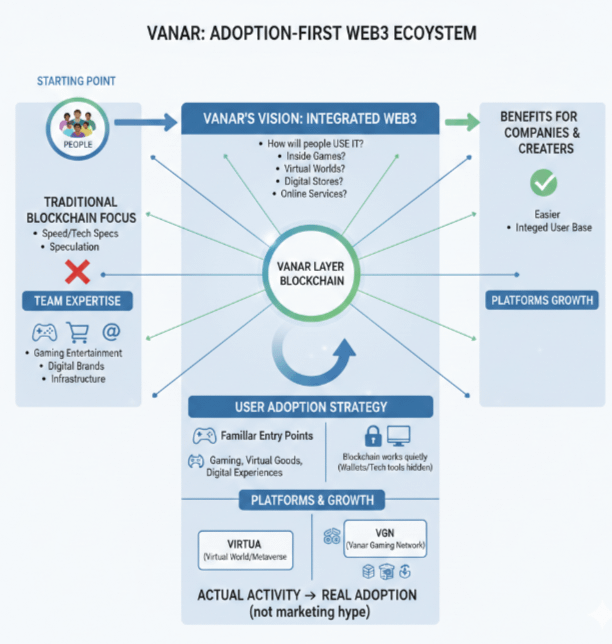
Vanar is a Layer One blockchain created with a very clear direction. The team behind it has experience in gaming entertainment and digital brands which changes how they think about infrastructure. They are not only asking how fast a chain can process transactions. They are asking how people will use it inside games virtual worlds digital stores and online services. That starting point matters because if a network is built with real use in mind it becomes easier for companies and creators to adopt it.
One of the biggest ideas behind Vanar is bringing the next wave of users into Web3 through things they already understand. Instead of pushing people directly into wallets and technical tools they are building environments where blockchain works quietly in the background. Gaming is a big part of that plan. Through platforms like Virtua and the VGN gaming network the chain already has places where users interact trade items and build digital experiences. If those environments grow then adoption does not come from marketing hype but from actual activity.
I am also seeing Vanar push strongly into AI connected infrastructure. This part is important because the future of digital platforms will not only be about storing data but also about understanding and using it. If AI tools run on top of blockchain networks then those chains become more than transaction systems. They become intelligent infrastructure layers. Vanar has been building components designed for that direction which shows they are thinking beyond the current market cycle.
Another thing that makes this project interesting is how they try to connect real usage to token value. Many blockchains struggle because their tokens move only when traders speculate. Vanar is trying to link activity inside its ecosystem directly to demand for the VANRY token. If games applications and digital services grow on the network then the token becomes fuel for that economy instead of just a tradable asset. If that model works it could make the ecosystem more stable over time.
Of course none of this matters unless adoption actually happens. Every Layer One promises growth but only a few turn their vision into real user activity. The true test for Vanar is whether developers keep building and whether users keep returning. If applications inside the ecosystem start feeling useful and natural then the network can expand steadily. If adoption slows down then even good technology will not be enough. That is the reality for every infrastructure project in Web3.
What gives Vanar a chance is that the team seems focused on execution rather than only narrative. They have been pushing tools products and integrations instead of waiting for market hype. We are seeing them move from concept into real deployment which is usually the stage where serious projects separate themselves from temporary ones. If this phase continues successfully Vanar could slowly turn into a platform that connects entertainment digital ownership AI driven tools and real world services into one system.
When I step back and look at the bigger picture Vanar feels less like a short term crypto play and more like a long term infrastructure bet. The project is built around the belief that blockchain only matters if people outside crypto start using it naturally. They are trying to create a network where users do not need to understand the technology because it simply works inside the platforms they already enjoy. If that idea succeeds Vanar does not just become another chain. It becomes part of the bridge between Web3 and everyday digital life.