
I used to blame myself when a trade went sideways. Maybe I clicked late. Maybe I sized wrong. Then I started paying attention to the “invisible stuff”, the few seconds where your order is floating around, waiting to land. That’s where a lot of value leaks out.
FOGO is trying to make that leak smaller.
Their official site describes FOGO as a purpose-built L1 for trading, with sub-40ms blocks and sub-second confirmation.
Those numbers matter because latency isn’t just a UX issue, it shows up directly in execution.
MEV, slippage, failed txs, it’s all the same delay pain.
People call it the “latency tax,” but it’s easier to understand as three everyday pain points:
MEV : you broadcast a trade, someone faster reacts first, you get a worse price.
Slippage : the price moves between click and confirmation, and you land lower than expected.
Failed transactions : you try again, and by the time it works, the moment is gone.
None of this feels dramatic in isolation. It’s death by a thousand cuts, especially in fast markets.
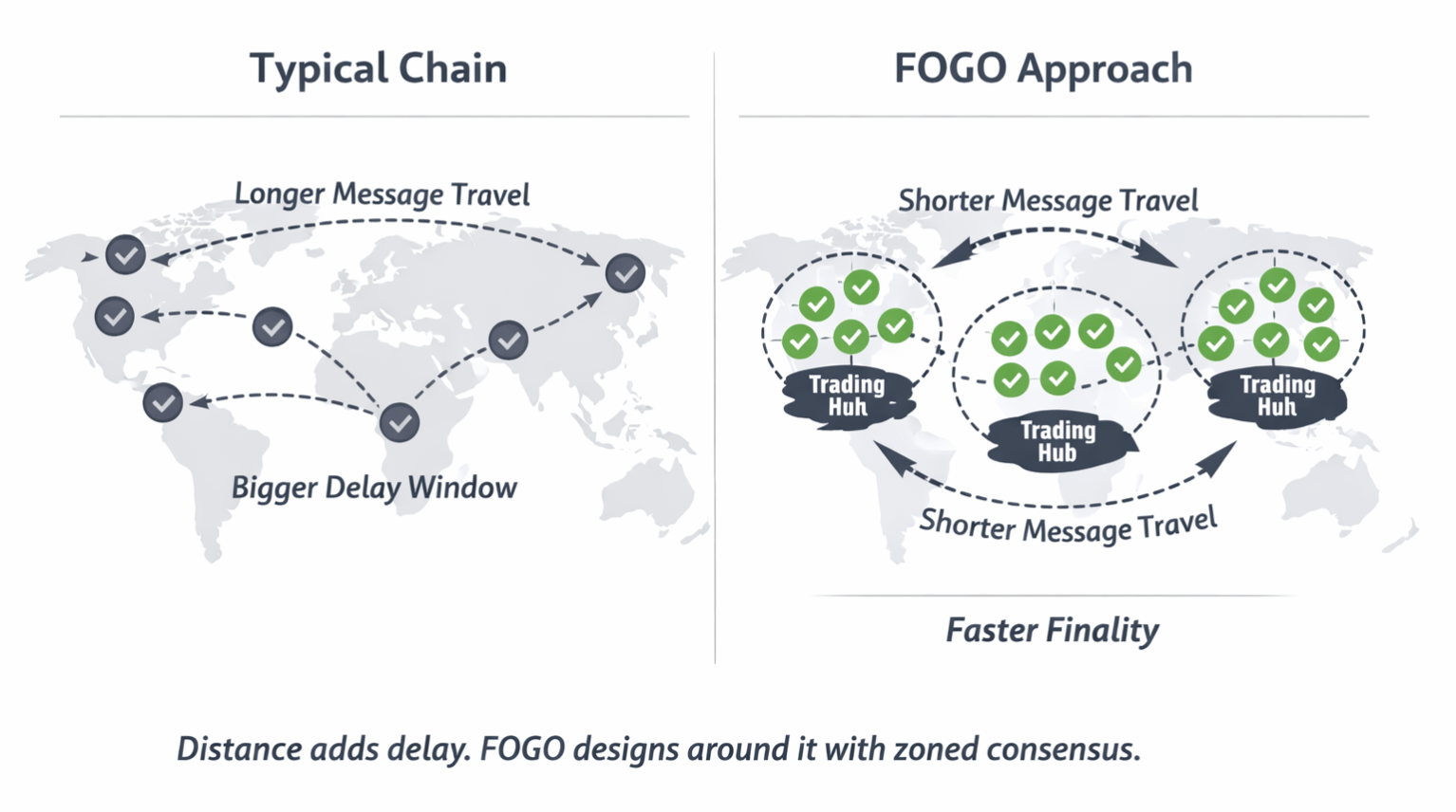
On most chains, there’s a built-in delay between “I sent it” and “it’s final.” Messages travel across the network, validators coordinate, blocks get produced, and under load the whole thing turns into a timing contest. The longer that window is, the more room there is for bot games, stale quotes, and trades that revert.
FOGO doesn’t pretend distance and network physics don’t exist.
Its docs describe a zone-based, multi-local consensus setup where validators co-locate in tight geographic zones, aiming for ultra-low latency consensus and block times under 100ms in that environment.
And on day one, FOGO states that active validators are collocated in Asia, near exchanges, with backup nodes ready.
So the “workaround” is basically: keep consensus close, keep execution predictable, and optimize for the way markets actually move.
Speed matters, but consistency is the real win for me.
I’m not impressed by “fast chain” claims anymore. Everyone has a fast slide deck.
What I do respect is when a team says exactly what they’re building, and then shows the guts of it. FOGO says its core is a custom Firedancer client modified for stability and speed.
That’s a very specific choice.
It signals they care about low variance, not just peak performance.
Now the question is, how FOGO tries to cut the latency pain ?
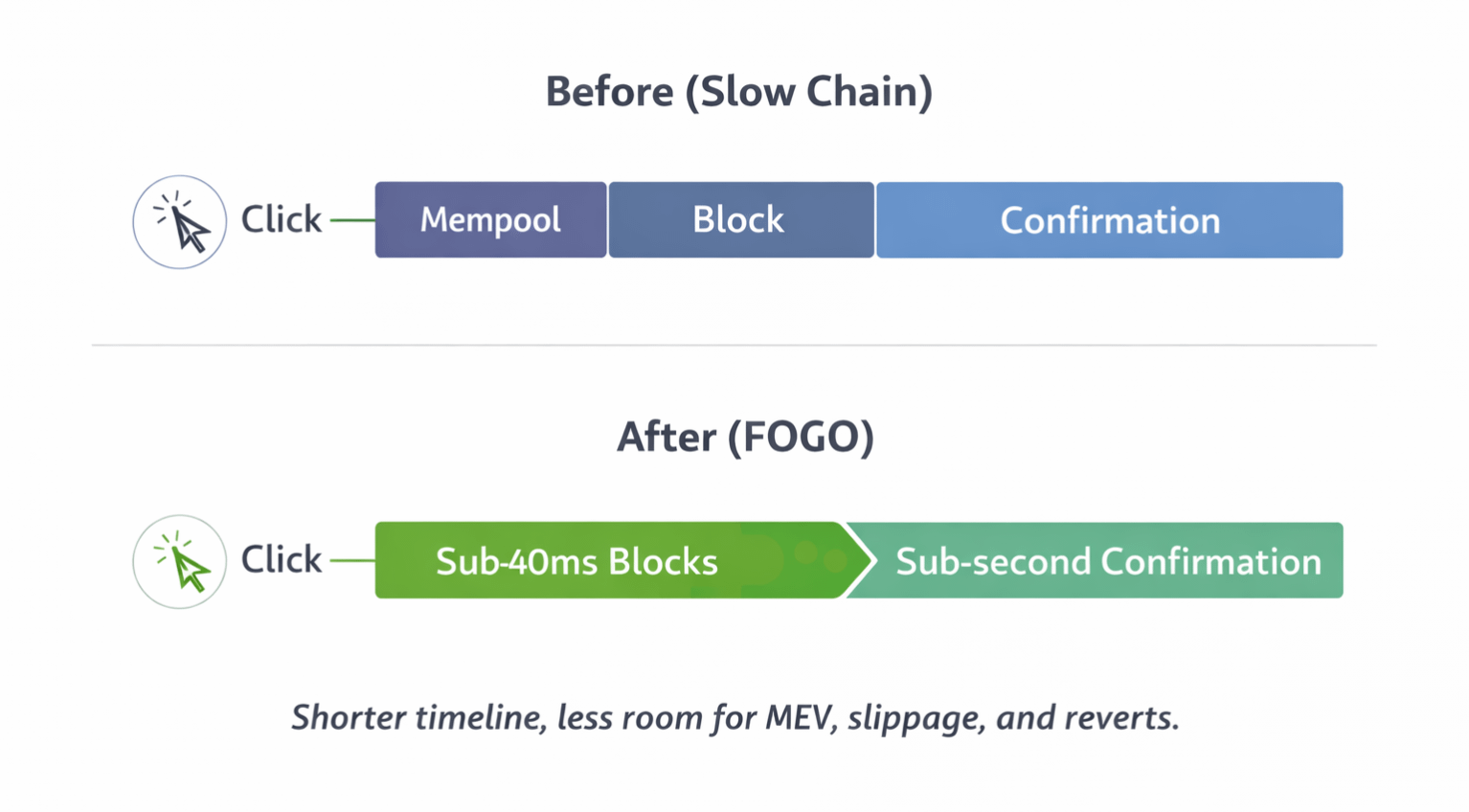
Here’s the way I’d translate FOGO’s approach into trader language:
Shrink the time window :
With sub-40ms blocks and sub-second confirmation (as stated on their site), there’s simply less time for prices to drift against you after you click.
Put consensus where liquidity lives :
FOGO leans into “follow the market.” Their validator design post talks about 8-hour epochs and explicitly notes that most spot volume clusters around 13:00–15:00 UTC during the EU–US overlap.
That’s not fluff, it’s a trading reality they’re designing around.
Treat MEV as a design problem :
FOGO repeatedly frames itself around fairer execution and trading-first infrastructure. Even the core site highlights execution-focused design alongside the low-latency metrics.
My quick take :
This is the simple, boring checklist I care about:
i. Fills look closer to what I clicked.
ii. Fewer failed transactions when volatility spikes.
iii. Less “weirdness” where speed decides who wins, instead of price.
If FOGO can deliver its stated sub-40ms blocks and sub-second confirmation consistently, that’s not a hype headline. It’s fewer hidden costs leaking out of routine trades, and that’s the kind of improvement that actually sticks.