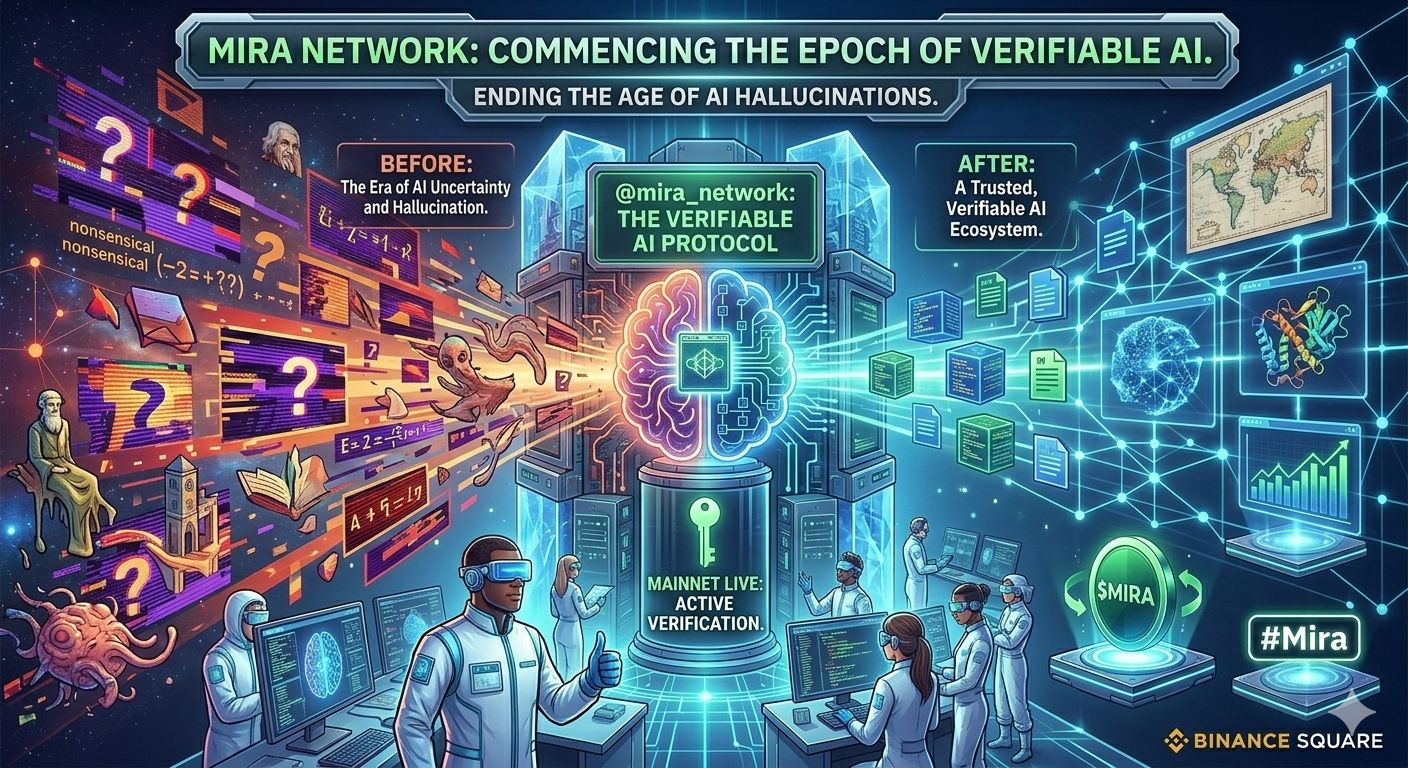
Trí tuệ nhân tạo đã thay đổi cách chúng ta làm việc, sáng tạo và giao tiếp. Tuy nhiên, khi các mô hình AI trở nên mạnh mẽ và tự chủ hơn, một sai sót cơ bản đã xuất hiện: vấn đề "ảo giác." Các mô hình AI thường xuyên tạo ra thông tin không chính xác, thiên lệch hoặc hoàn toàn bịa đặt với độ tự tin cao. Trong khi điều này gây khó chịu trong sử dụng thông thường, những sai sót này lại nguy hiểm khi AI được triển khai trong các lĩnh vực quan trọng như tài chính, chăm sóc sức khỏe và hệ thống pháp lý.
Nhập vào Mira Network, một giao thức hạ tầng phi tập trung được thiết kế để thiết lập một "tầng tin cậy" cơ bản cho AI. Sứ mệnh của nó là làm cho đầu ra của AI có thể xác minh, kiểm toán và đáng tin cậy, thu hẹp "khoảng cách độ tin cậy" hiện đang cản trở sự tự trị hoàn toàn của AI.
Cách Mira Network Hoạt động: Xác minh thông qua Sự đồng thuận
Cách tiếp cận hiện tại đối với độ tin cậy của AI thường liên quan đến sự giám sát tốn kém của con người. Mira giải quyết vấn đề này thông qua một cách tiếp cận phi tập trung, mật mã. Mạng lưới chuyển từ mô hình rủi ro "Tin tưởng AI" sang mô hình an toàn "Xác minh AI."
Quy trình tuân theo một vài bước chính:
Biến đổi tuyên bố: Giao thức của Mira tiếp nhận một đầu ra phức tạp từ một mô hình AI (như báo cáo phân tích tài chính) và chia nhỏ nó thành các tuyên bố nhỏ hơn, cụ thể hơn.
Định tuyến phi tập trung: Những tuyên bố này được phân phối qua một mạng lưới toàn cầu gồm các nút xác thực độc lập.
Xác minh chéo mô hình: Quan trọng là, các nút xác thực này thường là những mô hình AI đa dạng khác. Chúng đánh giá độc lập các tuyên bố dựa trên cơ sở kiến thức của chính mình.
Nhất trí: Mạng lưới sử dụng cơ chế đồng thuận kinh tế tiền điện tử để đồng ý về tính hợp lệ của mỗi tuyên bố. Nếu các người xác thực đạt được sự đồng thuận rằng thông tin là đúng, nó sẽ được cấp một chứng minh mật mã.
Phạt và Phần thưởng: Để đảm bảo sự trung thực, các nút xác thực phải đặt cược các token gốc để tham gia. Nếu họ cung cấp các xác minh không trung thực hoặc lười biếng, khoản đặt cược của họ sẽ bị phạt (mất). Các người xác thực trung thực nhận phần thưởng.
Thông qua việc tận dụng "trí tuệ tập thể" thay vì chỉ tin tưởng vào một mô hình duy nhất, Mira có thể đạt được độ chính xác cao hơn đáng kể—với một số chỉ số cho thấy độ chính xác xác minh vượt quá 95%—so với mức chuẩn của các mô hình độc lập hiện tại.
Tiện ích $MIRA Token
Hệ sinh thái được cung cấp bởi token $MIRA , hoạt động như tiện ích và nhiên liệu của mạng lưới:
Staking để Bảo mật: Các nút xác thực gắn Mira để tham gia vào sự đồng thuận, điều chỉnh lợi ích kinh tế của họ với việc xác minh trung thực.
Thanh toán: Các doanh nghiệp và nhà phát triển thanh toán bằng Mira để truy cập các dịch vụ xác minh của mạng lưới thông qua APIs.
Quản trị: Những người nắm giữ token có quyền biểu quyết để định hình các nâng cấp tương lai của giao thức, phân phối phần thưởng và thay đổi tham số.
Triển vọng
Khi thế giới chuyển từ các công cụ AI cô lập sang các tác nhân AI hoàn toàn tự động xử lý giá trị thực, nhu cầu về một lớp trách nhiệm là điều tối quan trọng. Mira Network đang định vị mình như lớp cần thiết đó—"kiểm toán viên" của trí tuệ AI. Bằng cách thiết lập một tiêu chuẩn sự thật phi tập trung, Mira có thể mở khóa hàng triệu triệu giá trị kinh tế hiện đang bị hạn chế bởi các vấn đề về lòng tin, cho phép tiềm năng thực sự của cuộc cách mạng AI.

#Mira @Mira - Trust Layer of AI