
Back in the early 2000s, building anything online was a headache. You had to buy servers, wrangle with hardware, and deal with all kinds of up-front costs. Then AWS showed up and flipped the script. Suddenly, you didn’t need to worry about any of that just pay for what you use, spin up anything you want, and focus on building. It was a real turning point for the internet.
Now, something like that shift could be brewing in robotics.
Fabric Protocol wants to be the backbone of the robot economy a kind of public infrastructure where robots, AI agents, and humans all work together, with everything happening out in the open and on-chain. The big, gutsy question: can Fabric actually become the AWS for autonomous machines?
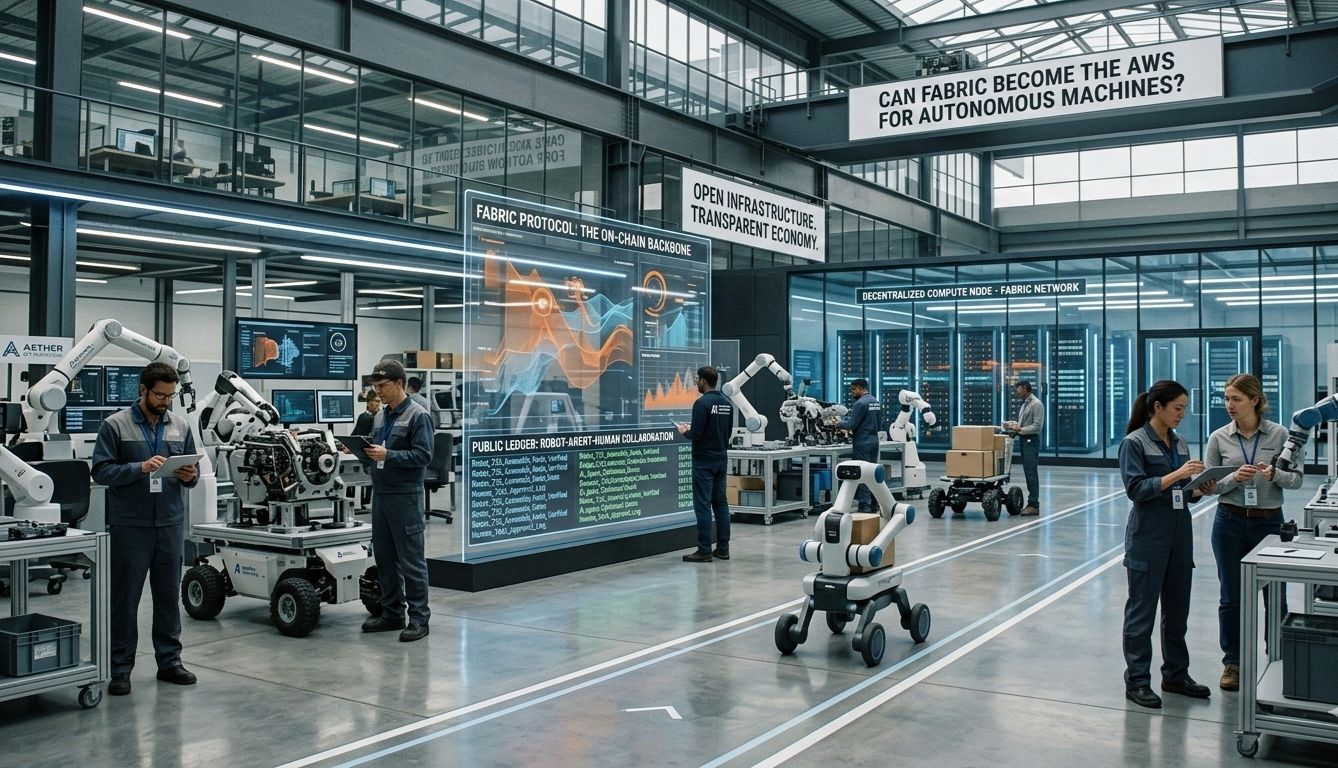
What’s Holding Robotics Back
Right now, robotics is kind of a mess. Most robots are locked inside corporate walled gardens. Someone else controls their identity, their permissions, how they get paid, and how they’re managed. Sure, the robots can do their jobs, but they can’t prove what they did on their own, cut their own deals, or join open marketplaces.
So, robots are missing something basic: real economic infrastructure.
It’s a lot like the early days of the web, before cloud platforms made life easier. If you want to deploy robots at scale, you need trust, secure identity, ways to settle payments, and a system everyone can agree on for compliance and governance. Without that shared layer, growth stays stuck.
Fabric’s Big Idea: Robots Need a Public Network
Fabric Protocol’s pitch is simple robots shouldn’t just be dumb endpoints. They should be part of the network.
Here’s what Fabric brings to the table:
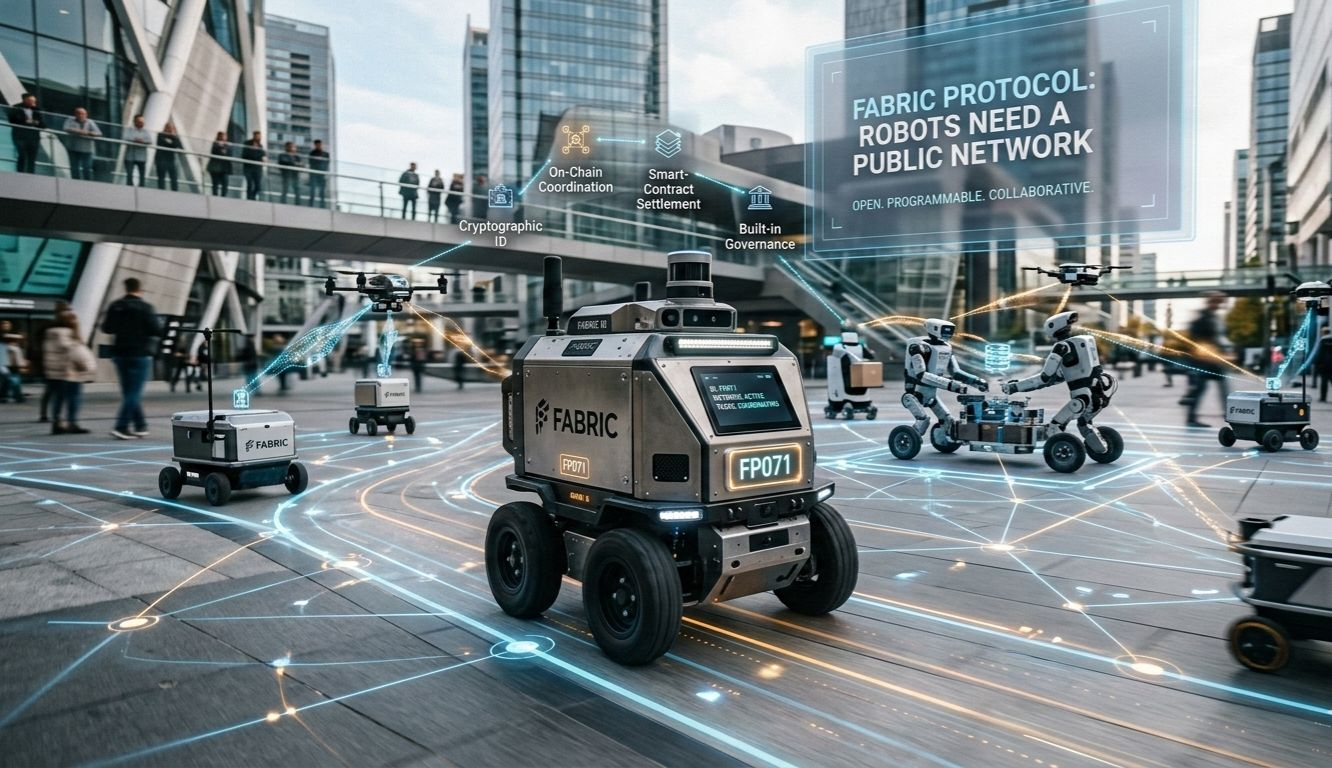
- Cryptographic ID for robots
- On-chain coordination for tasks
- Smart-contract settlements
- Built-in governance tools
- Infrastructure designed for agents, AI, and robotics to work together
Instead of closed off, proprietary networks, you get open, programmable ones where robots can actually collaborate.
If AWS took away the pain of managing servers, Fabric wants to take away the pain of managing trust, coordination, and payments for autonomous systems.
From Cloud Computing to Robot Computing
AWS made it possible for anyone to launch software anywhere, without owning a single server. Fabric wants to do the same for robots: let anyone deploy, manage, and make money from robotic systems, without having to build their own backend.
Picture this:
- A warehouse robot can bid for jobs on its own.
- A delivery bot proves its work through cryptography not just a checklist.
- A cleaning robot joins a fleet driven by shared token based rules.
- Different types of robots work together and using common protocols.
Instead of being tied to a single company’s backend, everything runs on Fabric’s public, programmable ledger. It’s transparent, verifiable, and out in the open.
This isn’t just tech infrastructure. It’s changing who holds the power.
The Economic Layer: Turning Robots Into Active Players
Remember how AWS lowered the bar for startups to build? Fabric wants to do the same, but for the economic side of robotics.
By bringing in tokenized payments and on-chain governance, Fabric unlocks:
- Machines paying each other directly
- Humans giving feedback and getting rewarded
- Distributed fleets of robots organizing themselves
- Shared ownership models
- Rules and regulations you can actually program
All of this sets the stage for what folks are calling the “Robot Economy” where machines aren’t just passive tools, but are actually earning, spending, and collaborating.
If Fabric pulls this off, it won’t just host robots. It’ll let them trade, team up, and evolve together in an open system.
But Let’s Be Real: There Are Big Risks
No big infrastructure play is easy.
AWS worked because there was sky high demand for web services. Fabric’s shot depends on how quickly autonomous robotics takes off. Physical robots come with their own mess of regulatory headaches, safety issues, and real world unpredictability that cloud computing never had to deal with.
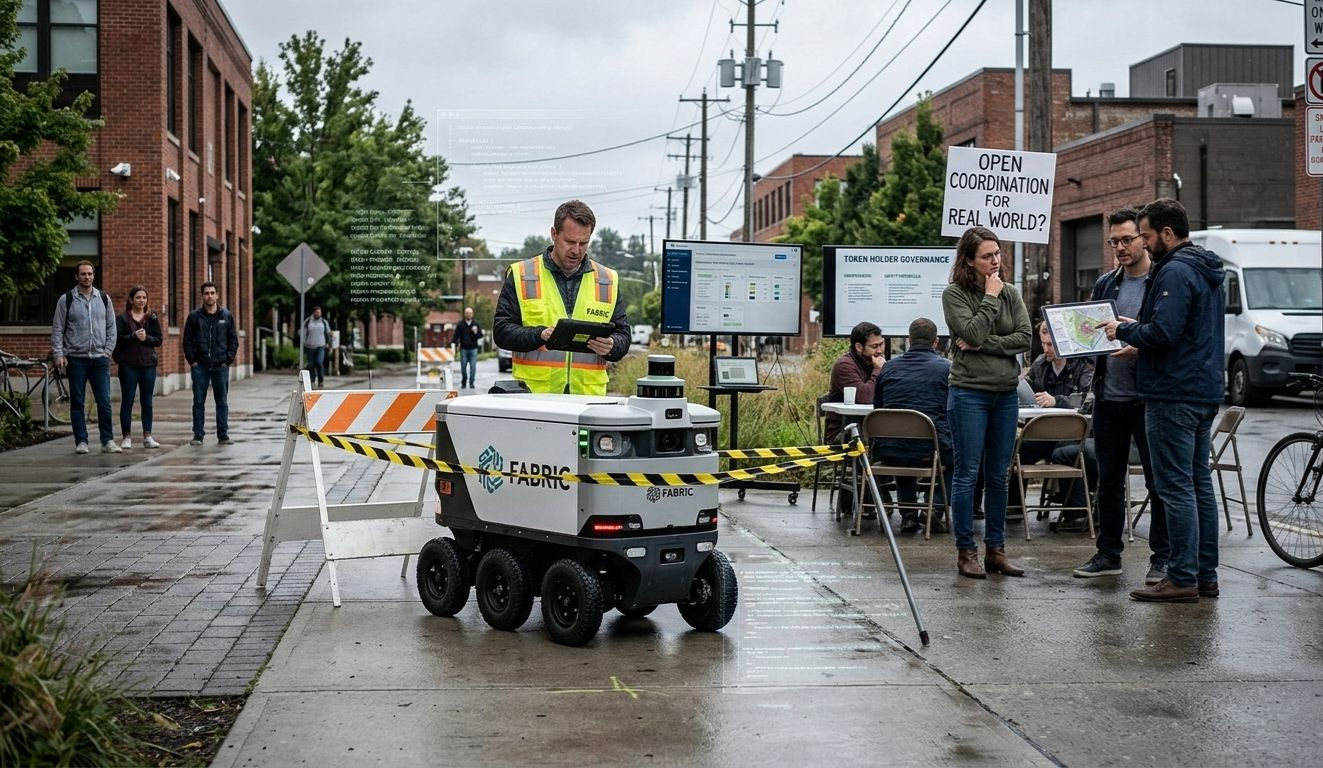
And then there’s the whole decentralization question: can token holders be trusted to steer robots out in the real world? Can open coordination keep things safe?
These aren’t just little details they’re deal breakers if not handled right.
Why Now?
It comes down to timing.
AI agents are getting smarter. Robotics hardware is cheaper and more powerful. Blockchain tech has matured. The missing link has always been a way to tie everything together a coordination layer.
Fabric Protocol wants to be that missing link.
Will it actually become the AWS of robotics? That’s up to adoption, execution, and how the ecosystem grows. But here’s what’s obvious: if robots are going to work together, run their own transactions, and cross corporate lines, they need infrastructure.
The internet needed AWS.
The robot economy might just need Fabric.
#robo || #ROBO || @Fabric Foundation || $ROBO
