I’ve been watching how machines behave lately, and it keeps giving me this odd feeling. They do so much on their own now. They move around, finish whatever task they’re given, collect bits of information, and make small choices without anyone standing there telling them what to do. But after all that, they just stop. They can’t take payment for the work, and they can’t handle the part that actually matters outside the machine. A person still has to step in and deal with the final piece. It feels like the machines have moved ahead, but the system around them hasn’t really changed with them.
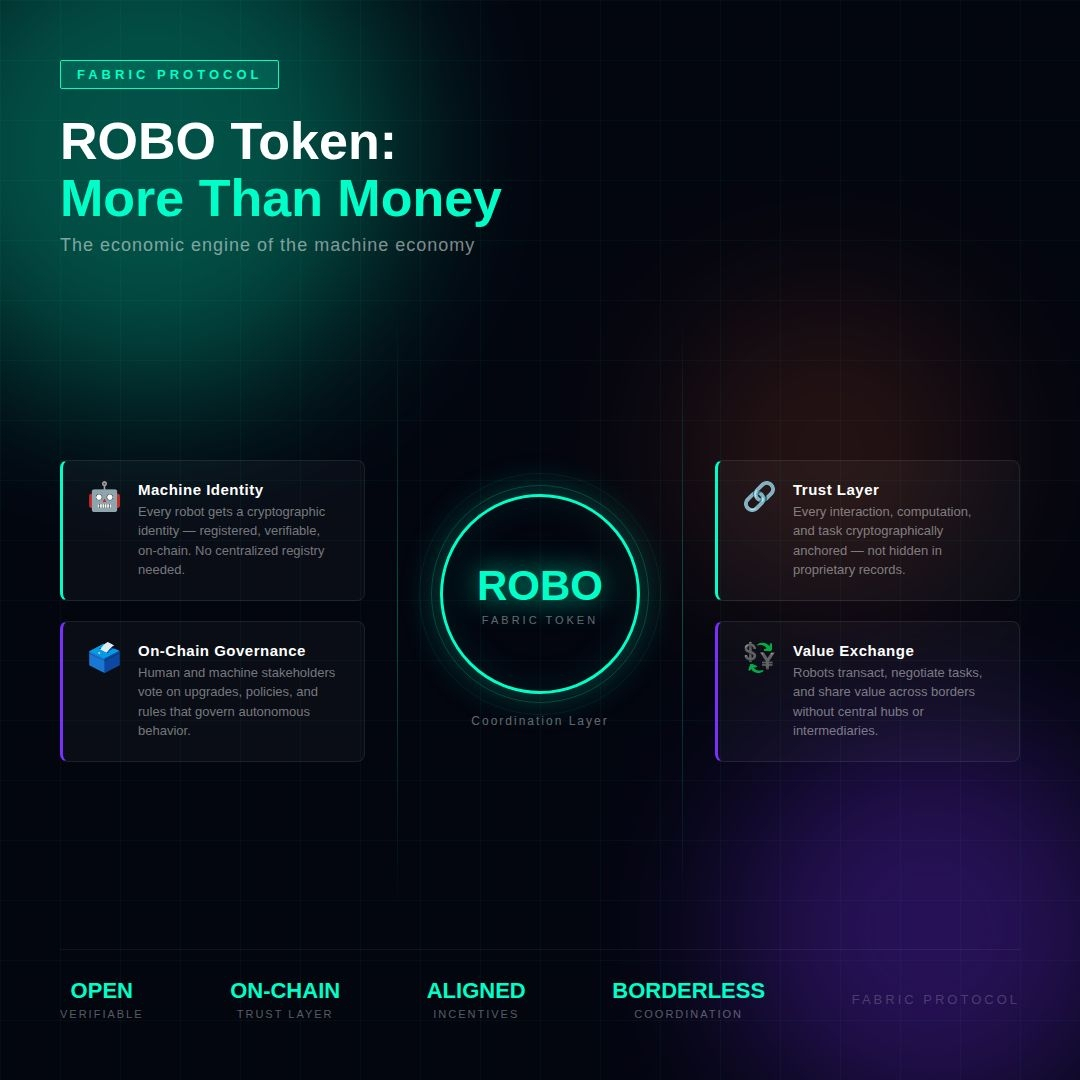
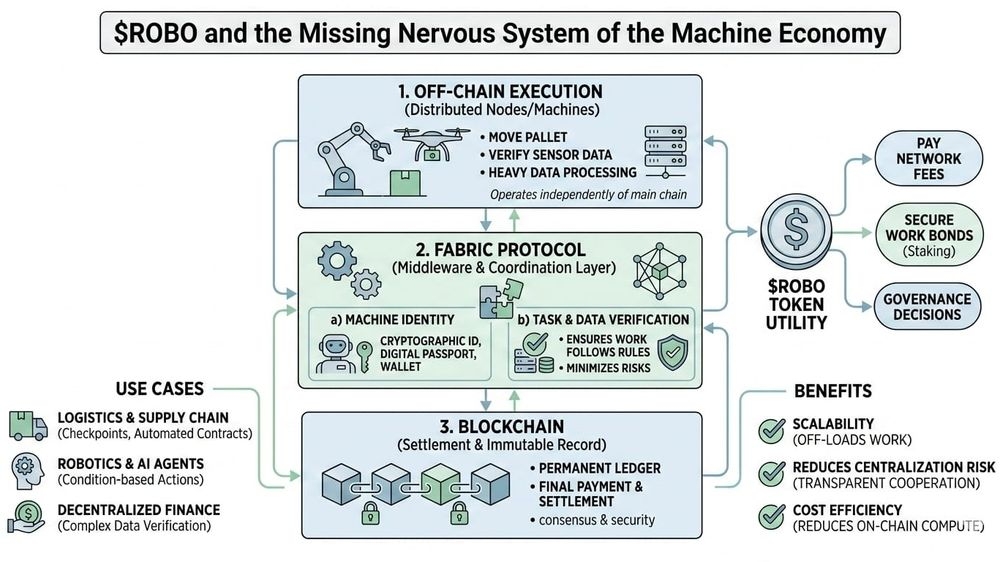
What Fabric is trying to build makes more sense when you stop thinking about it like a technical system and look at it the way you’d look at any tool that grows with its work. They don’t want machines to just have a sticker or a serial number. They want something that actually reflects what the machine has done, almost like a trail of its work instead of a number printed on it. And once a machine can hold a key, it suddenly has a bit more freedom. It can sign things on its own, interact with contracts, and even receive payment without someone standing there approving every tiny action. ROBO ends up being the piece that keeps the whole thing connected, the part that lets machines step into the network and finish their tasks while making sure no one bends the rules along the way.
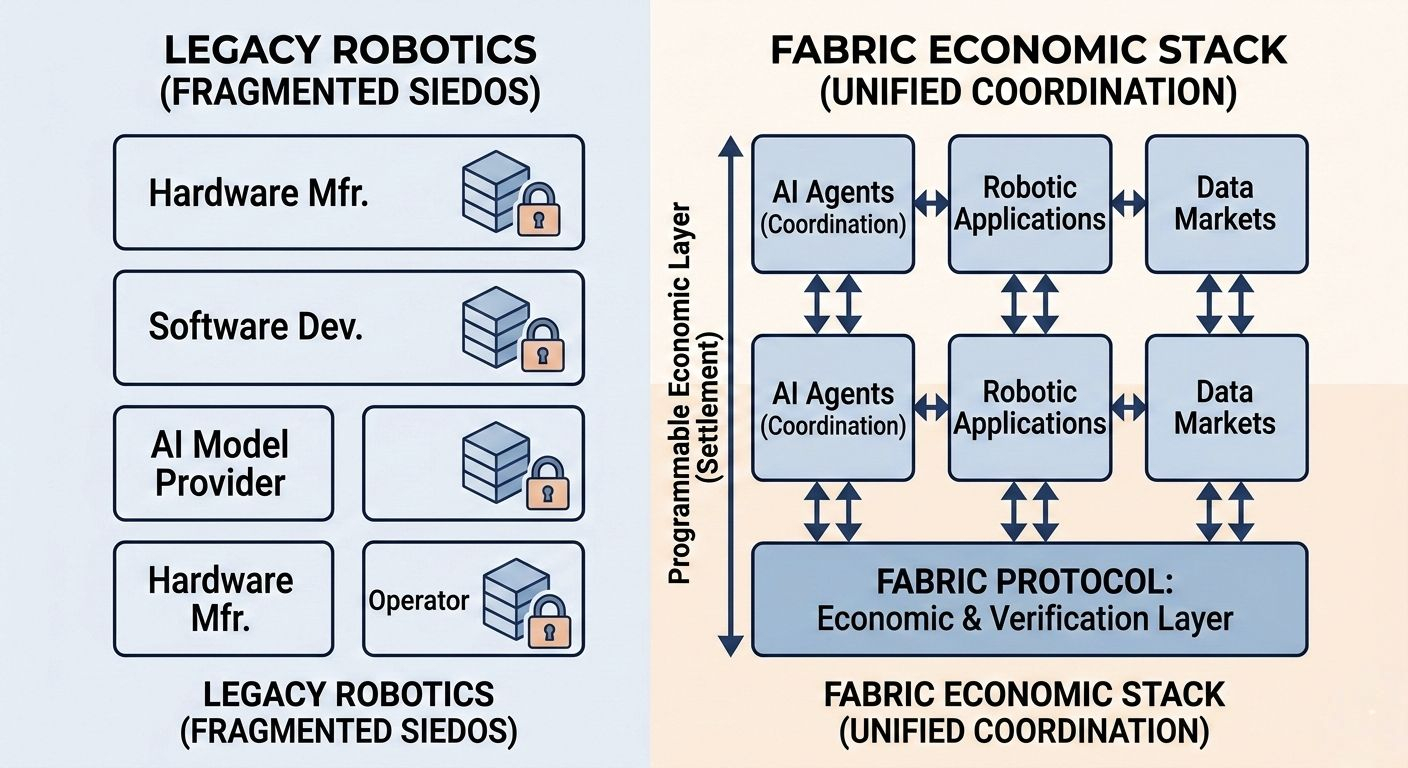
The bigger issue is coordination. When robots start doing delivery or inspection or warehouse work, someone has to decide who gets the job and who gets paid. Closed platforms solve this by controlling everything. They own the data and they decide who can join. It works fast, but it creates a world where a few companies control the entire robot economy. Fabric wants something different. A shared layer where machines and operators follow the same rules and where identity and work history matter more than who owns the platform.
The bonding model is important here. Open networks always attract people who try to cheat. Fake identities, low‑effort work, and false claims show up everywhere. Fabric’s answer is simple. Anyone who wants to join puts up a refundable bond. If someone lies or reduces reliability, that bond can be reduced. It isn’t fancy, but it’s fair. If you want access to work, you put something at risk. If you waste the network’s time, you pay for it. This is where ROBO becomes more than a token. It becomes the part of the system that keeps everyone honest.
Verification is the hardest part. Checking a blockchain transaction is easy. Checking real‑world work is not. Sensors can be wrong. Logs can be changed. Environments are messy. Outcomes are not always clear. If the system depends too much on off‑chain truth, people will say it’s centralized. If it depends only on on‑chain proof, it may not work for real machines. The only way forward is a mix of both. Enough cryptographic proof to make cheating difficult and enough economic pressure to make cheating pointless. It takes time. It doesn’t happen in one update.
Fabric has been pretty open about where things stand. The main network isn’t coming anytime before 2026, and the validator group is still slowly taking shape. The apps that are supposed to run on top of it are also in their early stages. It’s the kind of thing that grows one careful step at a time. Robotics itself doesn’t rush either. Machines that can handle their own transactions without help are still a while away. What people picture in their minds is one thing, but what’s actually happening out there is something else entirely.
The real question is simple. Can Fabric create reliable coordination when people try to cheat or when machines fail. If the network can enforce identity, uptime, honest reporting, and fair dispute outcomes, then it becomes a base layer for machine labor markets. If it cannot, it will follow the same pattern many crypto projects have followed. Attention first, reality later, and a slow fade when the gap becomes clear.
For now, it’s early. The market is being asked to price a future where machines need open settlement and shared standards. If Fabric proves this in small and steady steps, then ROBO won’t need big claims. It will have real weight.
@Fabric Foundation #ROBO $ROBO