
Lately I’ve been thinking a lot about privacy in crypto.
Not the “hide everything from everyone” kind of privacy. More like the type that actually makes blockchain usable outside of purely speculative markets.
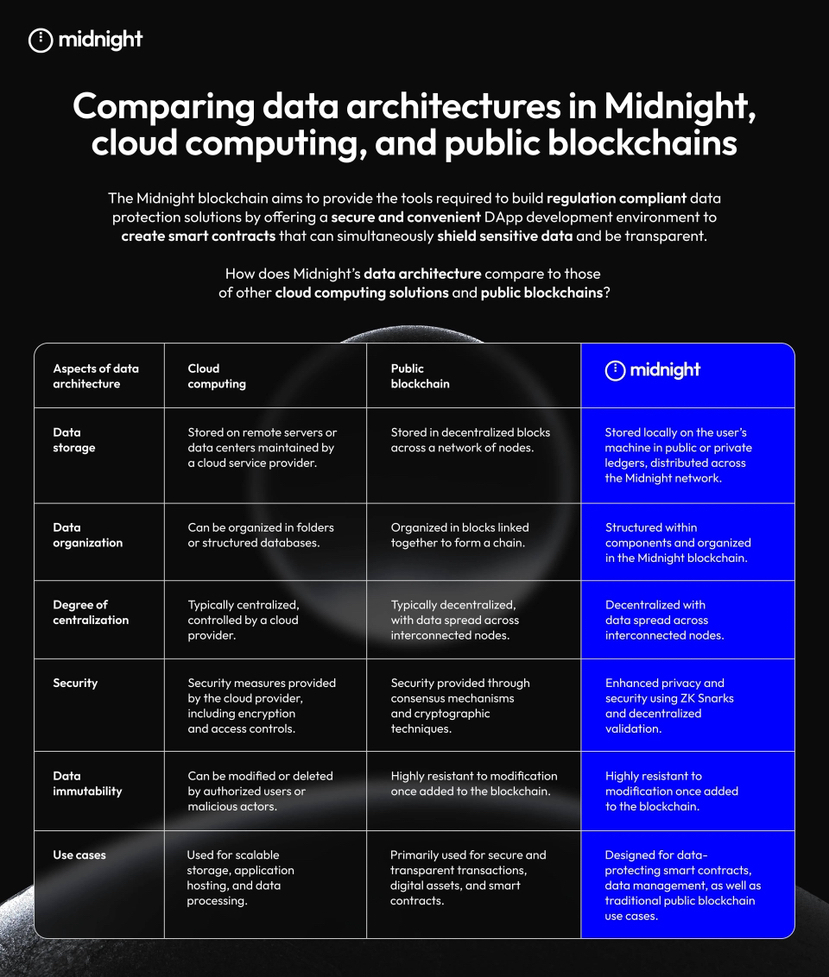
Because when you really look at it, most blockchains today are radically transparent. Every transaction is visible. Wallet activity can be traced. Anyone with the right tools can follow the flow of funds.
From a security perspective that transparency is powerful.
From a business perspective… not always.
Imagine a company running financial infrastructure on a network where competitors can watch every transaction in real time. That situation clearly creates problems.

This is probably one of the reasons privacy infrastructure has started getting more attention lately. And one project that keeps appearing in discussions is @MidnightNetwork
Midnight is being developed by Input Output Global, the same research and engineering group behind Cardano. Instead of removing transparency entirely, the project is exploring something slightly different.
They describe it as programmable privacy.
In simple terms, certain information can remain private while the network still verifies that everything happening on-chain is legitimate.
This is where zero-knowledge proofs start to play an important role.
With this type of cryptography, a system can confirm that a statement is true without exposing the underlying data.
A simple example: someone could prove they meet certain identity or compliance requirements without revealing their personal details. The validation still happens — the private information simply never appears publicly.
Because of this property, zero-knowledge technology has been attracting a lot of attention across the industry. Some researchers even believe ZK systems could become a foundational part of future blockchain infrastructure.
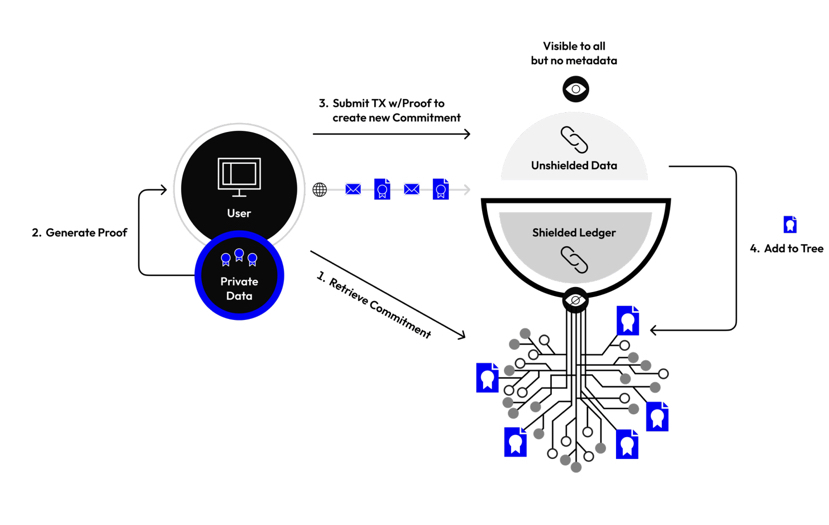
Midnight builds on that idea with an architecture that separates private computation from public verification.
Smart contracts can run privately, while the blockchain records cryptographic proofs showing that the computation was valid. The network still maintains security guarantees, but sensitive information isn’t broadcast across the entire chain.
For developers, that opens up a number of possibilities.
Things like confidential DeFi applications, identity layers, enterprise data sharing systems, or governance frameworks where certain data needs to remain restricted
Within the ecosystem, the main token is $NIGHT
Holding it allows participants to take part in governance and support the operation of the network. The projected supply is around 24 billion tokens, and early distribution is designed to reach multiple crypto communities.
Instead of concentrating everything in a single ecosystem, Midnight is distributing tokens through a mechanism known as the Glacier Drop, which includes users connected to Bitcoin, Ethereum, and Cardano.
Another interesting part of the design involves something called DUST.
DUST functions more like a resource used inside the network. Private transactions consume DUST during execution.
Users who hold NIGHT generate DUST, which separates the economic value of the token from the computational resources needed for private operations.
Stepping back a bit, privacy infrastructure could easily become a much larger sector within crypto over the next decade.
As blockchain technology gradually moves beyond retail speculation and toward institutional or enterprise usage, the need for confidentiality becomes difficult to ignore.
Not every dataset can exist on a fully transparent ledger.
Because of that, several projects are exploring zero-knowledge based systems. Networks such as zkSync, Starknet, and Aleo are experimenting with different approaches to this technology.
Whether Midnight succeeds will ultimately depend on developers building real applications on top of it.
Still, the direction itself is interesting.
For a long time blockchain has been defined by transparency.
The next stage might be about finding the balance between verification and privacy.
And that’s essentially the problem Midnight is trying to address.
