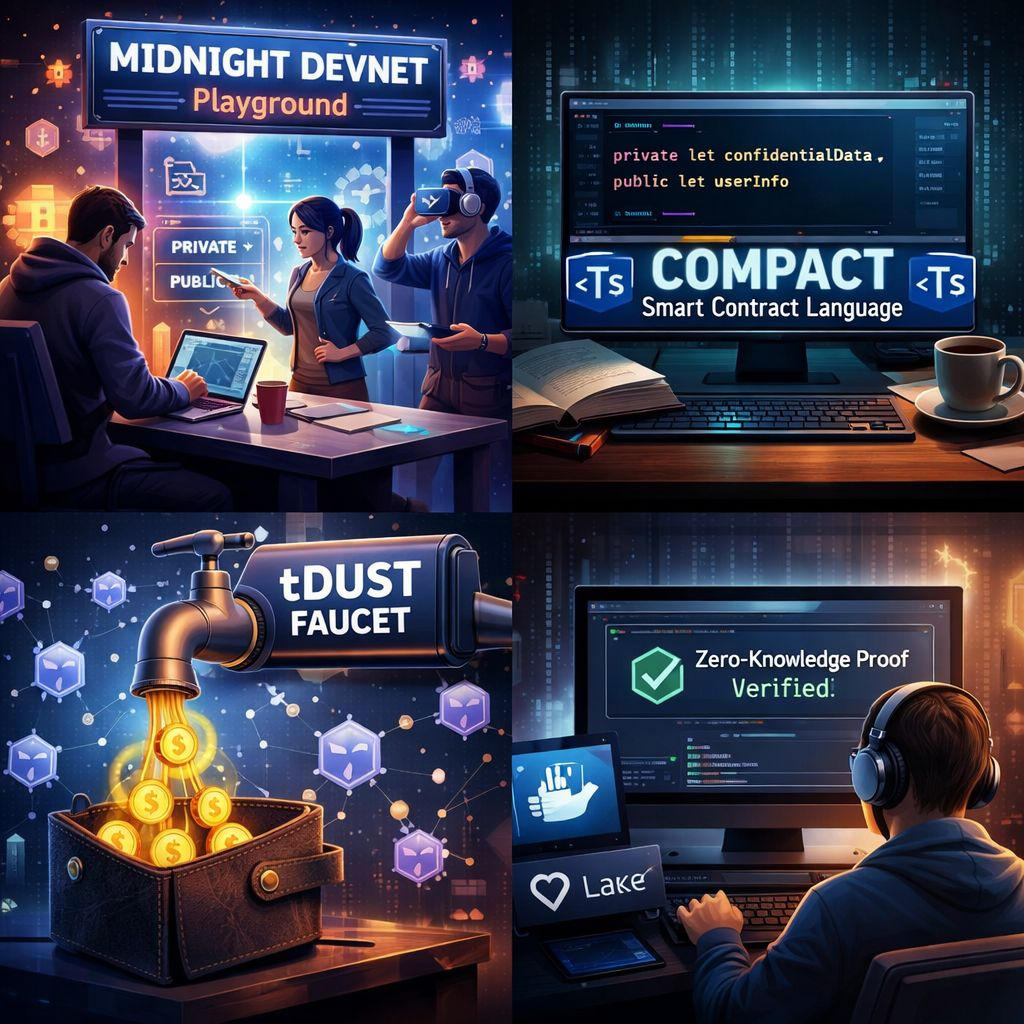
I realized that the Midnight devnet is more than just a place to test a blockchain. It actually feels like a playground where people can experiment with privacy technology. The devnet started in 2023 and was designed so that both experienced blockchain developers and beginners can try building privacy-focused smart contracts. What I found interesting is that even people who don’t have deep blockchain knowledge can explore it. Developers can first test their ideas locally on their own computer and then deploy them to a public blockchain environment.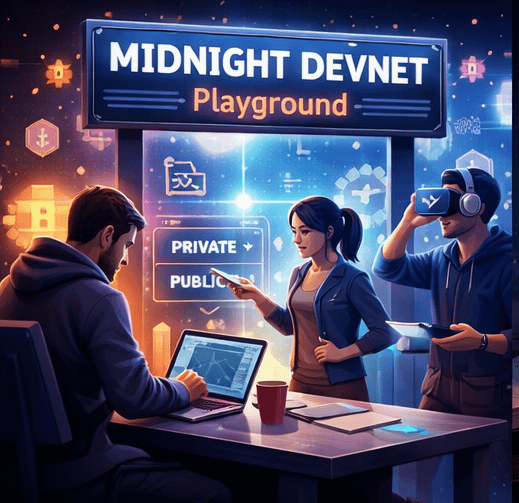
The tools are designed to be simple and developer-friendly. Midnight created a smart contract language called Compact, which is similar to TypeScript. Since many developers already know TypeScript, it becomes easier for them to start building on Midnight. In Compact, developers clearly define which parts of a contract are public and which parts are private. Some complex TypeScript features were removed so that the code can be verified more easily. Because of this, developers do not need to be experts in cryptography to create applications.
After writing a contract, a developer can compile it and send it directly to the devnet. From there, it can be tested using a browser wallet, and the application can even be shared with other testers so they can try it as well.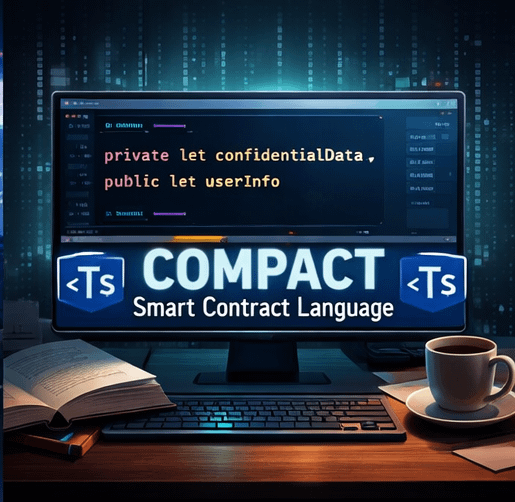
Inside the devnet there is also a special testing token called tDUST. This token only exists for testing purposes and has no real value. Testers can receive tDUST from a faucet and use it to pay transaction fees or move shielded assets while experimenting on the network.
Midnight also provides several helpful tools for developers. Users can interact with Midnight assets through a Chrome extension, generate zero-knowledge proofs using a local worker, read blockchain data through a pub-sub service, and build applications using a VS Code extension.
One important feature is that most of these tools run directly on the developer’s own computer. This means developers do not need to send sensitive data to external servers while building or testing their apps.
The proof server usually runs locally as a Docker container on port 6300, and the Lace wallet connects directly to it. This setup allows developers to build applications that can meet strict data-protection requirements. Sensitive personal or financial information can stay off-chain while still proving that certain rules or checks were successfully completed.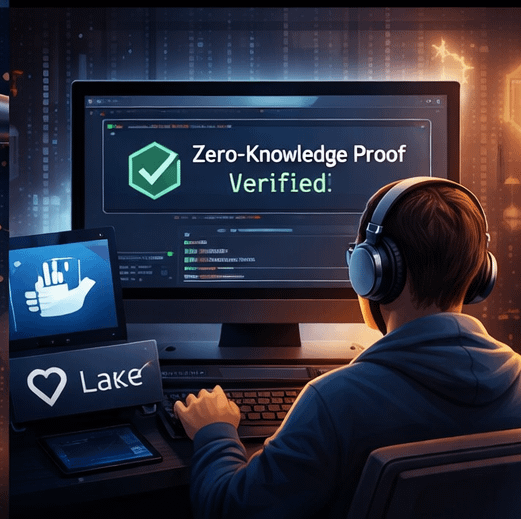
After exploring the devnet, I started to understand why Midnight talks so much about programmable privacy. The platform makes it easier for developers to build privacy-focused applications. Instead of making privacy complicated, Midnight tries to make it practical for everyday developers. Zero-knowledge applications stop being just a theory and become something people can actually build and test.
For me, the most interesting part is that the devnet allows developers to control how information is shared. Privacy here is not just about hiding everything. It is about choosing what information should be public and what should remain private.