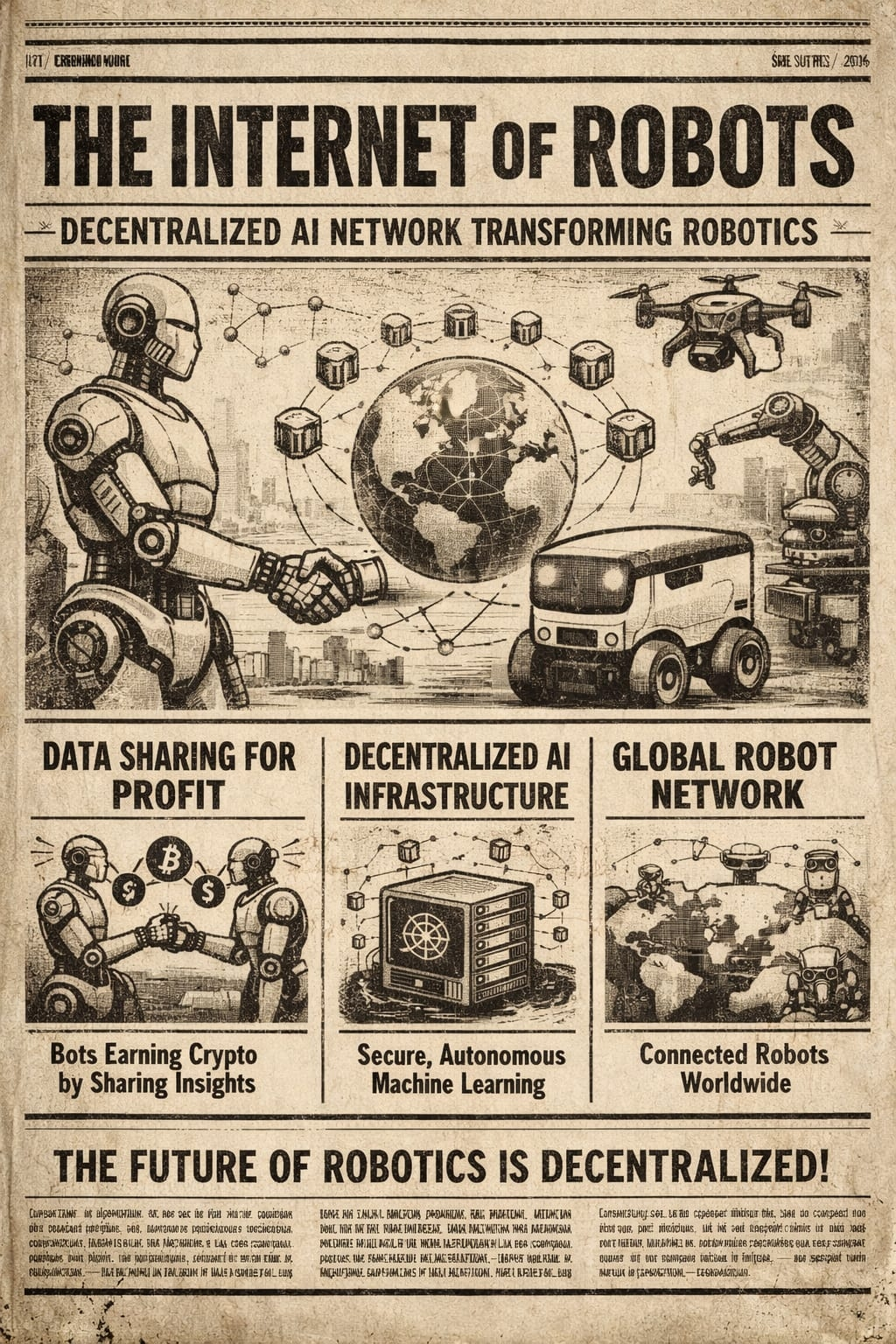
Robots aren’t just metal arms on factory lines anymore. They’re evolving drones handle deliveries, warehouse bots tackle logistics, and autonomous vehicles constantly process streams of environmental data. But here’s the catch: even with all this progress, most robots still depend on centralized systems for coordination, updates, and sharing intelligence. It’s a bottleneck that threatens scale and resilience. One outage or compromise, and the whole fleet grinds to a halt.
Fabric Protocol flips that model. Instead of central hubs, it uses blockchain to give robots a decentralized network for intelligence aiming to tear down the old walls and turn robots into direct contributors and beneficiaries of shared knowledge.
The Centralized Bottleneck
Robots generate mountains of data: sensor feeds, maps, performance stats, environmental observations the raw material of intelligence. Traditionally, cloud providers scoop up this data, process it, and serve it back through closed platforms. That approach, while serviceable in the early days, brings three major headaches.
First, data ownership gets messy. The company that collects the data typically controls its value even if a robot picks it up far from headquarters. Whoever owns the central servers owns the data.
Second, there’s no easy way to let intelligence build on itself and spread. Say a warehouse robot discovers a better way to navigate. How does a delivery drone in another network benefit from that insight? In centralized systems, it usually can’t. Innovations stay siloed.
Third, centralized systems create single points of failure. If a control provider suffers an outage or a security breach, entire robot fleets are left stranded. Resilience takes a hit.
Fabric Protocol’s answer: a decentralized intelligence layer. Here, robots don’t just consume intelligence they contribute, verify, and even monetize it.
Fabric’s Core Architecture
Fabric sees each robot as an independent economic agent. Robots aren’t just machines; they’re nodes in a peer-to-peer network. They generate data, offer computational power, and tap into a shared pool of AI models and insights, all managed on-chain.
The protocol’s three main pillars:
1. Decentralized Data Markets
Robots constantly produce high value data environmental scans, route optimizations, performance metrics. Fabric turns these datasets into on chain assets that robots and their operators can trade. Data flows across the network, and suddenly, machine knowledge isn’t just used internally; it’s tokenized and exchanged.
2. Shared Machine Learning Infrastructure
Robots, under Fabric, collaboratively train and improve models. Each robot submits local observations, enriching global models, yet doesn’t have to reveal sensitive underlying data. This isn’t just theoretical it’s a design echoing the best ideas emerging in decentralized AI.
3. Incentive Mechanisms via Tokens
Decentralization relies on solid incentives. Fabric’s token system rewards data contributions, model improvements, and validation. Nodes that provide genuine intelligence get paid, binding economic rewards to the network’s growth and resilience.
Why Fabric Matters Now
Fabric sits at the heart of two of crypto’s biggest themes: scalable AI infrastructure and the rise of decentralized physical networks (DePIN). AI models crave ever larger, authentic datasets, while robot fleets generate real world data 24/7. Fabric creates a bridge transforming robots from isolated tools into full fledged networked participants and data providers.
If Fabric succeeds, it opens the door to a new kind of blockchain infrastructure one where online value flows aren’t just digital, but extend into fleets of machines acting independently in the real world.
Risks and Caveats
This vision doesn’t come without challenges. Robot hardware is still a patchwork; standardizing interfaces and protocols across devices is a tough nut to crack. Verifying data quality is another hurdle networked models are only as good as the inputs they receive. And then there’s the regulatory side: governments haven’t figured out who owns the rights to robotic data or set clear legal rules for machine autonomy.
Final Takeaway
Fabric Protocol marks a turning point a move from robots as silent tools to active network participants who generate, trade, and benefit from intelligence. For those building or investing in the crypto space, the crucial insight is this: the next wave of decentralized infrastructure will go beyond computers and users. It will connect robots, machines, and real world activity. Understanding this shift is vital for recognizing opportunities at the collision point of AI, robotics, and blockchain.