
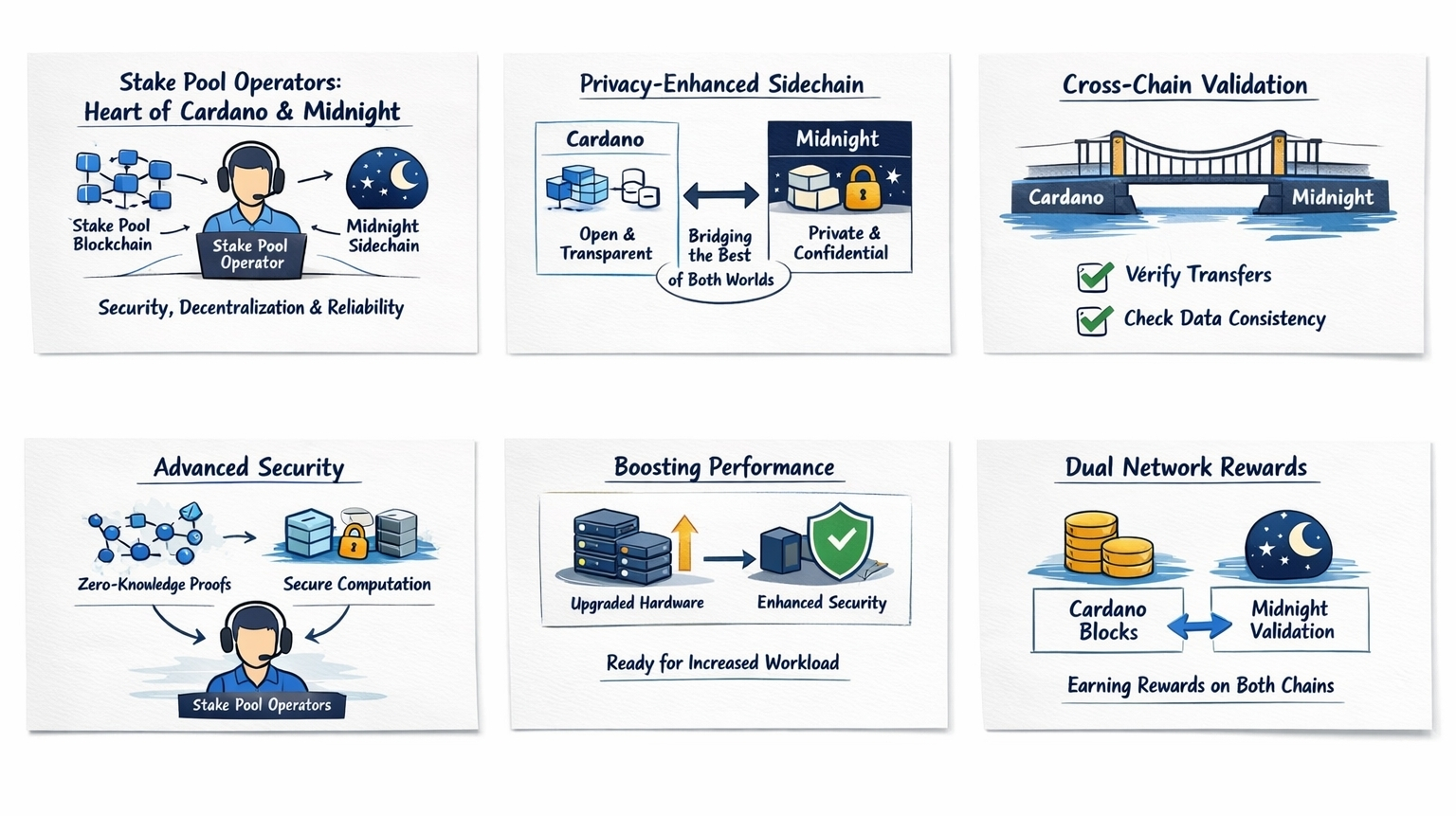
Stake pool operators really are heart of the Cardano network they’re steady force working behind the scenes while everything else grab the headlines. They validate transactions, produce block, keep the network decentralized and running smoothly. But to me, they’re more than just tech people at the keyboard. They’re trusted steward looking out for the whole ecosystem. When someone delegates their stake to a pool, it feels like the community saying, “We trust you; we want you handling this.” It’s how the network decides who gets a say in consensus. And with that trust comes a real responsibility to keep things running reliably for everyone involved.
Now things are changing. The introduction of Midnight Network a privacy-first sidechain make the whole setup much more interesting. Midnight brings something new to the table: privacy, but not at the expense of transparency. That’s a big deal in blockchain. On Cardano, everything stays open and auditable, but Midnight protects sensitive data when it’s needed. You end up with a network where trust and privacy both have their place where you can prove something happened, but don’t have to reveal all the details. That’s a pretty compelling direction.
What strikes me about all this is how operators aren’t just running basic infrastructure anymore? They’re stepping into new territory, helping Cardano and Midnight work together as one system. Their experience keeping nodes healthy gives them an edge when it come to things like cross-chain communication. They’re not just watching a single chain; they’re making sure transactions moving between Cardano and Midnight stay accurate and secure. Their role is shifting from technical to absolutely crucial they’re the glue holding the pieces together.
This cross-chain work raises the stakes. Operators now have the job of verifying that assets and data move correctly between chains. If something slip, confidence in the whole system take a hit. So, I see their job as not just technical maintenance but protecting the integrity of both networks. They’re out there catching inconsistencies before they turn into real problems.
Privacy adds another level of challenge and intrigue. Midnight leans on some serious cryptography like Zero-knowledge proofs and Secure multiparty computation. I find these ideas fascinating; you can prove you know something without revealing what that something is. Operators don’t have to see sensitive data, but they’re still making sure those cryptographic proofs check out, that every transaction stick to the rules and nothing slips through the crack.
That’s a shift in what it means to validate transactions. It’s not just about checking what’s on the surface, but trusting and verifying some pretty complex math running underneath. Operators need to know their stuff on top of running infrastructure, now they need to understand how these cryptographic systems fit into the bigger picture.
Bridging Cardano and Midnight isn’t simple. These cross-chain bridges are tricky, and if they aren’t managed well, things can break in very expensive and public ways. Operators have to make sure everything lines up consensus mechanisms, asset transfers, and whole package. It stop problems like double-spending and ensures that when you lock something on Cardano, it’s reflected right on Midnight. They’re acting like the referees, keeping both sides fair and in sync. If they weren’t there or lost focus, risks would skyrocket.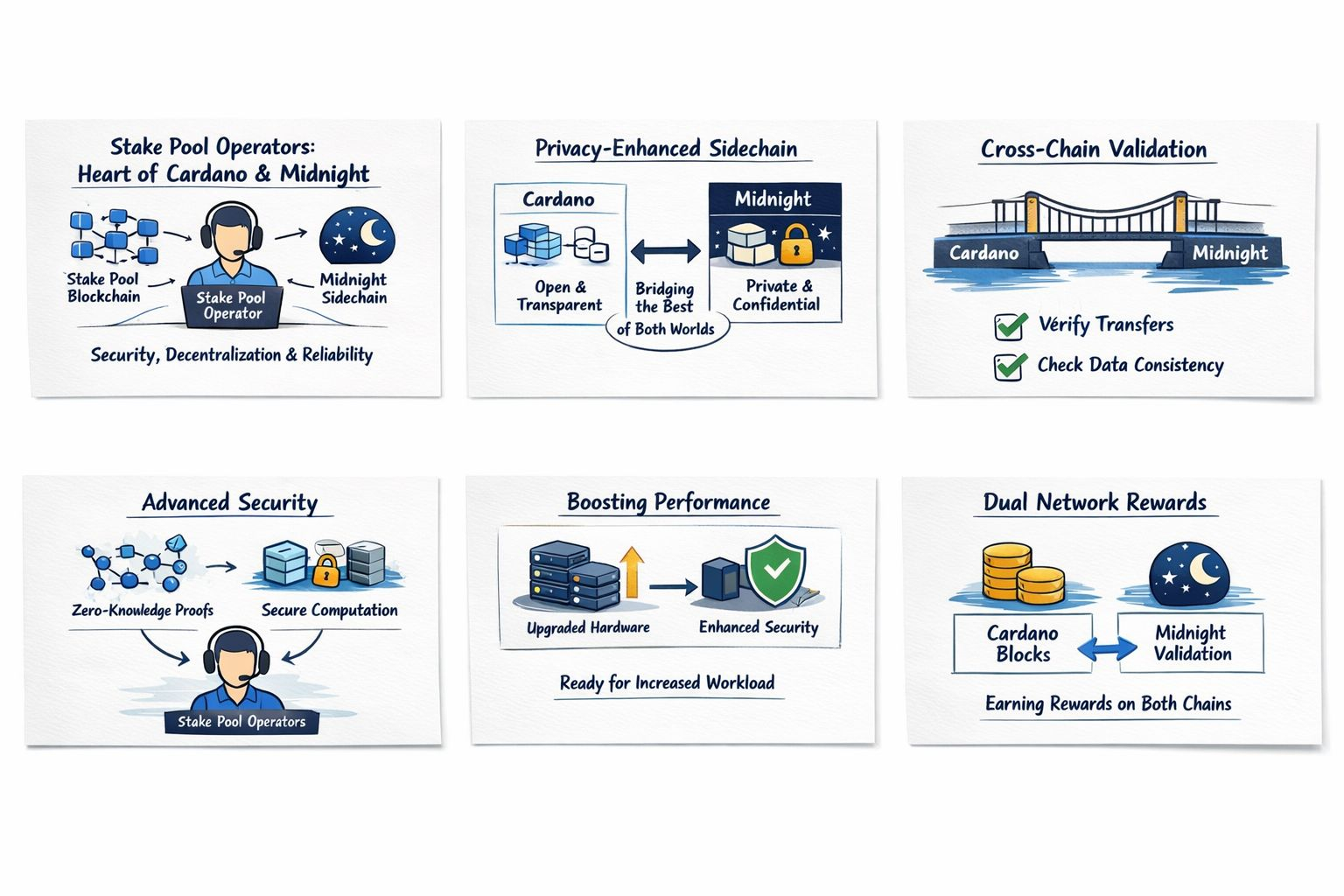
Because of all this, reliability matters more than ever. Operators can’t afford outages. They need to monitor their systems closely keep security tight and with the extra demand Midnight bring maybe even upgrade their gear. It’s about staying ahead of possible problems, not just reacting to them when something goes wrong.
Security’s getting tougher too. As Cardano and Midnight grow more connected, there are more holes for attackers to try and exploit. Operators have to be relentless patching systems watching for new threats running best practices day in and day out. That’s what keep the network safe, even while it’s growing and changing.
The economics are shifting too. Operators might start earning rewards not just for blocks on Cardano, but also for helping validate on Midnight. That feels fair; they’re taking on more work and more risk, so it makes sense they’d get more out of it. This will probably encourage operators to get even more deeply involved with both networks, keeping the whole thing stronger in the end.
Even delegators the folks choosing which pools to support stand to gain. By backing pools that work across both Cardano and Midnight, they get to help shape how the network grows. They matter in this process, not just as bystanders, but as people who influence which operators really drive progress.
Overall, stake pool operators have moved from block producers to something way bigger. They’re at the core of both Cardano and Midnight, trusted to handle new technology and growing expectations. Their blend of experience and technical skill is what allows all this innovation to take off. We’re heading into a blockchain world where both privacy and transparency matter, and operators are central in making that possible and sustainable.
In the end, that seem to reflect what people want from tech these days: systems that are open when they need to be, private when it counts, and reliable no matter what. Operators are doing that hard work making sure everything fit together always on, always trustworthy. The whole ecosystem depends on them getting it right.
