

Real-world asset tokenization has quietly become one of the most significant financial infrastructure shifts happening right now. What started as a niche experiment in decentralized finance has exploded into a 35 billion market that's attracting the biggest names on Wall Street.
At its simplest, tokenization means taking something like a Treasury bond, a building, or a loan and representing it as a digital token on a blockchain. Instead of calling your broker and waiting days for settlement, you can trade fractional ownership instantly, 24/7, with anyone in the world. The token itself is programmable it can automatically pay you yield daily, enforce ownership restrictions, or settle trades in seconds rather than days.
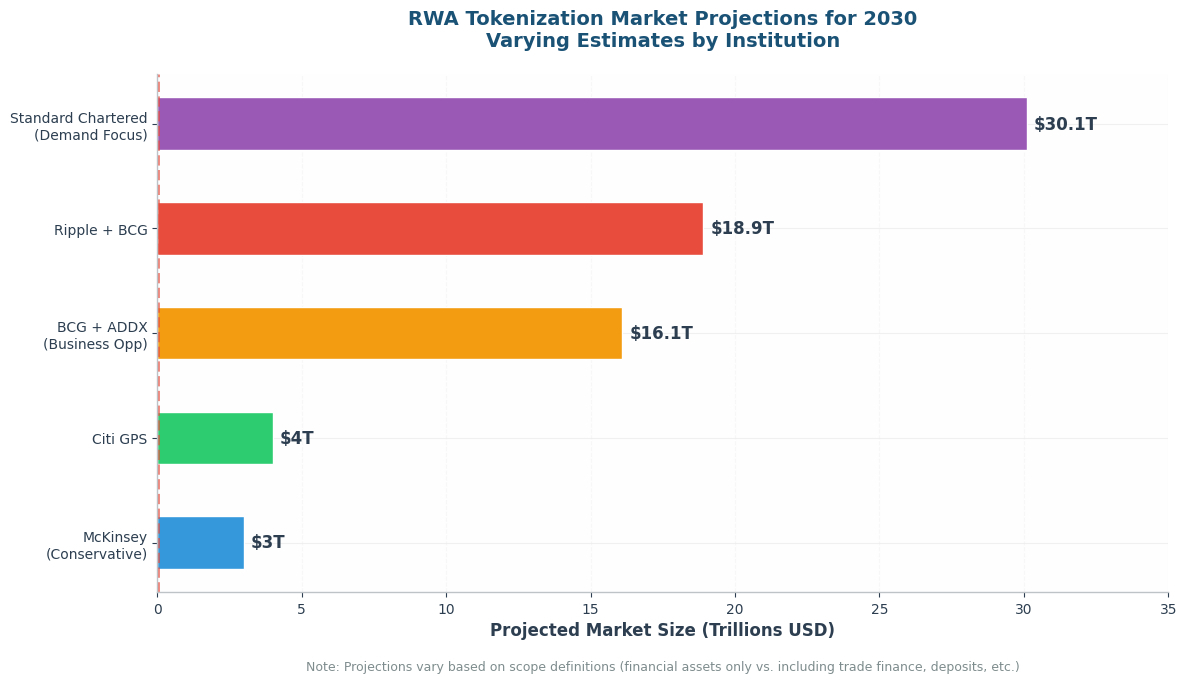
The numbers tell a compelling story. The market has grown over 700% since 2022, and conservative estimates put it at 2 to 4 trillion by 2030. Some projections go as high as 30 trillion when you include things like trade finance and deposits. But what's more interesting than the forecasts is who's actually building this infrastructure.
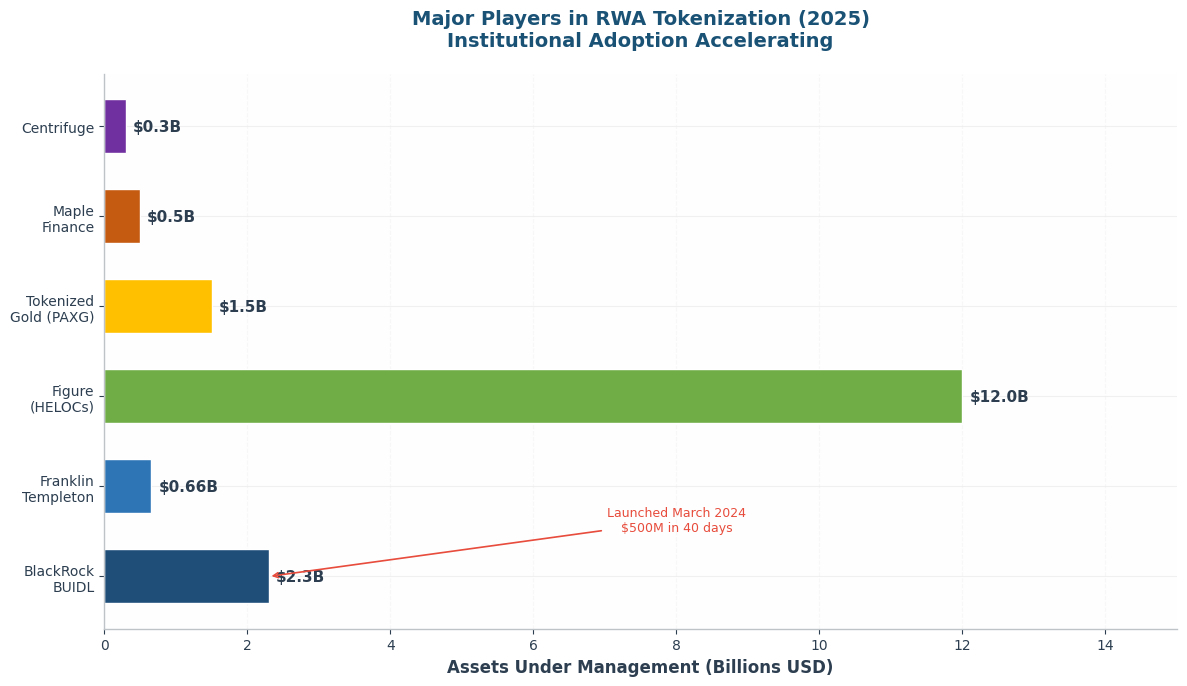
BlackRock changed everything when they launched their BUIDL fund in March 2024. It hit half a billion dollars in 40 days and now manages over 2.3 billion. Larry Fink has been remarkably direct about where this is heading, stating that every asset can and will be tokenized. When the world's largest asset manager with 11 trillion under management goes public with that conviction, competitors listen. Franklin Templeton, JPMorgan, and Apollo have all followed with their own tokenized products.
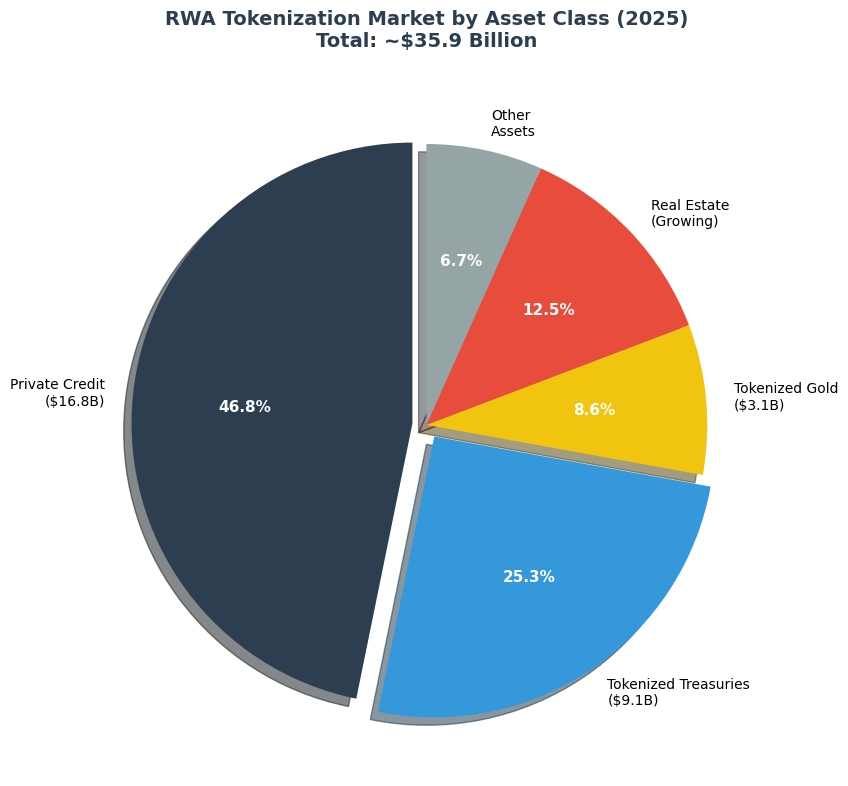
Private credit has emerged as the dominant use case so far, with nearly 17 billion in tokenized loans and receivables. Companies like Figure have put over 12 billion in home equity lines on-chain. Tokenized Treasuries come next at around 9 billion these function essentially as on-chain money market funds paying out yield automatically. Even gold has found a second life as a digital asset, with over 3 billion in tokenized form that trades with the liquidity of a cryptocurrency while representing physical bullion in vaults.
What's driving this acceleration isn't just crypto enthusiasm. Settlement times have collapsed from two days to instant. Issuance costs for bonds have dropped 60-70%. Real estate investments that were previously locked up for years can now trade on secondary markets with 30-45% better liquidity. The technology has matured to the point where institutions can actually use it without compromising their security or compliance standards.
Regulation is catching up too. The EU's MiCA framework is now live, Singapore and Dubai have created clear pathways for digital assets, and even the US is advancing stablecoin legislation with bipartisan support. This regulatory clarity removes the existential risk that kept many institutions on the sidelines.
Of course, challenges remain. Custody is still centralized—you're trusting issuers to actually hold the assets they claim. Legal frameworks for smart contract enforcement are untested in most jurisdictions. And the governance tokens of many RWA protocols have actually lost significant value even as the underlying assets grew, suggesting the value capture isn't straightforward.
But the direction feels settled. We're moving from a world where financial assets exist in siloed databases with manual reconciliation, to one where ownership is programmable, settlement is instant, and markets never close. The infrastructure being built today will likely underpin how the next generation of securities are issued and traded. Whether that represents a 2 trillion opportunity or a 30 trillion one, the shift itself increasingly looks inevitable.
#FTXCreditorPayouts #BinanceKOLIntroductionProgram #MarchFedMeeting #SECApprovesNasdaqTokenizedStocksPilot #USFebruaryPPISurgedSurprisingly