
I’m not convinced the ecosystem is as ready as it sounds.
Not for this. Not yet.
#signdigitalsovereigninfra gets framed like an upgrade — better identity, better control, cleaner verification. But that framing misses something important.
This isn’t an upgrade.
It’s a replacement.
And replacements don’t happen just because they’re better. They happen when the current system starts breaking in visible ways.
Right now, centralized identity still works.
It’s flawed, exposed, occasionally inefficient — but still functional enough that no one feels forced to move.
That’s the gap.
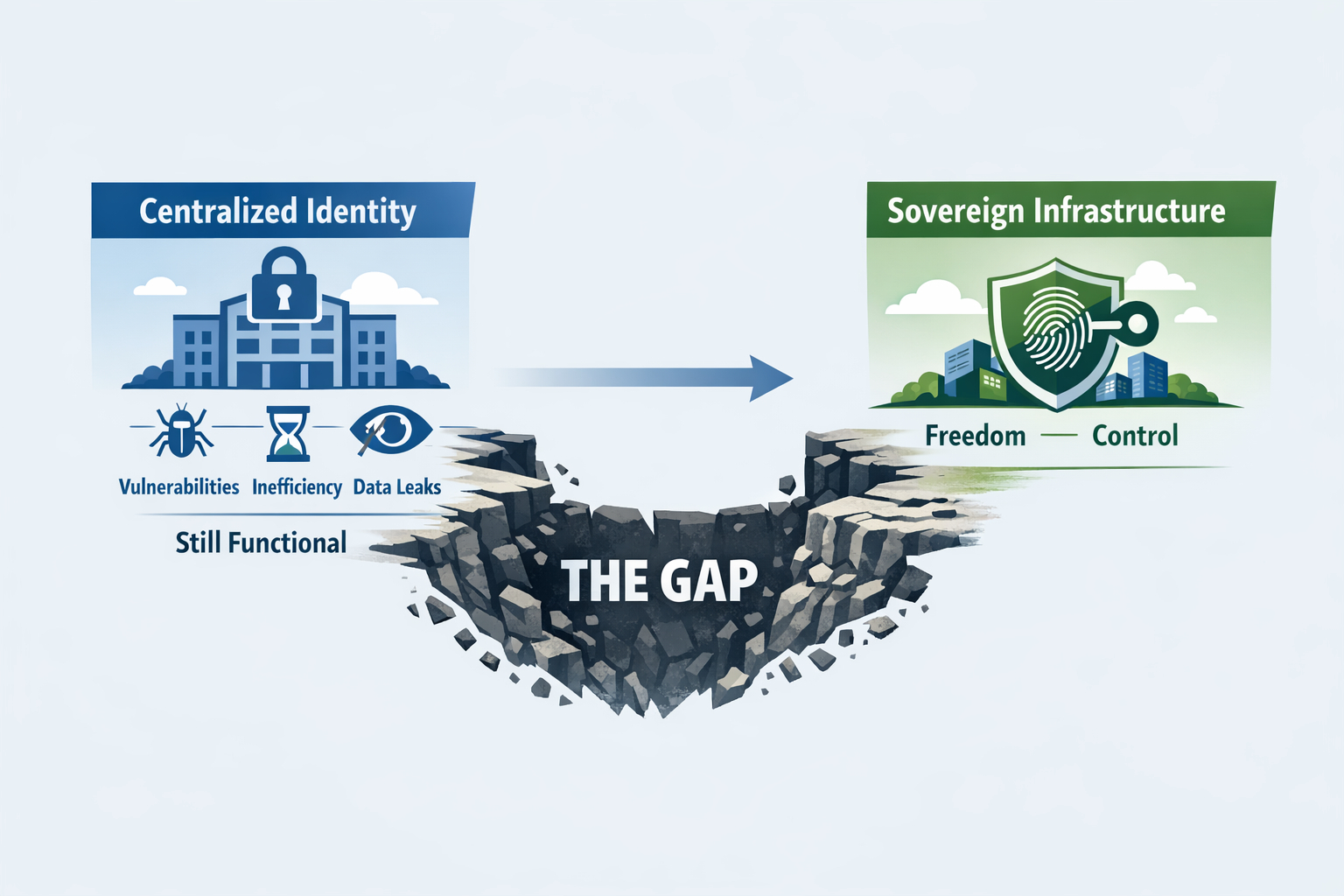
Sign’s model — attestations, on-chain verification, user-controlled identity — is built for a world where trust in intermediaries erodes. Where proving something without revealing everything becomes necessary, not optional.
We talk about that world like it’s already here.
It isn’t.
So what you’re left with is infrastructure that feels ahead of its environment.
Technically aligned.
Conceptually sound.
But contextually early.
And early infrastructure has a strange gravity. It attracts attention, experiments, pilot integrations… but rarely full commitment. Not until the external pressure shows up.
That pressure is the missing variable.
Because once systems start failing at scale — breaches, misuse, jurisdictional conflicts — the narrative flips quickly. What felt like overengineering starts looking like the minimum requirement.
That’s where Sign could matter.
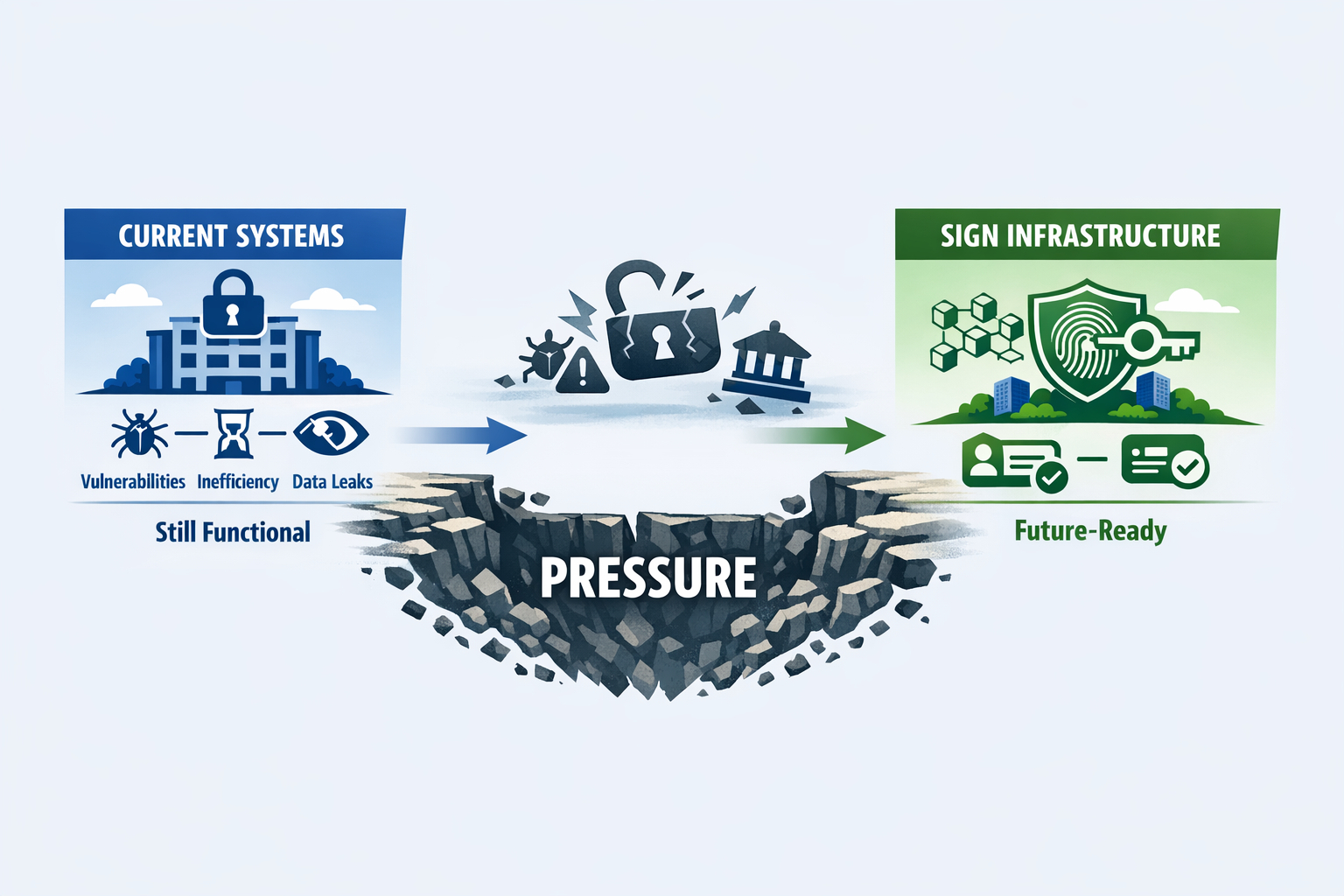
But until that shift happens, it exists in a kind of liminal space.
Respected. Discussed. Positioned well.
Yet not fully necessary.
And necessity is what turns infrastructure into default behavior.
I don’t see #SignDigitalSovereignInfra as early adoption.
I see it as pre-condition infrastructure.
Something that becomes obvious only after the current model stops working.
We’re not there yet.
But we’re probably closer than it feels.
