
Do you ever feel like Web3 is evolving quickly, yet something essential still feels incomplete? New technologies are introduced every day, ecosystems are expanding, and digital economies are growing, but one key layer often goes unnotiCed trust. Without a reliable way to verify identity, credentials, and participation, even the most advanced systems can struggle to function efficiently. This gap may not always be visible at first, but oVer time, it becomes clear that without strong verification, fairness and transparency begin to weaken.
Now think about how digital identity works today. Information exists everyWhere, but it is fragmented. Credentials are issued, but they remain locked within specific platforms. Participation is recorded, but it is not always recognIzed across systems. These small disconnects create larger inefficiencies, especially when users move between ecosystems. What’s missing is nOt innovation, but connection something that ties identity, data, and value together in a trustworthy way.
This is where @SignOfficial introduces a different perspective. Instead of focusing only on transactions or surface level features, it builds a deeper infrastructure layer based on verifiable credentials and structured token distribution. This means information is no longer just stored, it becomes proVable. Once a credential is issued, it can be verified and reused across multiple ecosystems without needing repeated validation. This concept may sound simple, but its impact is far reaching because it tranSforms how trust is established in digital environments.
A system where trust is verIfied.
A system where credentials are portable.
A system where vaLue flows accurately.
Consider token distribution, for example. Many projects aim to reward users, but without strong verification systems, outcomes can become distorted. Bots exploit weaknesses, genuine users are overloOked and fairness becomes difficult to maintain. This pattern has been seen across multiple ecosystems, and it highlights a deeper issue distribution without verifIcation leads to imbalance.
Sign changes this approach by linking distribution to verifiable data.
Instead of guessing, it verifies.
Instead of broad allOcation, it targets.
Instead of imbalance, it promotes fairness.
A small real world scenario makes this clearer. There have been cases where higHly active participants in a project received little to no reward, while automated or inactive accounts benefited simply because the system could not differentiate effEctively. This creates frustration and reduces trust over time. When systems fail to recognize genuine contribution, users lose confidence.
Fair recOgnition requires verification.
Verification requires infrastructure.
Infrastructure is what Sign provides.
Another important dimension is how this connects to digital sovereignty. As more regions and institutions invest in digital transformation, the need for systems that offer both control and transparency becomes critical. Centralized systems offer control but limIt openness, while decentralized systems offer openness but can lack structured verification. Bridging this gap is essential for sustainable growth.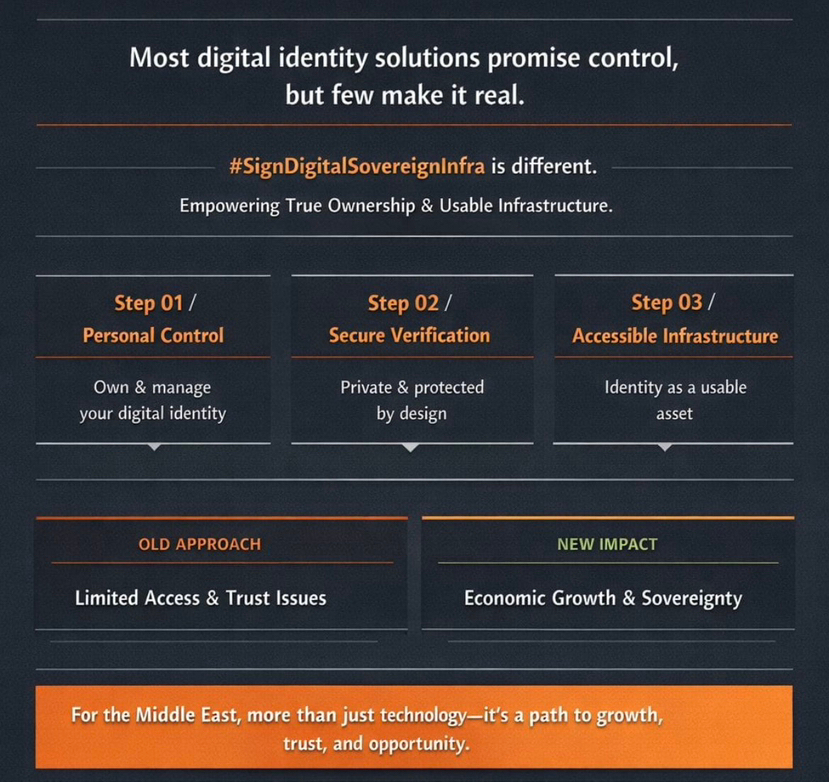
Sign operates in this space.
It enables independent credential issuance.
It ensures global verifiability.
It supports both control and transparency.
Now think about broader applications beyond crypto. In education, credentials often take time to verify. In employment, proving experience across borders can be difficult. In digital services, identity verification can create friction. These challenges are not limited to one sector they exist everywhere digital systems operate.
Sign introduces a universal solution.
Credentials become portable.
Verification becomes instant.
Trust becomes scalAble.
Another key strength lies in adaptability. Instead of replacing existing systems, Sign enhances them. It acts as a layer that integrates with different ecosystems, improving their reliability without disrupting their structure. This makes it flexible and future-ready, capable of supporting various use cases across industries.
Stronger systems require stronger foundations.
Better foundations eNable better growth.
Better growth leads to real adoption.
It’s also important to understand that infrastructure like this often develops quietly. It may not generate immediate hype, but it builds long-term value. Many of the most impactful technologies operate behind the scenes, supporting systems that people rely on daily without always noticing.
Not everything valUable is visible.
Not everything impactful is immediate.
Some innovations define the future silently.
As digital ecosystems continue to expand, the need for trust will only increase. Systems will become more interconnected, users will interact across multiple platforms, and data will flow more freely. Without veriFication, this complexity can lead to inefficiencies. With verification, it becomes an opportunity for growth.
Sign positions itself at this critical point.
It connects systems.
It verifies interactions.
It enables fair distribution.
In many ways, this represents a shift in how Web3 is understood. It is no longer just about decentralization or financial innovation. It is about building systems that people can trust at scale. Trust is not a feature it is a foUndation. And without it, even the most advanced systems struggle to reach their full potential.
Sign focuses on this foundation.
It strengthens digital interactions.
It enhances system reliability.
It supports long term sustainability.
Looking ahead, the importance of verifiable infrastructure will contiNue to grow. As more industries adopt digital solutions, the ability to prove identity, validate credentials, and ensure fair distribution will become essential. Systems that can provide this layer will play a key role in shaping the future.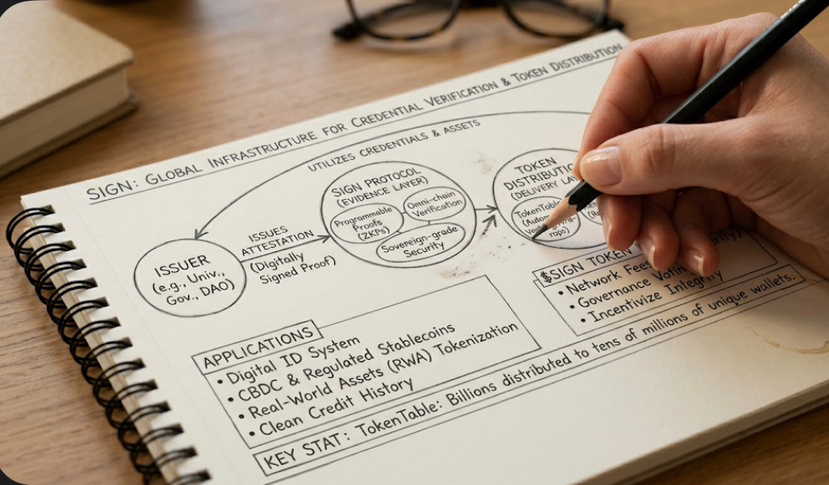

Sign represents that direction.
A direction toWard verified trust.
A direction toward connected systems.
A direction toward sustainable growth.
In conclusion, the evolution of Web3 is not just about innovation at the surface level, but about strEngthening what lies beneath. Trust, verification, and fairness are the pillars that support real progress. Without them, growth remains limited. With them, possibilities expand significantly.
Sign addresses these core needs.
It transforms how trust is built.
It improves how value is distributed.
It defines how syStems connect.