So, I found myself knee-deep in this $SIGN thing one night back in March—just doing my usual routine, drifting through random threads and half-finished whitepapers because apparently, I like self-inflicted confusion. I almost ignored the whole thing at first. Seriously, another so-called “identity layer”? I’ve lost count of how many pitches I’ve seen for that exact flavor of vaporware. But this time... I don’t know, something made me pause. They started talking about “work” you could actually prove—like, on-chain, not just dumped on some résumé where you’re crossing your fingers that people trust you.
That really hit. Like, actually stung a bit.
Take a step back for a sec, and it makes sense. Remote work didn’t just get popular—it sort of exploded overnight and then fragmented into a thousand weird splinters. Everybody’s a freelancer or a DAO contributor or just some Discord rando with a clever username, and now AI’s out here eating half the gigs. And in all that mess, the same gnarly little question won’t shut up: How can you know who actually did what?
I’ve felt that pain, by the way. Hired this dev from some sketch Web3 board, right? Profile looked prime, GitHub flexed, sounded sharp on calls. But two weeks in... man. Deadlines ghosted, updates got slippery, and then outright vanished. Like, Houdini-level gone. No receipts, no trail—did the person exist at all? Zero accountability. I doubt I’m the only one; people just rarely admit it.
So, that’s the actual gap $SIGN is poking at.
They’re not chasing the whole hardcore identity thing—no passports, no KYC hoops, none of that. It’s more like, can you show up? Did you actually do the work? Can anybody else out there vouch for you—not just you saying you did something? Kind of feels like a living CV, except it’s a jumble of little signals stacked over time instead of a frozen brag sheet.
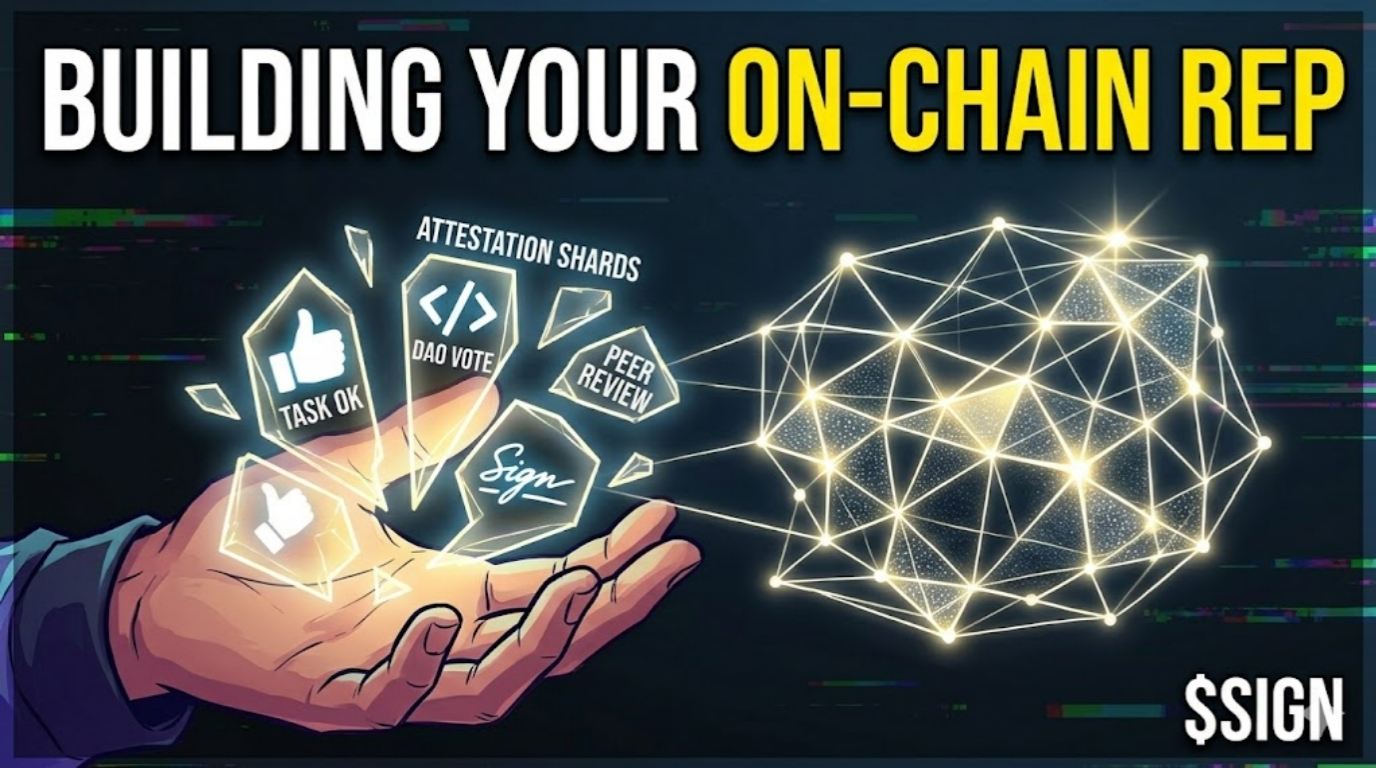
From what I’ve pieced together, SIGN is built around attestations. Not just you, but peers, bosses, protocols—they all leave little proofs that you completed some task or helped run a DAO vote or whatever. Do a thing, snag a credential. Keep piling those up, and eventually you’re lugging around a portable rep—something you can point to anywhere, not just inside one platform’s walls. It sounds messy, and it is, but messy’s the job, isn’t it?
There’s always a token (because of course)—the $SIGN token. You get paid, you reward honesty, maybe you stake to boost your credibility. To be honest, the whole incentive juggle is still a little murky to me. Kind of promises, kind of vibes—typical for anything crypto.
But here’s the real shift: moving away from “who are you?” and pasting on some tidy label, into “show me what you’ve done, for real.” Most on-chain ID projects just want a permanent anchor—name, wallet, badge. $SIGN’s more about anchoring your story in your actual work, not some fixed label.
Of course, problems sneak in.
Attestations? They can get gamed, obviously. Buddies vouch for each other, the digital version of giving your friends an A+ on RateMyProfessor, right? Or just cheesing reviews. We’ve seen that movie. It’s just got new blockchain wardrobe.
Then adoption—good luck. To actually mean something, these credentials have to land with platforms and employers who look at them and, you know, trust what they see. Outside the crypto echo chamber, that’s a bold ask.
And reputation itself is sticky. It’s never as clean as a score or a star. It’s full of context, weird backstories, moods—sometimes it’s a gut feeling. Good luck turning that into numbers or code.
Still, I keep drifting back to the bigger idea—not just $SIGN, but the whole shift. Work history as this wild, tangled stream of signals scattered across the web. Not tied to one company, not locked in some HR drawer. If this ever really takes off—even if it just half-works—it might finally make remote hiring less like hunting for hidden landmines. Maybe a little fairer, a lot messier, but definitely more “real world” than what we’re pretending to have now.
Honestly, it’d be an upgrade. Even if it’s rough around the edges.