


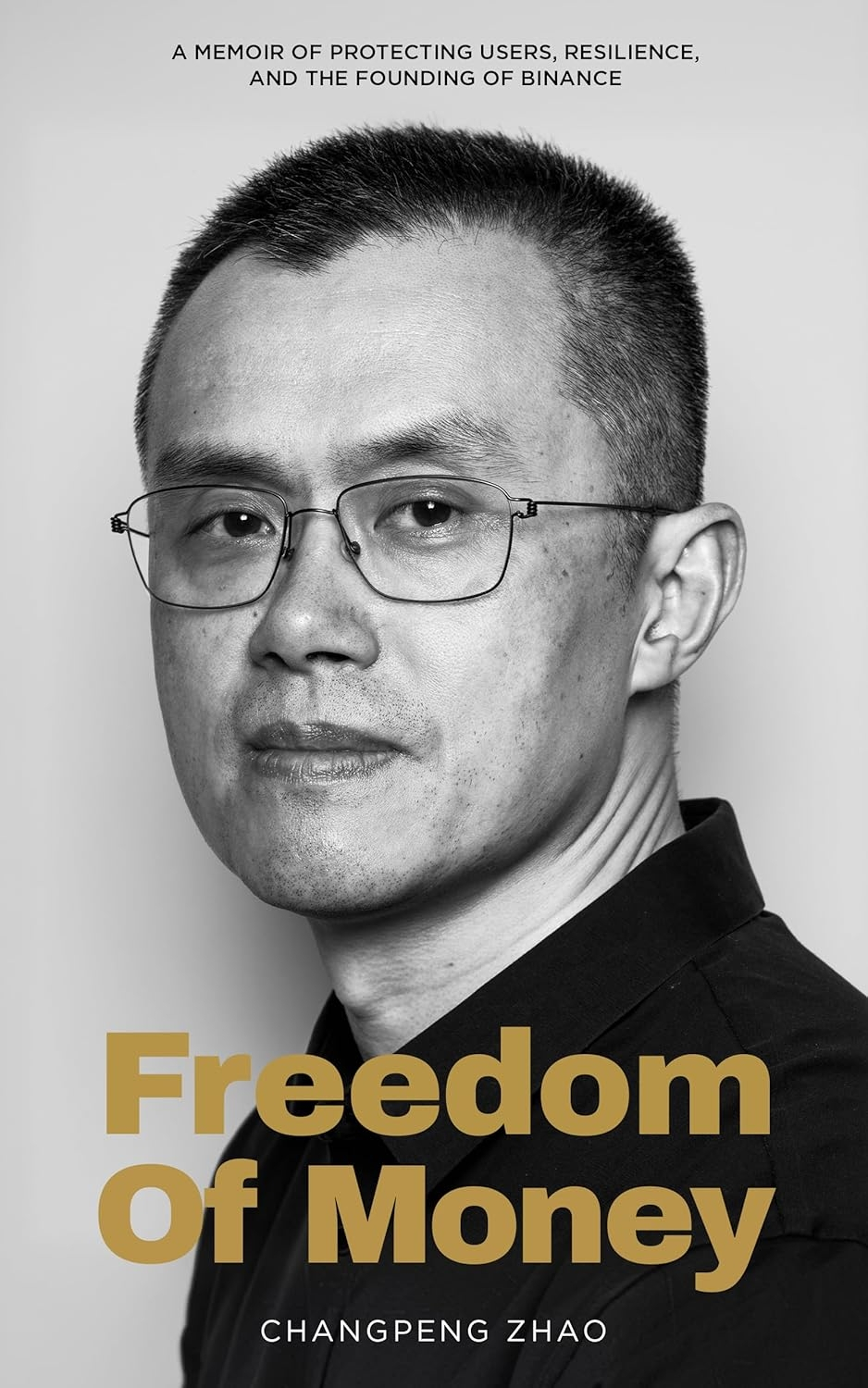
Well, have you noticed one thing... when we read the story of a great founder, do we actually read the story, or do we read narrative hidden within that story?
This question kept coming to my mind while reading this book "Freedom of Money". Because on the one hand, it is clearly a memoir - a man's struggle, rising from zero, survival instinct, taking risks... it's all there. But on other hand, it's not just a "life story". There is a very calculated framing here. I mean, how to reposition a controversial figure in public perception - a live example that. Look, @CZ 's early life part - rural China, dirt floor, struggle - this part is very intentional. It builds empathy. You connect with him emotionally. It's a classic storytelling technique, but it works. Then slowly narrative shifts - builder mindset, vision, execution speed... How did Binance grow - these come. But here too, the interesting thing is - they are not only showing sucess, but also mentioning chaos, volatility, regulatory pressure - these. I mean, they know that a completely clean story is not believable. That is why controlled imperfection has been kept. Now the real place comes in the controversy part. FTX collapse, Sam Bankman-Fried - these have mentioned, but very carefully. @CZ is not showing himself as a direct hero but rather putting himself in the position of "the one who survived". It is subtle, but powerful. And the issue with US regulators - this is honestly most sensitive part of the whole book.
If I am being completely honest -
Here they are pushing a very specific narative: it is not a crime, it is a compliance gap. I mean, not fraud or money laundering - just a paperwork issue. Now you can take it for granted if you want, or you can call it PR framing - both possible here. But what is clear is that - the attempt to shape the reader's perception is very strong here. One more thing to note - @CZ voluntarily went to the US, guilty plea, jail time - these said as if it not weakness, but integrity. Meaning, “I didn’t run away, I faced it.” This positioning is powerful, because it helps rebuild trust - completely..... but it is not one-sided at all.
If you look it with a cold mind, there were some structural advantages behind Binance’s rapid growth - regulatory arbitrage, speed over compliance, aggresive expansion. These come indirectly in book, but not fully unpacked - that is the limitation. Meaning, technical strength - scalability, liquidity depth, execution - these are real. #Binance has genuinely built a high-performance system. But the economic side - centralization risk, regulatory dependency, trust fragility - these are equally real. And honestly…
The book tries to balance these two, but not compltely neutral - slightly tilted, obviously. And honestly, it is expected. Because it is not an outsider analysis, it is insider narrative. So I would not call it pure truth or pure marketing - neither of two. It is a place in-between - a curated reality.
Finally, what I found interesting - #Binance is not just selling itself as exchange here. They are selling an idea: “financial fredom” targeting especially developing countries - where traditional banking is weak. This part is genuinely strong, but also risky at the same time - because tension betwen freedom and regulation will always be there. So yeah.... In the end, after reading the book, I felt - it is a story of @CZ , but equally it is an attempt to rebuild Binance's reputation. And honestly, it is not badly done.
But it is not worth believing with your eyes closed. You have to stand somewhere in the middle and read.............👀👍🤔💛
