
I’ve been testing a few Web3 games recently, not as an investor… but as a normal player. Just logging in, farming, exploring, doing small quests. No charts, no token tracking, no ROI calculation. And honestly… that changed how I see this entire space.
Somewhere along the way, I started asking a simple question. Are we actually playing games anymore, or are we just interacting with financial systems that look like games?
This question feels more relevant now than ever in 2026.
If you look at the current state of Web3 gaming, especially after the post-2024 correction phase, the data tells a clear story. According to multiple on-chain analytics dashboards and reports from organizations like , daily active users in blockchain gaming are still strong, often leading all other categories. But retention… that’s where things start to fall apart. Many projects see sharp drop-offs after initial token incentives dry up.
I’ve seen this cycle too many times. A new game launches, tokenomics looks attractive, early users farm aggressively, liquidity builds up, and then slowly… interest fades. Not because the rewards stopped, but because the game itself wasn’t strong enough to stand without them.
That’s where the real identity crisis begins.
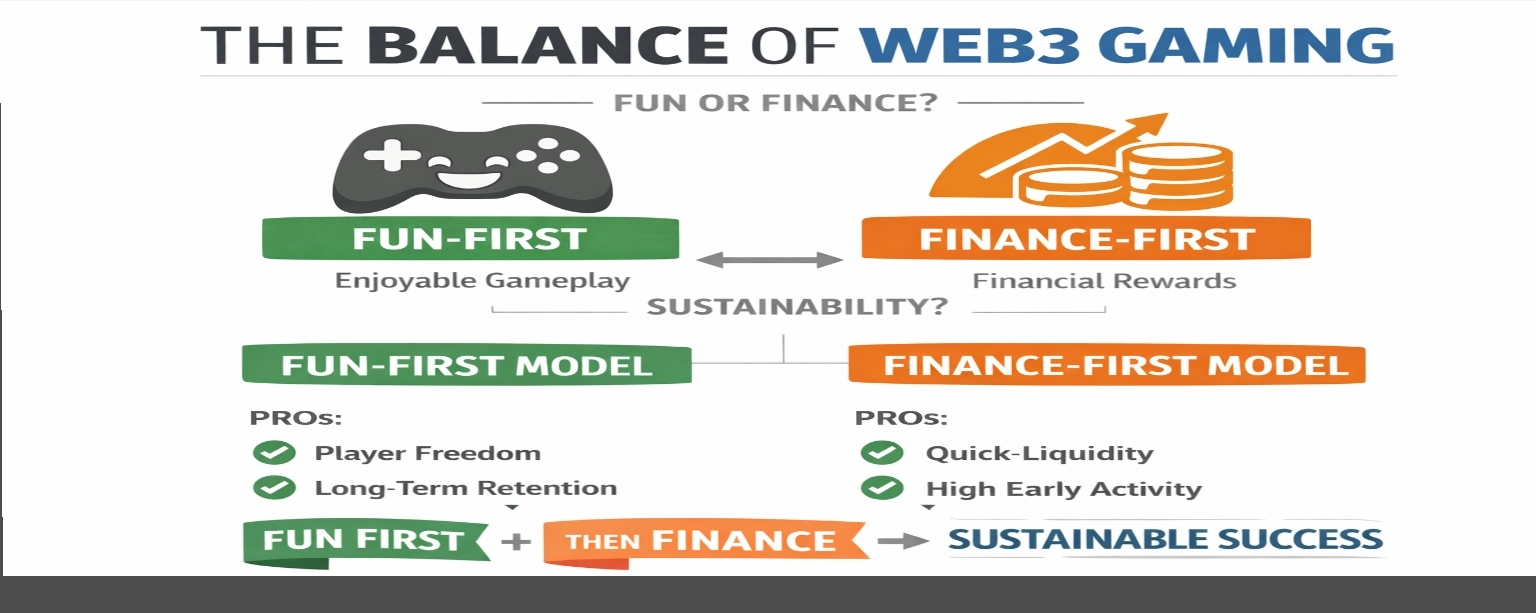
Is a Web3 game supposed to be fun first, or financially rewarding first?
From my observation, most projects still lean heavily toward finance. Tokens are introduced early, marketplaces go live quickly, and suddenly every in-game action has a price tag. Crafting, upgrading, even basic progression becomes tied to earning or spending. It feels efficient on paper. But in practice, it creates pressure. Constant pressure.
And pressure is the opposite of what makes games enjoyable.
Recently, while experimenting with , I noticed something different. The gameplay loop is simple. Farming, gathering, small interactions, open exploration. Nothing revolutionary. In fact, I’ve seen this loop many times in traditional games. But here’s the interesting part… I didn’t feel rushed.
I wasn’t thinking about how much I could earn per hour. I wasn’t checking token prices every few minutes. I was just playing.
And that made me pause.
Because according to the project’s litepaper and documentation, Pixels is trying to position itself as a “fun-first, open-ended world” where blockchain ownership exists in the background, not at the center. The in-game economy includes on-chain assets like land and resources, while also using off-chain systems like Coins to reduce friction. The premium token $PIXEL is there, yes, but it’s not forced into every action.
That design choice matters more than most people realize.
When you reduce financial friction, you increase player freedom. And when players feel free, they stay longer.
But let’s not ignore reality.
The risk is still there.
Every Web3 game that introduces tradable assets eventually faces the same challenge… speculation. Once players realize that items, tokens, or land have real-world value, behavior changes. The mindset shifts from “how do I enjoy this” to “how do I optimize this.” And once optimization takes over, fun becomes secondary.
I’ve personally seen economies collapse under this pressure. Inflation, bot activity, reward imbalance, and over-supply of assets. It doesn’t happen instantly, but it always starts quietly.
So while Pixels feels promising, I’m still watching closely.
Because the real test isn’t the first impression. It’s what happens after 30 days, 60 days, 90 days. Does the game still feel enjoyable when the novelty fades? Does the economy remain stable when more players enter? Does ownership still feel meaningful when markets fluctuate?
These are not small questions. These are structural questions.
And for traders and investors, this matters more than hype cycles.
A game that is “finance-first” might generate short-term volume. But it rarely builds long-term ecosystems. On the other hand, a “fun-first” game has a slower start… but a much stronger foundation if executed correctly.
So where do I stand right now?
Somewhere in the middle.
Yes, I like the direction. I like the calm gameplay. I like the idea that I can just play without being constantly monetized. But at the same time… I don’t fully trust any Web3 game economy yet. Not until it proves itself over time.
Because in this space, sustainability is not promised. It’s earned.
Maybe the future of Web3 gaming isn’t about choosing between fun and finance. Maybe it’s about sequencing them correctly. Fun first… then finance, quietly layered on top.
If a game is not worth playing without money, it’s probably not worth investing in either.
And that’s something I keep reminding myself every time I log in.
