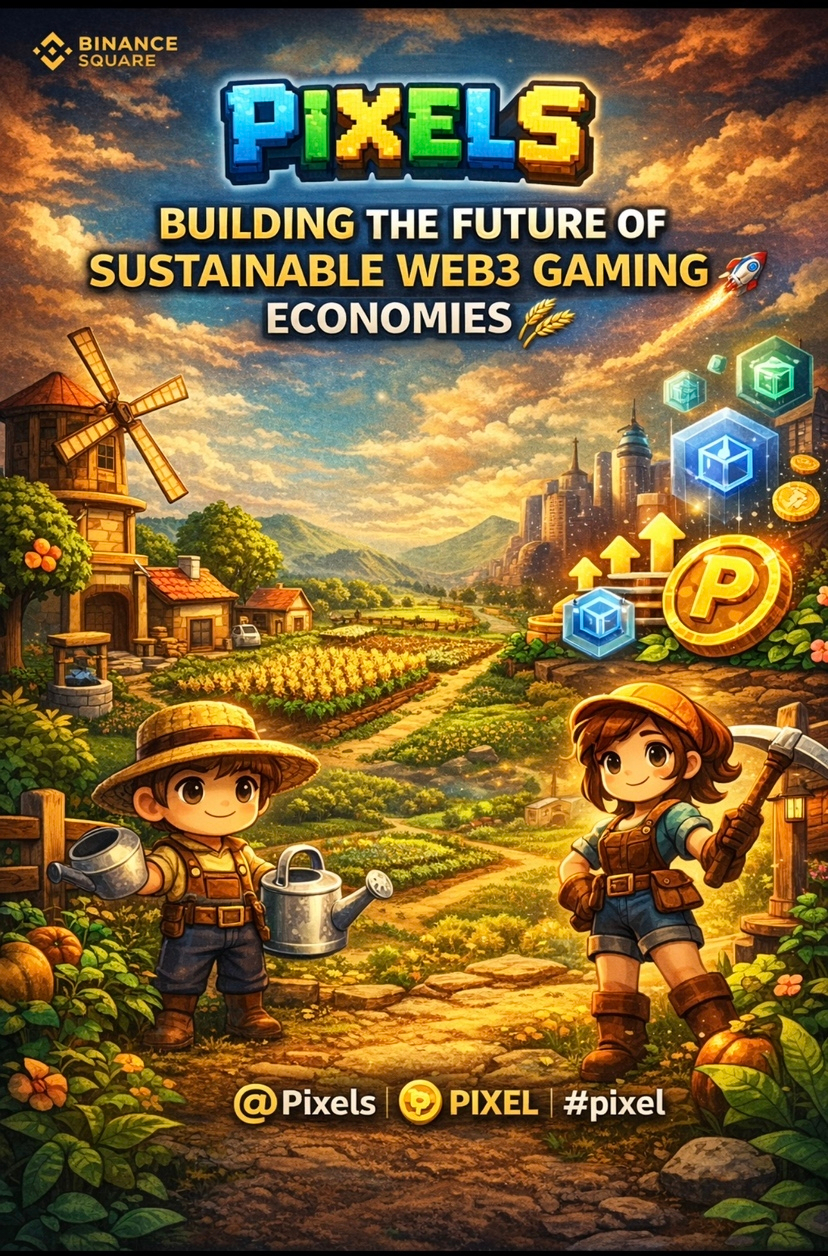
The next phase of Web3 gaming is not about hype cycles or short-term token pumps — it’s about building sustainable ecosystems that players actually want to stay in. That’s exactly where @Pixels is starting to separate itself from the crowd.
Most play-to-earn projects in the past failed because they focused heavily on rewards without creating real engagement. Once rewards dropped, users disappeared. Pixels flips this model by prioritizing gameplay first — a farming-based, social, and strategy-driven environment where users genuinely enjoy spending time. This is critical, because retention is the true foundation of any long-term blockchain game.
At the center of this ecosystem is $PIXEL. Unlike many tokens that exist purely for speculation, $PIXEL has real in-game utility. It fuels transactions, upgrades, land interactions, and progression mechanics. This creates a natural demand cycle — as more users join and actively participate, the token becomes more valuable through usage, not just market sentiment.
Another important factor is the community layer. Pixels is not just a game — it’s a digital economy where players collaborate, trade, and compete. This kind of organic interaction is what traditional Web2 games mastered, and now Pixels is bringing that into Web3 with true ownership.
From an investor perspective, this is where smart money starts paying attention. The combination of active users, real utility, and scalable design creates a strong base for long-term growth. Instead of chasing temporary narratives, projects like Pixels are quietly building the infrastructure for the next gaming cycle.
If Web3 gaming is going to evolve into a multi-billion-dollar sector, it won’t be driven by empty promises — it will be led by ecosystems that people actually use daily. Pixels is showing early signs of becoming one of those leaders.
Watch the user growth. Watch the engagement. And most importantly, watch how $PIXEL integrates deeper into the economy over time — because that’s where the real value will come from.