


I just wanted to unwind. You know, plant some crops, harvest stuff, maybe pet a virtual animal or two. Simple, brain-off entertainment. So I fired up this pixel-style farming game thinking it would be the digital equivalent of staring at clouds.
Instead, I accidentally enrolled in an unpaid, no-certificate crash course in economics, game systems, and the cruel art of delayed gratification. Thanks, I hate it.
The “Casual” Lie They Tell You
They market these games as “casual.” What a joke. Casual is scrolling TikTok in bed. This? This is closer to running a small business while the taxman keeps changing the rules every week.
You think you’re just playing. In reality, you’re managing scarce resources, optimizing time, predicting future costs, and slowly realizing the game is training you to think like a cynical economist.
The Illusion of Simple Interactions
At first it feels innocent. Click on a tree → get wood. Click on a plot → plant seeds. Easy.
But very quickly you notice something’s off. Not every click behaves the same. Sometimes you get the reward immediately. Other times the game just stares at you like “bro, did you really think it was that simple?”
Every single interaction is actually feeding data into some hidden backend system that decides, in real time, whether you deserve progress today or if you need another lesson in humility. It’s less “gaming” and more “quietly negotiating with an algorithm that has trust issues.”
Progression? More Like Carefully Managed Frustration
The quests and tasks look cute on the surface: “Harvest 10 carrots” or “Talk to 3 villagers.”
In practice, they’re cleverly designed bottlenecks. The game doesn’t care how motivated or efficient you are. It cares about pacing you exactly how the designers want. You feel like you’re moving forward, but it’s always on their timetable.
It’s the gaming version of “you can be anything you want… as long as it fits our engagement metrics.”
Inflation Hits Harder Than Real Life
This is the part that actually made me laugh out loud in disbelief.
You grind for hours, finally stack up a decent amount of in-game currency, and for about ten glorious minutes you feel rich. You start planning big purchases.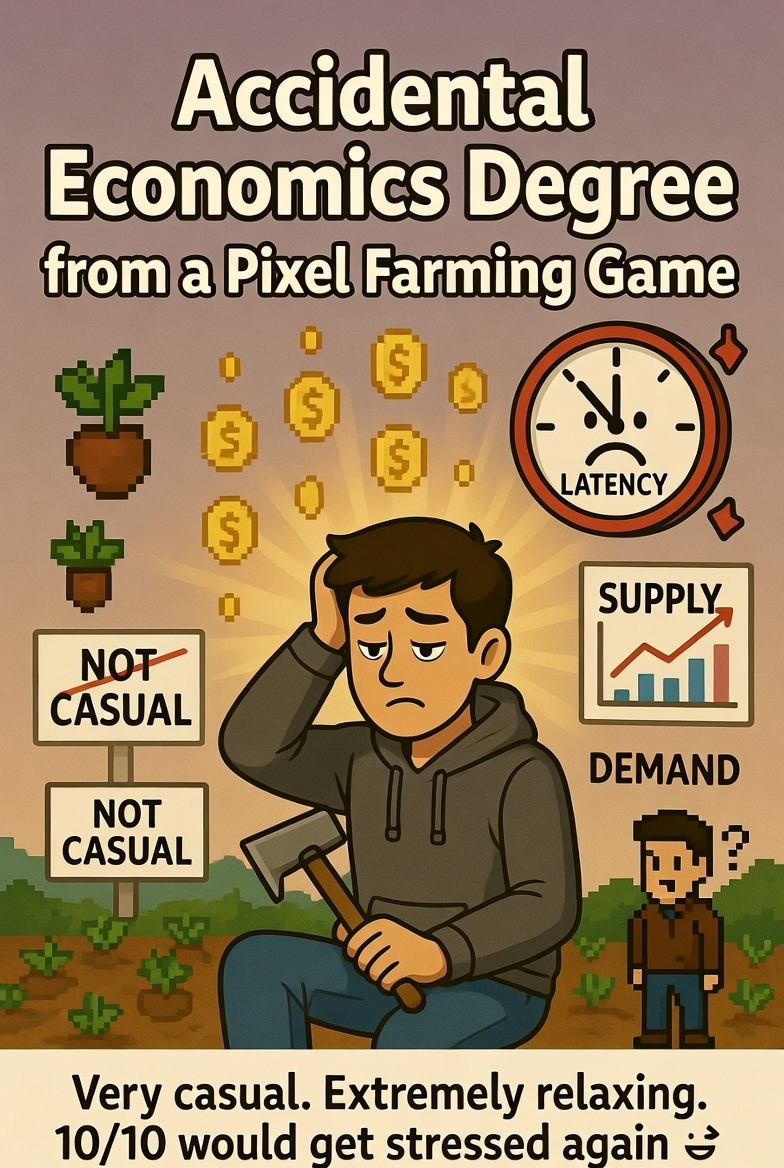
Then the prices quietly creep up.
Suddenly that tool you wanted yesterday now costs 40% more. Your hard-earned coins buy less and less. It’s inflation, baby — and the game didn’t even warn me there would be a pop quiz.
I sat there watching my purchasing power evaporate and thought: #pixel “Wow, this is exactly what my uncle complains about with the rupee, but in cute pixel form.” Character-building? More like wallet-building trauma.
Latency: The Ultimate Humility Check
Nothing teaches patience like clicking on something and then just… standing there. Waiting. Wondering if the server heard you or if it’s taking a coffee break.
One second everything feels buttery smooth. The next, your character$PIXEL is frozen mid-action while the game decides whether to reward you or make you question your internet provider.
It’s a beautiful reminder that even in a fake little pixel world, time and servers can still humble you.
The Hidden Systems You’ll Never Fully Understand
By day three I was convinced there were layers I couldn’t see. Some secret economy balancer, some engagement algorithm, maybe even a boredom-detection system that adjusts difficulty when you start getting too comfortable.
I still don’t know half of what’s actually happening behind the scenes. And honestly? That mystery is half the fun (and half the frustration).
Final Reflection (with heavy sarcasm)
I logged in to relax and switch my brain off.
Instead I ended up @Pixels analyzing resource scarcity, time-value-of-money, supply/demand mechanics, and psychological nudges — all while my character just stood in a field holding a pixel hoe like a confused salaryman.
10/10 would recommend if you enjoy being gently gaslit by a video game into learning real-world concepts.