
@Pixels #pixel
Most people still look at Pixels and think it’s just another farming game with token rewards. That’s honestly the wrong way to approach it. Once you start paying attention to how people actually behave inside the system, it becomes clear this isn’t just a game it’s a small, constantly moving economy built on the Ronin Network.
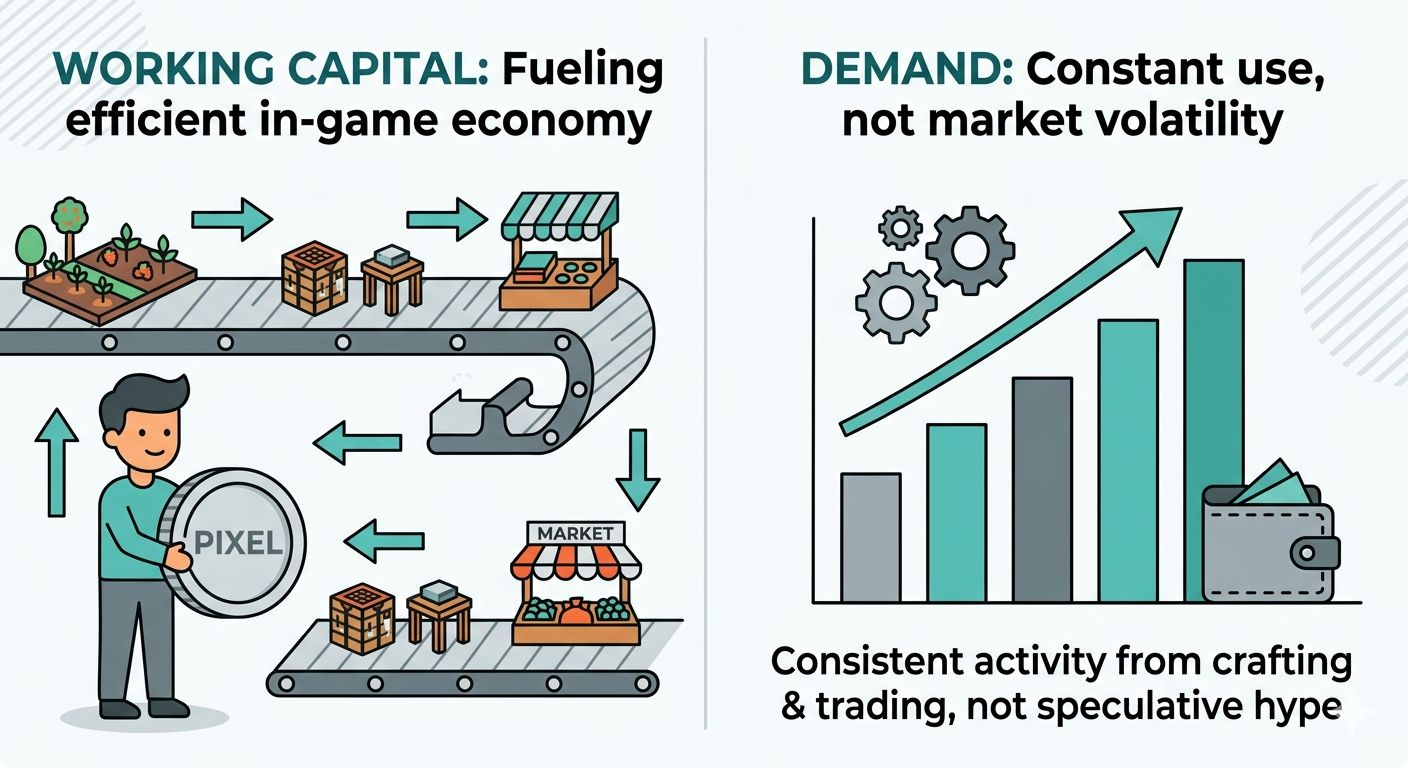
What makes it different is consistency. In most crypto projects, activity shows up when volatility does. Here, it doesn’t really stop. Even on quiet market days, people are still planting, crafting, selling. That steady flow of actions creates something you don’t usually see demand that isn’t tied to hype cycles.
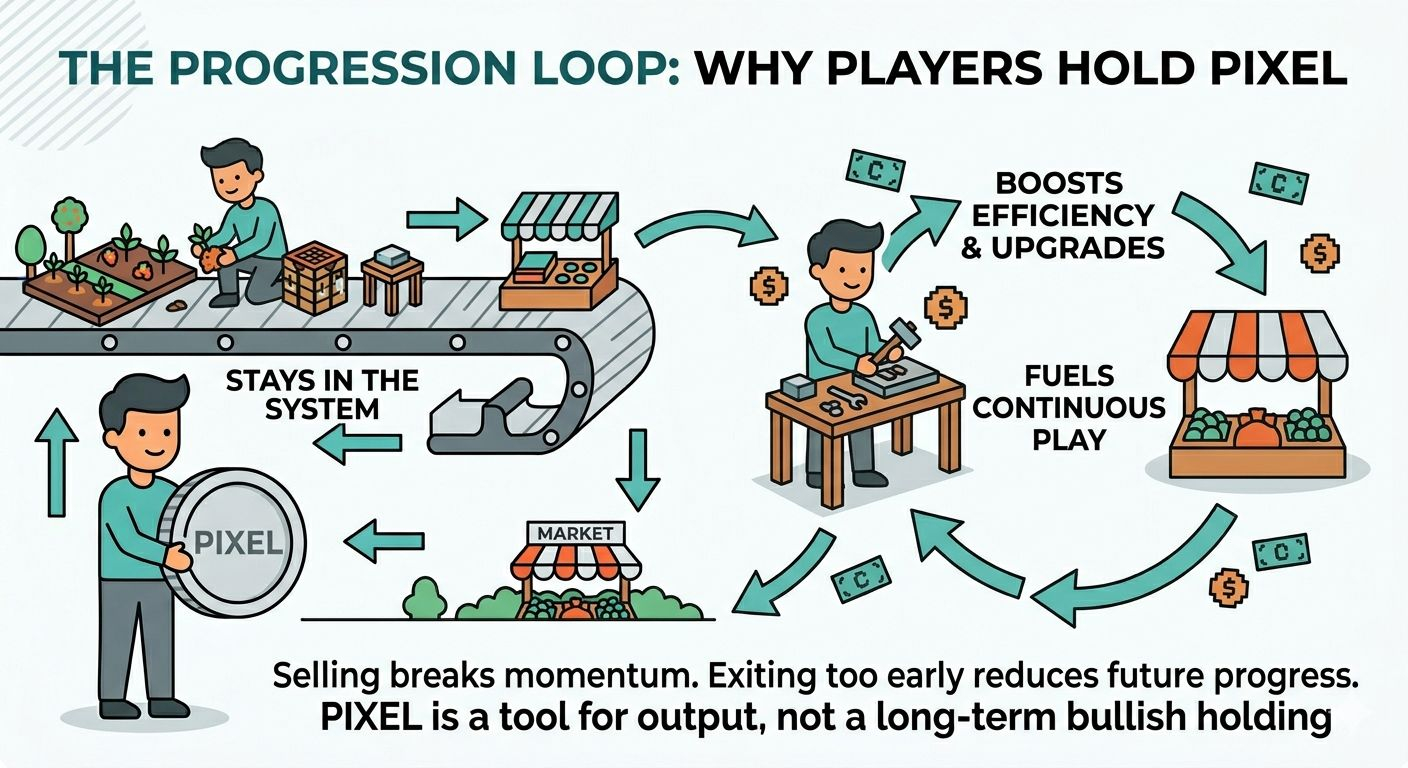
The real shift happens when you notice how fast everything moves. The loop is tight: plant, harvest, craft, sell, repeat. It forces constant decisions. After a while, it stops feeling like gameplay and starts feeling like managing a small operation where your efficiency actually matters.
And that’s where most people misunderstand “holding.” Players aren’t sitting on PIXEL because they’re bullish long-term. They’re holding because exiting too early hurts their progress. Selling breaks momentum, slows upgrades, and reduces output. So they stay in the loop. It looks like belief, but it’s really just how the system keeps you engaged.
Because of that, PIXEL behaves less like a typical token and more like working capital. You’re not holding it to wait you’re using it constantly. The better you play, the better you allocate it. Over time, that naturally separates stronger players from weaker ones without any formal staking or rewards system.
The Ronin Network plays a big role here. Transactions are cheap and fast, so there’s no friction slowing people down. Users don’t wait or batch actions they just keep going. That creates a smooth, ongoing flow instead of the sharp spikes you see in most other ecosystems.
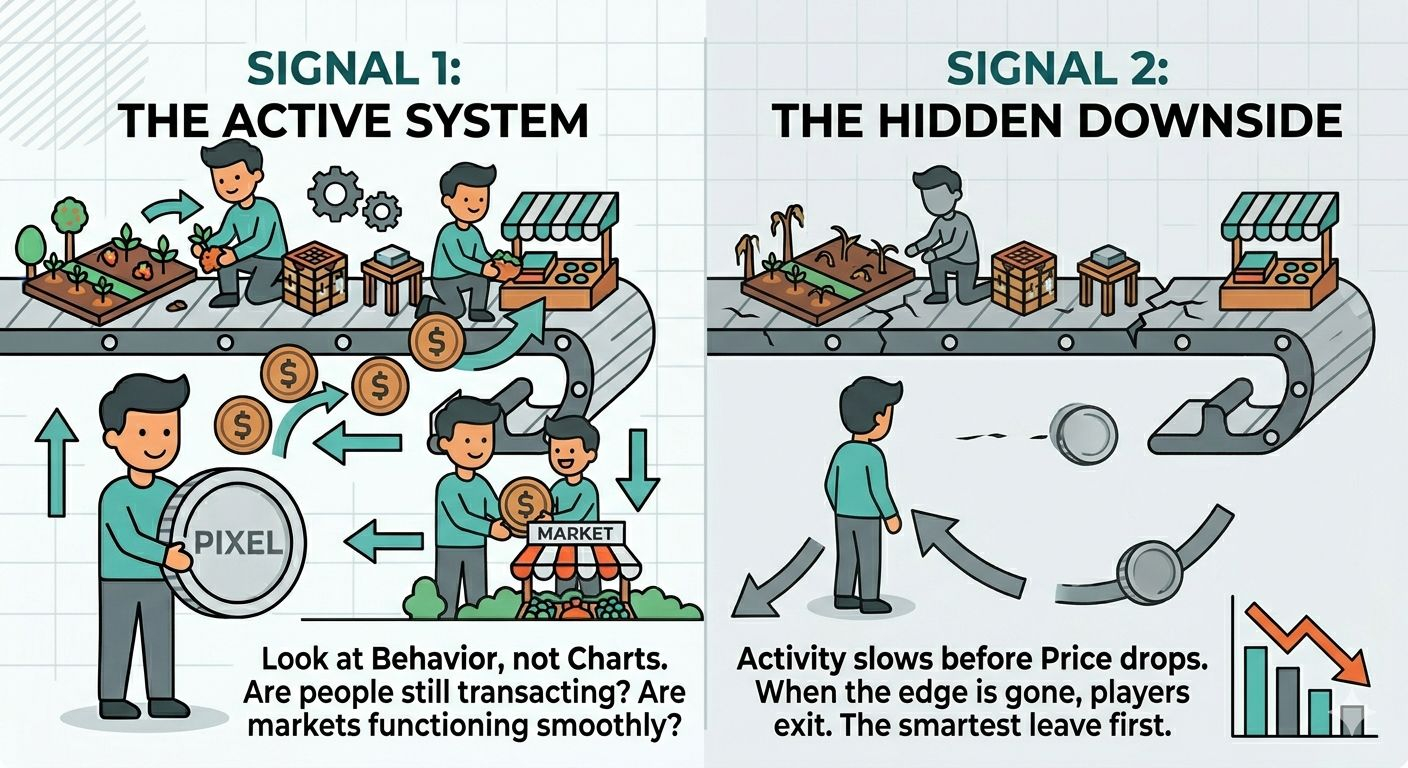
But that smoothness comes with a hidden downside. When things start to weaken, they don’t break suddenly. Activity just slowly drops off. Fewer actions, less engagement, thinner markets. You might not see it in price right away, but you can feel it in the system.
There’s also a layer that doesn’t show up directly on-chain. Players share strategies, coordinate, and optimize together in private groups. Those decisions what to farm, when to sell often show up in behavior before they show up in price. It’s subtle, but it matters.
The real risk isn’t inflation it’s what happens when everyone becomes efficient. As more players figure things out, the edge disappears. And once there’s no real advantage left, people start questioning whether it’s worth their time at all.
Pixels isn’t just competing with other games either. It’s competing with anything that rewards attention trading, farming, airdrops. If users feel their time works better somewhere else, they’ll move without hesitation.
If you’re trying to understand where things are going, don’t just watch the chart. Look at behavior. Are people still active? Are they transacting as often? Are in-game markets still functioning smoothly? Those signals matter more than price in systems like this.
Looking forward, the real opportunity isn’t just better gameplay. It’s expansion beyond the loop. If PIXEL connects to lending or DeFi tools within Ronin, it becomes more than an in-game currency it becomes something people can build strategies around.
Right now, the system works because there’s still room to optimize. But if that balance shifts if efficiency gets too high and new players stop coming in the whole dynamic changes.
And when that happens, you won’t see it on the chart first.
You’ll see it in how people stop playing.
By the time price reacts, the smartest players will already be gone not because they lost, but because the game stopped being worth playing.
