
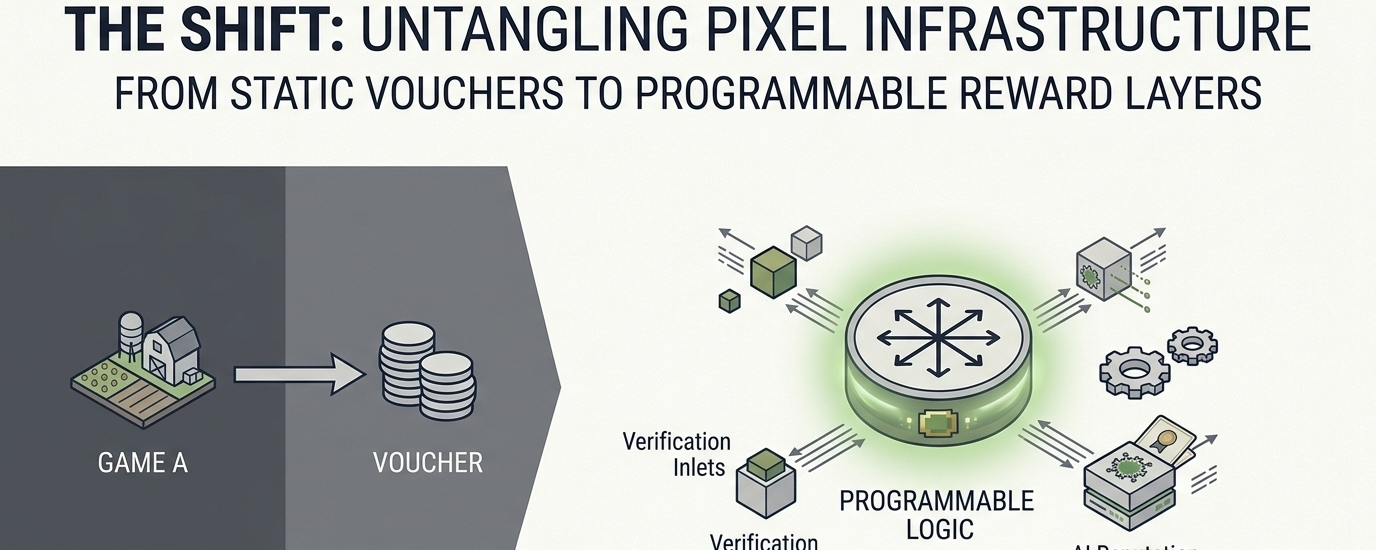
I keep noticing how we talk about game tokens as if they are static vouchers for digital corn.
The reality of PIXEL is shifting toward a programmable coordination layer that doesn't care about the borders of a single farm.
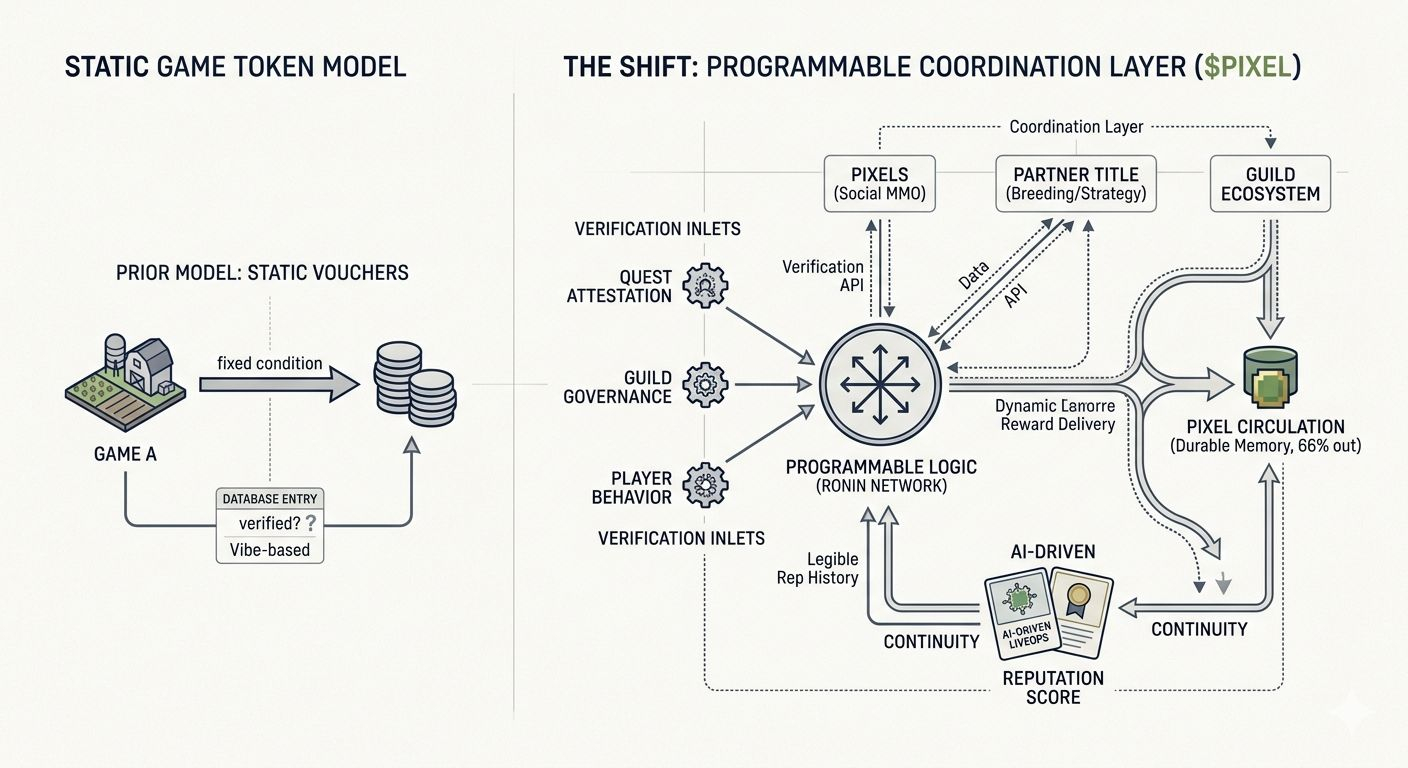
Historically, a reward was a fixed entry in a database. You finish a quest, and a number goes up.
But we are moving toward logic that reacts to verified player behavior across the Ronin network.
The difference is subtle but the implications for infrastructure are massive.
We are seeing the transition from "currency as a product" to "currency as a signal" for cross-ecosystem participation.
The shipping reality
The hype around $PIXEL often focuses on price action, yet the infrastructure work is much more boring and difficult.
Building a functional reward layer like Stacked requires shipping code that handles millions of daily active users without breaking the economic logic.
I have seen too many "half-baked ideas" in GameFi that rely on vibes rather than attestation.
shipping a cross-ecosystem currency means managing a circulating supply where 66 percent of tokens are already in the wild.
It requires building guild systems that function like on-chain corporations with their own internal logic.
The challenge isn't just creating a token, it is verifying that a player in one game actually earned their rewards before they spend them in another.
That gap between a marketing promise and a functional, auditable reward loop is larger than it looks.
most teams fail because they optimize for the trade rather than the verification of the effort.
The Memory Gap
Data is useless unless it preserves its meaning and proof across different systems and over time.
Digital records in gaming are usually ephemeral; they die when the server shuts down or the hype fades.
Durable memory in the PIXEL ecosystem depends on creating a continuity of value that survives the migration between different titles.
If a player earns a reward in a social MMO, that "memory" must be legible to a strategy game or a breeding sim on the same network.
Without this legibility, we are just creating isolated islands of data that eventually sink.
The use of AI-driven liveops engines is an attempt to solve this memory problem by turnning player history into a persistent reputation score.
this creates an infrastructure where a player’s past actions serve as an attestation for future incentives.
we are finally seeing the "shipping" of tools that treat a player's history as a durable asset rather than a temporary state.
Continuity is the only way to scale human coordination without starting from zero every time.