
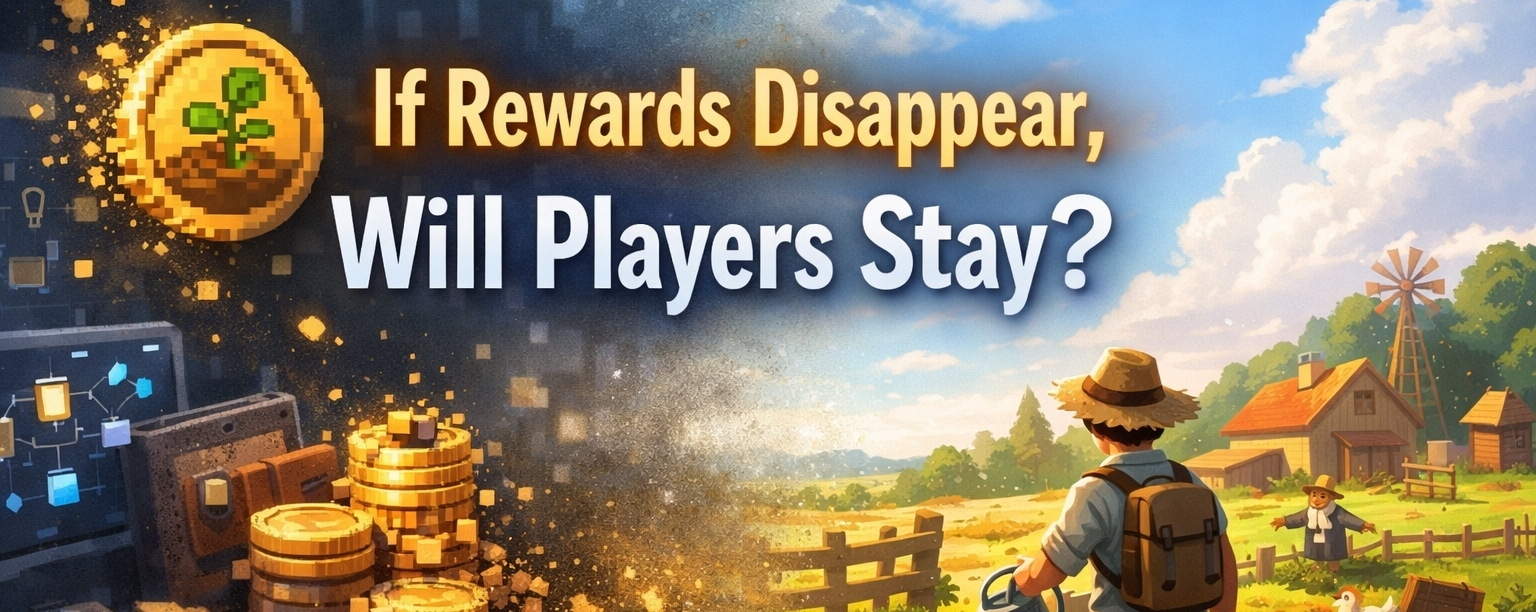
Why do so many blockchain games start off feeling exciting, only to become something people quietly drift away from? It’s a pattern that keeps repeating, and it says more about design priorities than technology itself.
For a while, Web3 games were built around a simple belief: if players can earn, they will stay. And at first, they did. People joined quickly, explored the systems, and invested time because there was something tangible to gain.
But over time, something became clear. Many of these games weren’t actually that enjoyable to play. Once the rewards slowed down, the experience underneath often wasn’t strong enough to keep people engaged.
Developers tried to fix this by adding more—more tokens, more features, more layers of progression. But instead of improving the experience, this often made things feel more complicated and less natural.
There was also the issue of getting started. For many people, just entering a Web3 game felt like a task. Wallets, networks, transactions—these steps created a kind of distance before the game even began.
Pixels feels like a response to that problem, even if it doesn’t claim to be one outright. It takes a quieter approach, focusing on a familiar kind of gameplay—farming, exploring, building, and slowly progressing over time.
The first thing that stands out is how easy it is to begin. You don’t feel pushed into spending or forced to understand every technical detail right away. You can just enter the world and start playing, which already feels different.
The gameplay itself is simple, almost intentionally so. Planting crops, gathering resources, interacting with the environment—it’s all easy to understand. There’s a calm rhythm to it that doesn’t demand constant attention or optimization.
That simplicity can be refreshing, but it also brings a question. Will it still feel engaging after hours or days of play? Or does it risk becoming repetitive once the novelty fades?
What Pixels does differently is how it handles ownership. Yes, digital assets are part of the game, but they don’t dominate every moment. They exist in the background rather than defining the entire experience.
Still, the structure behind the game matters. Being built on Ronin Network gives it a certain technical foundation, but it also means the game depends on that ecosystem. Any changes there could ripple into the experience itself.
Fairness is another subtle challenge. In any evolving system, some players move ahead faster than others. In Web3, those differences can feel more permanent, especially when ownership is involved.
The community adds another dimension. Pixels encourages players to exist in a shared space, to interact and build over time. That can make the world feel alive—but only if new players still feel like they belong there.
Not everyone will connect with this kind of game. Some people want depth, competition, or complex strategy. Others just want something relaxed and steady. Pixels seems to lean toward the second group.
In that sense, it feels less like a bold reinvention and more like a careful adjustment. It’s trying to make Web3 gaming feel a bit more human, a bit less mechanical.
But that leads to a quiet, important question. If you took away the idea of earning entirely, would this still be a game people genuinely want to spend time in?
