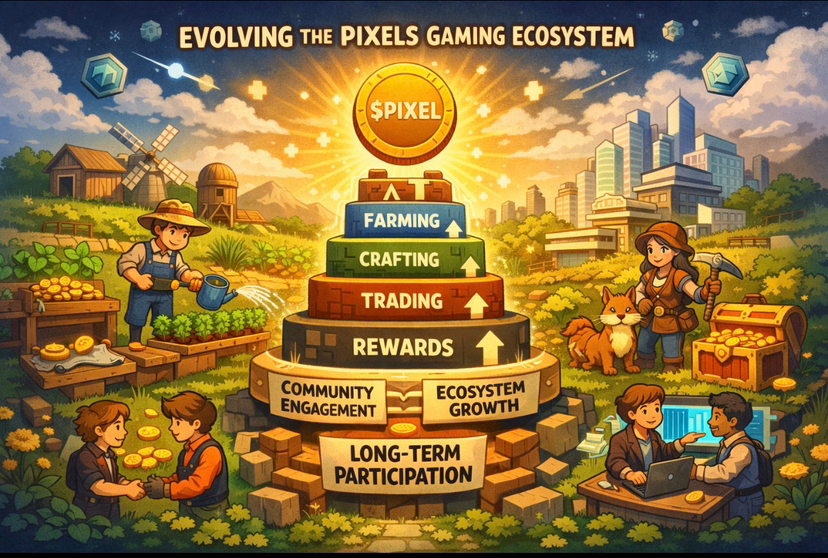
The Pixels ecosystem is steadily evolving into one of the more interesting Web3 gaming economies, especially with the introduction and expansion of its Stacked system. Instead of focusing only on short-term gameplay rewards, the ecosystem is now shifting toward long-term participation, where consistency, engagement, and ecosystem activity become key drivers of value.
At its core, the Stacked system is designed to encourage deeper user involvement. Players are not just completing tasks or earning temporary rewards; they are building progression layers that connect gameplay, assets, and ecosystem incentives together. This structure helps create a more stable in-game economy where rewards are tied to sustained activity rather than one-time actions.
One of the most important strengths of Pixels is how it connects community behavior with ecosystem growth. As users engage more deeply with farming, crafting, trading, and progression systems, the value loop becomes stronger. This makes the ecosystem more resilient compared to traditional play-to-earn models that often struggle with retention after initial hype cycles.
The role of @Pixels in building this ecosystem cannot be ignored. With continuous updates and expansion of its Stacked mechanics, the project is clearly moving toward a more mature gaming economy model. This evolution is important because it aligns incentives between players, builders, and long-term token holders.
From a market perspective, ecosystems like Pixels tend to benefit from increased engagement cycles. As more users stay active longer, demand for in-game utility and ecosystem participation naturally grows. This is where $PIXEL becomes more relevant, not just as a token, but as a key element of ecosystem interaction and progression.
Overall, the shift toward stacked engagement represents a broader trend in Web3 gaming: moving from simple reward farming to structured, sustainable digital economies. Pixels is positioning itself within this transition by focusing on retention, progression, and deeper gameplay value rather than short-term incentives.
As the ecosystem continues to expand, its long-term success will depend on how well it balances rewards, gameplay depth, and user engagement consistency. If executed properly, the Stacked system could become a defining feature that strengthens both the community and the overall economic model.