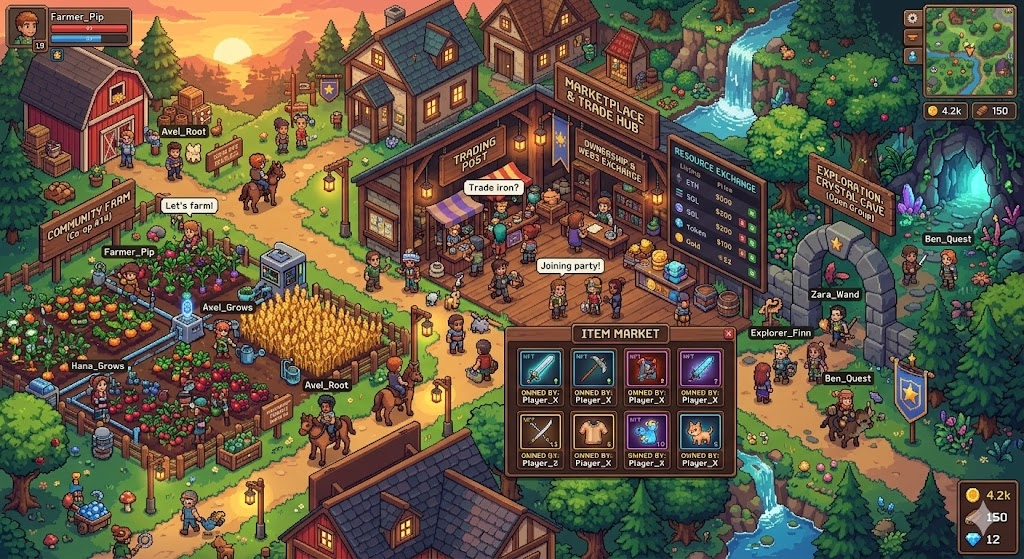
I’ve been closely following the evolution of Web3 gaming, and Pixels ($PIXEL) stands out as one of the most promising projects shaping the future of this space. Unlike many projects that focus purely on hype or short-term token performance, Pixels is building something far more meaningful—a fully functional, player-driven ecosystem where utility comes first.
At its core, Pixels is a social, open-world farming and exploration game built on the Ronin Network. What immediately caught my attention is how seamlessly it blends traditional gaming mechanics with blockchain infrastructure. Players aren’t just interacting with a game—they’re participating in a digital economy where their time, effort, and creativity hold real value.
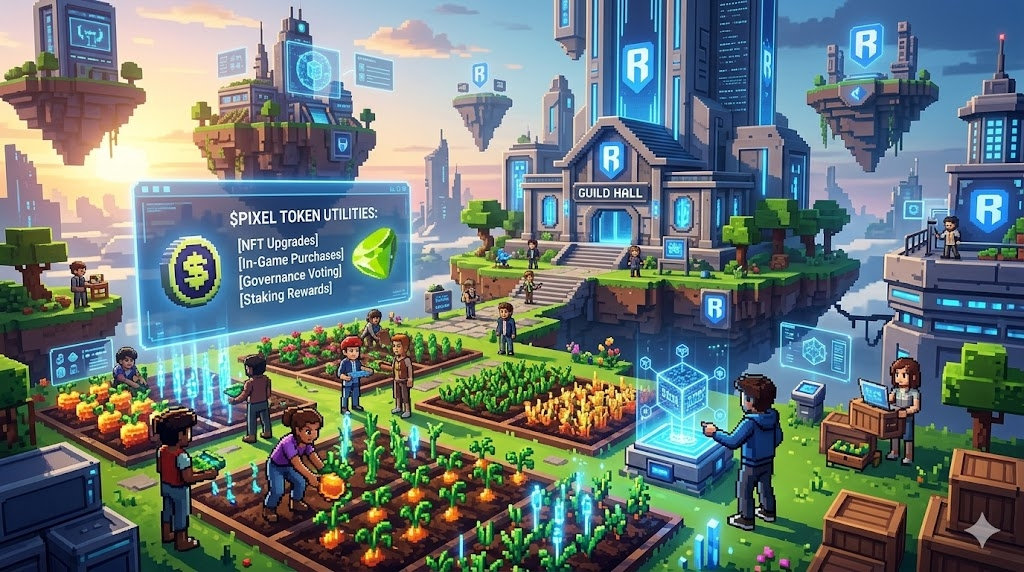
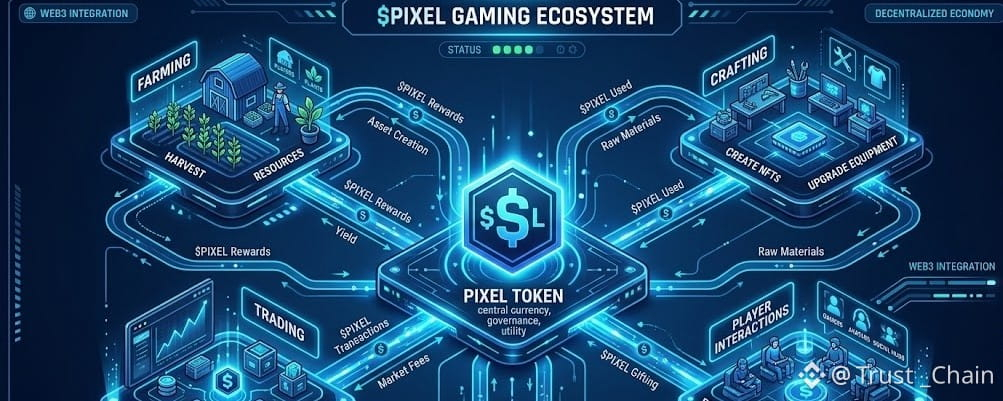
From a technical perspective, $PIXEL acts as the backbone of the entire ecosystem. It’s not just a tradable token; it functions as a coordination layer for in-game activities. Whether it’s crafting, upgrading assets, participating in quests, or accessing premium features, $PIXEL plays a central role in facilitating these interactions. This is what differentiates Pixels from typical GameFi projects—the token is deeply integrated into gameplay mechanics rather than being an afterthought.
Another strong aspect is its deployment on the Ronin Network. Known for its high scalability and low transaction costs, Ronin provides the perfect infrastructure for a game that demands frequent micro-transactions. This ensures a smooth user experience without the friction that often comes with traditional blockchain networks. For a mass-adoption-focused game like Pixels, this is a critical advantage.
What I truly appreciate is the game’s focus on accessibility and user growth. Pixels has successfully attracted a large number of Web2 gamers by offering a familiar, low-barrier entry point. Players can start playing without deep knowledge of crypto, and gradually transition into understanding ownership, NFTs, and token economics. This onboarding strategy is exactly what the Web3 space needs to expand beyond its current audience.
The in-game economy is another highlight. It’s designed to reward active participation rather than passive speculation. Players earn through farming, trading, resource management, and social collaboration. This creates a sustainable loop where engagement drives value, rather than relying solely on new user inflow. In my view, this is a much healthier and long-term approach compared to many earlier GameFi models.
Additionally, Pixels emphasizes community and social interaction. It’s not just about grinding for rewards—it’s about building relationships, collaborating with other players, and contributing to a shared virtual world. This social layer adds depth and retention, making the experience more engaging and meaningful.
Looking at the bigger picture, I see Pixels as more than just a game. It represents a shift in how tokens are perceived—from speculative assets to functional infrastructure. As the ecosystem continues to grow, the demand for $ pixel is likely to be driven by real usage rather than market hype.
In my opinion, Pixels is setting a new standard for Web3 gaming by combining strong fundamentals, scalable technology, and a user-first approach. If this trajectory continues, $PIXEL has the potential to become a key player in the next generation of blockchain-powered gaming ecosystems.
If you’re serious about the future of Web3 gaming, keep a close eye on $PIXEL—this is where utility meets growth.