

The first time I heard someone describe a game economy using the words "sinks and faucets" I thought they were overcomplicating something simple. They weren't.
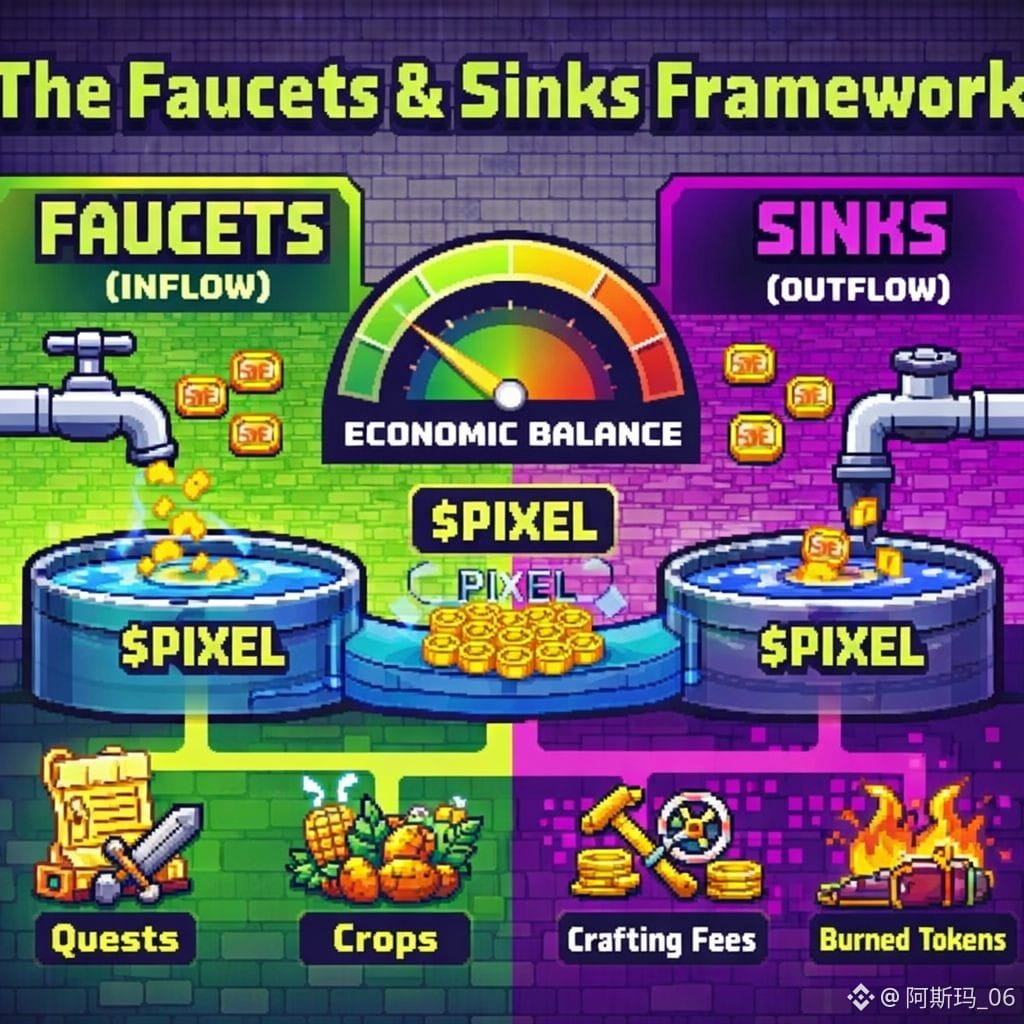
It's actually the clearest framework I've found for understanding why some Web3 game economies survive and most don't. Faucets are everywhere tokens or resources enter the economy. Quests that pay out PIXEL, crops that generate sellable goods, rewards for completing activities. Sinks are everywhere value leaves. Upgrade costs, crafting fees, land taxes, burned tokens. A healthy economy needs both sides working. Too many faucets and you get inflation. Too many sinks and players feel drained and leave. The balance between them is not a setting you configure once. It's something that has to be actively managed as the player base grows and shrinks and the token price moves.
Pixels has both faucets and sinks and the team clearly understands the framework. That puts it ahead of a lot of competitors who built economies that were essentially just faucets with cosmetic sinks stapled on afterward. The PIXEL token flows in through gameplay rewards and flows out through upgrades, crafting, and burn mechanisms. In-game resources follow similar patterns. The design intention is visible.
What's harder to evaluate is whether the calibration is right. And this is where I get genuinely uncertain rather than just cautiously optimistic.
The player population in Pixels has fluctuated significantly since launch. During the points campaign before the token generation event, daily active users were high and the economy had a large base of participants feeding both sides of the ledger. After the token launched and some of that speculative population left, the dynamics shifted. Fewer players means fewer faucet outputs and fewer sink inputs simultaneously. Whether the ratio stayed healthy through that transition is something I'd want to see actual data on before forming a strong opinion.
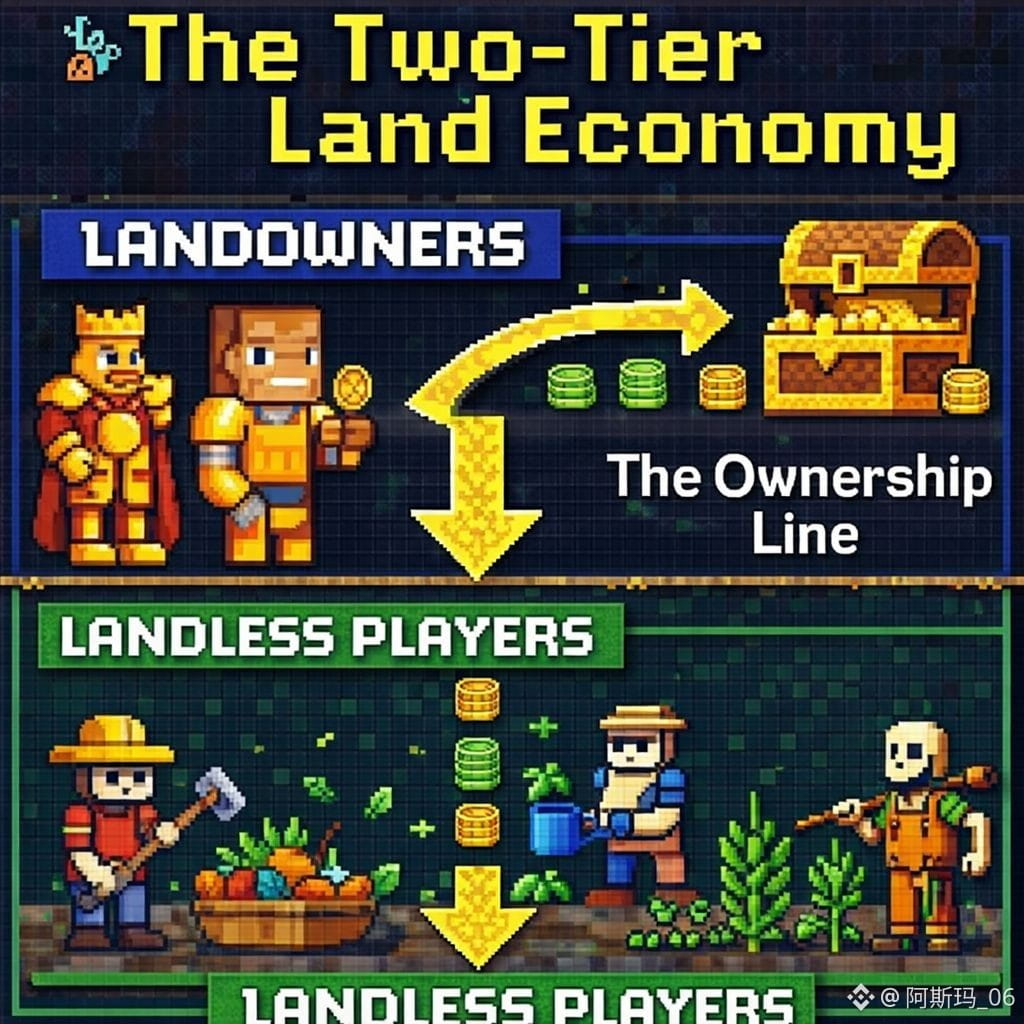
The land economy adds a layer of complexity that I find interesting and slightly concerning at the same time. Landowners earn from players farming on their plots. That's a faucet for landowners and effectively a sink for landless players, since a cut of their earnings flows to someone else. This creates a two-tier system where the economic experience of the game depends heavily on which side of the land ownership line you're on. It's not unlike real economies in that way, which I suppose is either reassuring or alarming depending on your politics.
Seasonal events and limited time content function as temporary sinks, pulling resources out of circulation during periods of high engagement. This is smart design. It creates urgency that drives spending without permanently altering the base economy. I've seen this work well in traditional games and there's no reason it can't work here. The risk is over-reliance on event-driven sinks to patch an underlying imbalance between regular faucet and sink activity.
The honest truth about any live game economy is that nobody gets it perfectly right on the first try. The question is whether the team is watching the right metrics and willing to adjust. Pixels has made adjustments before. The Ronin migration was partly an economic decision, reducing transaction friction to make sink mechanics more accessible to average players. That kind of willingness to change the infrastructure when something isn't working is a reasonable signal.
I still think the fundamental tension in Pixels is the same tension in every play-to-earn economy. Players who are there to earn need faucets to outpace sinks. Players who are there to play need sinks to give their earnings meaning. Those two groups want opposite things from the same system.
Nobody has fully solved that yet. Pixels is trying harder than most.