
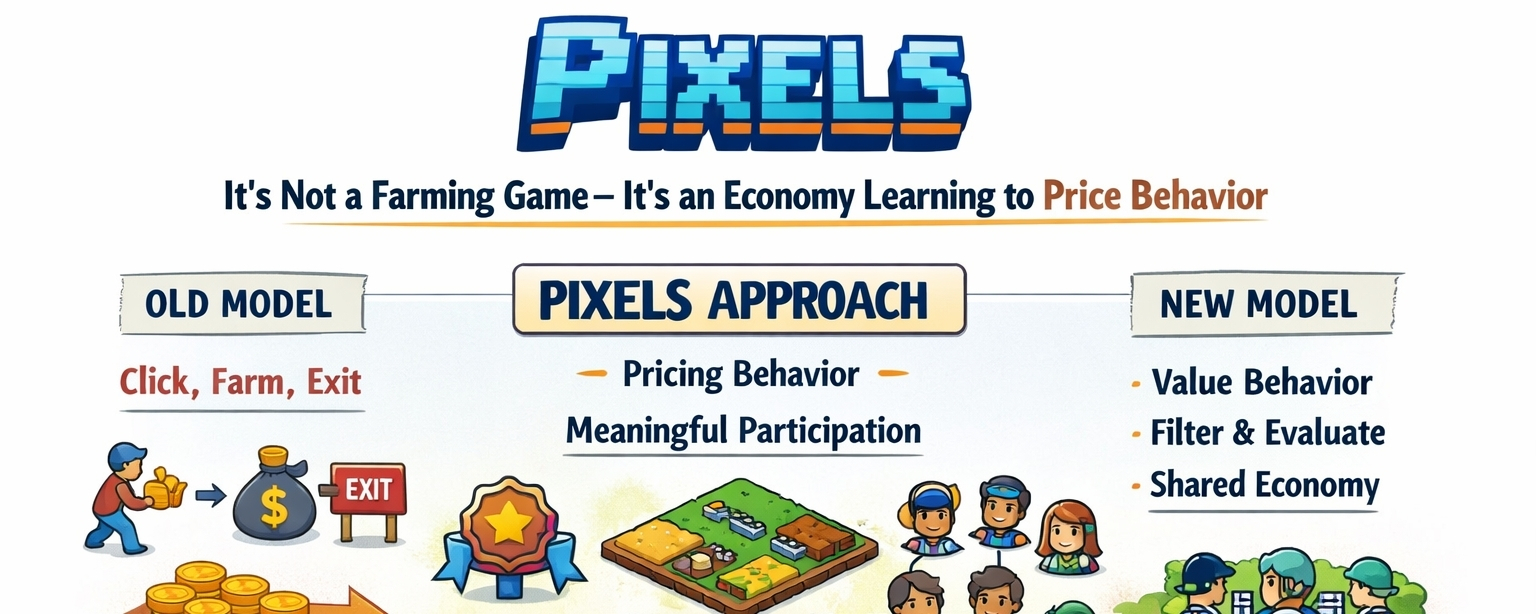
Pixels không phải là một trò chơi nông trại — đó là một nền kinh tế học cách định giá hành vi
Có một loại mệt mỏi nhất định mà bạn phát triển nếu bạn đã ở xung quanh crypto đủ lâu.
Bạn bắt đầu nhận ra các mẫu trước khi chúng hình thành hoàn chỉnh. Một dự án mới ra mắt, ngôn ngữ cảm thấy quen thuộc, cấu trúc cảm thấy quen thuộc, thậm chí cả sự phấn khích cũng cảm thấy... đã được tái chế. Sở hữu phần thưởng kinh tế cộng đồng. Bạn đã nghe tất cả điều đó trước đây. Bạn đã thấy nơi mà nó thường kết thúc.
Vì vậy, khi mọi người nhìn vào Pixels và nói rằng đó chỉ là một trò chơi nông trại khác với một token, tôi hiểu điều đó. Phản ứng đó không phải là tự nhiên. Nó đã được chứng minh.
Nhưng tôi nghĩ rằng cách hiểu đó còn thiếu. Không sai chỉ là nông cạn.
Bởi vì nếu bạn ở lại với Pixels lâu hơn một chút, nếu bạn nhìn qua vòng lặp canh tác và các cơ chế bề mặt, một cái gì đó khác bắt đầu hiện ra. Và nó không sạch sẽ hoặc hoàn toàn hình thành, nhưng chắc chắn là có.
Pixels không còn cảm thấy như một trò chơi cố gắng tối đa hóa hoạt động nữa.
Nó cảm thấy như một hệ thống cố gắng hiểu hành vi.
Có một mẫu trong trò chơi crypto đã trở nên quá quen thuộc đến mức khó nhận biết nữa. Một dự án ra mắt với một câu chuyện rõ ràng về quyền sở hữu, phần thưởng, cộng đồng có thể là một lời hứa về nền kinh tế thực. Những người dùng đầu tiên lao vào, không phải vì họ tin vào thế giới mà vì họ hiểu vòng lặp. Làm nhiệm vụ, kiếm token, lặp lại cho đến khi hệ thống yếu đi. Sau đó, những người đã thúc đẩy sự phát triển sớm trở thành thanh khoản thoát ra. Thế giới không thực sự quan trọng. Phần thưởng mới là điều quan trọng.
Pixels đã bước vào môi trường đó trông giống như một cái bẫy. Cơ chế canh tác pixel, quyền sở hữu đất đai, một token được đặt lên trên. Nhìn thoáng qua, nó khớp hoàn hảo vào cùng một thể loại mà đã tự làm kiệt sức. Đó là lý do tại sao nhiều người đã bác bỏ nó sớm. Và thật lòng mà nói, bản năng đó không phải là vô lý. Crypto đã dạy khán giả của mình giả định sự lặp lại, không phải sự đổi mới.
Nhưng Pixels trở nên thú vị hơn khi bạn theo dõi nó lâu hơn vì nó không hành xử như một dự án cảm thấy thoải mái khi ở trong khuôn mẫu đó. Nó cảm thấy như một hệ thống đang cố gắng phát triển ra khỏi nó, từ từ, không hoàn hảo và với đầy đủ nhận thức về độ mong manh của nỗ lực đó.
Để hiểu tại sao bạn phải nhớ những gì đã sai trước đó.
Các trò chơi crypto đầu tiên không thất bại vì thiếu người dùng. Chúng thất bại vì đã hiểu sai về họ.
Họ cho rằng tham gia là giống như giá trị.
Nhiều người chơi có nghĩa là nhiều sự phát triển. Nhiều hoạt động có nghĩa là một nền kinh tế khỏe mạnh hơn. Vì vậy, họ đã trả tiền cho mọi người để xuất hiện. Để nhấp chuột. Để lặp lại. Để tham gia.
Và trong một thời gian, nó đã hoạt động.
Nhưng mọi người không ngu ngốc. Họ học rất nhanh. Họ nhận ra rằng cách nhanh nhất để thắng không phải là quan tâm đến trò chơi mà là khai thác từ nó. Tối ưu hóa vòng lặp, canh tác phần thưởng, thoát trước khi hệ thống chậm lại.
Trò chơi không sụp đổ vì người chơi đã phá vỡ nó.
Trò chơi đã sụp đổ vì nó đã dạy người chơi cách phá vỡ nó.
Đó là phần mà hầu hết các dự án chưa bao giờ thực sự sửa chữa.
Pixels, ít nhất, dường như đang cố gắng.
Điều làm cho Pixels khác biệt không phải là canh tác. Nó không phải là token. Nó thậm chí không phải là khía cạnh quyền sở hữu.
Đó là sự thay đổi trong tư duy.
Thay vì hỏi Làm thế nào để chúng ta có được nhiều người chơi hơn?
Nó đang hỏi: Hành vi nào thực sự nên được thưởng?”
Nghe có vẻ nhỏ nhưng không phải vậy.
Bởi vì một khi bạn bắt đầu suy nghĩ theo cách đó, mọi thứ đều thay đổi.
Bây giờ hoạt động không tự động là tốt. Một số hành động củng cố hệ thống. Một số lặng lẽ làm cho nó cạn kiệt. Và nếu bạn đối xử với chúng như nhau, bạn sẽ phải trả giá cho sự sụp đổ của chính mình.
Pixels đang bắt đầu vạch ra ranh giới đó.
Một trong những vấn đề lớn nhất không được nói đến trong crypto luôn là ý tưởng rằng mọi ví đều bình đẳng.
Nghe có vẻ tốt. Nó trông đẹp trên bảng điều khiển. Nhưng không thực sự.
Một số người chơi xây dựng. Một số tổ chức. Một số chi tiêu. Một số chỉ xuất hiện để lấy.
Nếu hệ thống của bạn không thể phân biệt sự khác biệt, nó sẽ thưởng cho những người không đúng.
Pixels đang cố gắng khắc phục điều đó với lớp danh tiếng của nó.
Và không, đó không chỉ là một điểm số để khoe khoang.
Nó thực sự thay đổi cách nền kinh tế tương tác với bạn.
Danh tiếng cao hơn mở khóa quyền truy cập mượt mà hơn, giảm ma sát tạo ra sự tham gia có ý nghĩa hơn. Danh tiếng thấp hơn? Nhiều giới hạn hơn, nhiều hạn chế hơn, nhiều ma sát hơn.
Nó tinh tế, nhưng mạnh mẽ.
Bởi vì bây giờ hệ thống đang nói: chúng tôi đang theo dõi cách bạn hành xử chứ không chỉ rằng bạn tồn tại.
Đó là một sự thay đổi lớn so với mô hình cũ.
Crypto thích nói về quyền sở hữu. Nhưng hầu hết thời gian quyền sở hữu chỉ có nghĩa là giữ một cái gì đó và hy vọng nó tăng giá.
Pixels đang cố gắng vượt qua điều đó.
Đất đai chẳng hạn, không chỉ là một món sưu tầm. Nó không chỉ là một sự khoe khoang.
Nó có chức năng.
Nó xác định những gì bạn có thể sản xuất, cách bạn có thể hoạt động hiệu quả, và cách mà các người chơi khác tương tác với bạn. Nó cho phép chia sẻ đất đai. Nó tạo ra sự phụ thuộc. Nó biến những người giữ thụ động thành những người tham gia tích cực nếu họ muốn hưởng lợi.
Đó là sự khác biệt chính.
Quyền sở hữu ở đây bắt đầu cảm thấy ít giống như một cược và nhiều hơn như cơ sở hạ tầng.
Và một khi quyền sở hữu trở thành cơ sở hạ tầng, nền kinh tế ngừng hoàn toàn cá nhân.
Nó trở thành mối quan hệ.
Đây là nơi mà Pixels thường bị bỏ qua nhất.
Mọi người vẫn nghĩ theo cách của những người chơi đơn lẻ. Một ví, một chiến lược, một kết quả.
Nhưng các nền kinh tế thực sự không giữ nguyên cá nhân lâu. Chúng trở nên xã hội. Có tổ chức. Bất bình đẳng.
Pixels nghiêng vào đó thông qua các guild.
Và đây không chỉ là những nhóm xã hội để tạo không khí. Chúng là những hệ thống có cấu trúc.
Quyền truy cập quan trọng. Vai trò quan trọng. Quyền truy cập quan trọng. Ai có thể sử dụng cái gì, khi nào và như thế nào, tất cả đều được kiểm soát.
Điều đó giới thiệu sự phối hợp.
Và sự phối hợp thay đổi mọi thứ.
Bởi vì bây giờ giá trị không chỉ đến từ những gì bạn làm một mình. Nó đến từ việc bạn làm việc tốt như thế nào trong một nhóm, cách chia sẻ tài nguyên, cách tổ chức hệ thống.
Điều đó khó hơn nhiều để gian lận hơn một vòng lặp canh tác đơn giản.
Nhưng cũng khó hơn nhiều để làm đúng.
Nếu có một điều mà Pixels dường như rất ý thức, đó là:
Nếu không được kiểm soát, mọi nền kinh tế crypto trở nên khai thác.
Không phải vì mọi người xấu mà vì hệ thống cho phép điều đó.
Vì vậy, Pixels đang làm điều mà hầu hết các dự án tránh.
Nó đang cố gắng lọc.
Không phải ai cũng được thưởng theo cùng một cách. Không phải tất cả hành động đều được đối xử như nhau. Hệ thống nhìn vào các mẫu hành vi chứ không chỉ là mức độ hoạt động.
Đây là nơi mọi thứ trở nên thú vị và hơi khó chịu.
Bởi vì bây giờ phần thưởng không chỉ được kiếm. Chúng được đánh giá.
Và điều đó giới thiệu một loại căng thẳng mới.
Người chơi bắt đầu hỏi: Tại sao hành động này? Tại sao phần thưởng này? Tại sao không phải cái kia?
Hệ thống trở nên thông minh hơn nhưng cũng kém minh bạch hơn.
Và đó là một sự đánh đổi mà Pixels chưa hoàn toàn giải quyết được.
Dù hệ thống có tinh vi đến đâu, có một điều mà Pixels không thể thoát khỏi:
Nó vẫn có một token.
Và token mang lại thị trường. Và thị trường mang lại áp lực.
Bạn có thể thiết kế nền kinh tế trong trò chơi tốt nhất có thể nhưng ngay khi giá trị trở nên lỏng lẻo, mọi người bắt đầu suy nghĩ khác đi. Họ không chỉ là người chơi nữa. Họ là các nhà giao dịch.
Pixels rõ ràng đang cố gắng quản lý điều đó.
Cơ chế như staking, hệ thống token nhiều lớp, và phát thải có kiểm soát đều hướng tới một mục tiêu: làm chậm quá trình khai thác và khuyến khích tái đầu tư.
Nhưng đây là một hành động cân bằng mà không có giải pháp hoàn hảo.
Quá nhiều hạn chế và hệ thống cảm thấy ngột ngạt.
Quá ít, và nó lại trở thành một cuộc chơi tự do.
Pixels vẫn đang tìm kiếm ranh giới đó.
Phần thú vị nhất của Pixels không phải là những gì nó là hôm nay.
Đó là điều mà nó có thể đang chuyển mình.
Nó bắt đầu trông ít giống như một trò chơi đơn lẻ và nhiều hơn giống như một hệ thống để hiểu hành vi của người chơi qua các trò chơi.
Nếu hướng đi đó giữ vững, Pixels có thể trở thành một loại lớp hành vi cho game Web3, nơi các ưu đãi không chỉ được thiết kế mù quáng, mà được thông báo bởi dữ liệu thực về cách người dùng hành động theo thời gian.
Đó là một sự thay đổi lớn.
Bởi vì nó có nghĩa là tương lai của các trò chơi crypto có thể không phải là về cơ chế tốt hơn hoặc phần thưởng lớn hơn.
Nó có thể là về sự đánh giá tốt hơn.
Biết ai cần được thưởng. Khi nào. Và vì cái gì.
Tất cả những điều này không có nghĩa là Pixels an toàn.
Nó vẫn có thể thất bại. Nó vẫn có thể trôi trở lại vào những mẫu mà nó đang cố gắng thoát ra. Hệ thống có thể trở nên quá phức tạp, quá nặng nề, quá dễ để khai thác theo những cách mới.
Và có lẽ rủi ro lớn nhất là tâm lý.
Người dùng crypto đã được điều chỉnh để tối ưu hóa cho lợi ích ngắn hạn. Thay đổi hành vi đó không chỉ là một vấn đề thiết kế. Đó là một vấn đề văn hóa.
Pixels không chỉ xây dựng một trò chơi. Nó đang cố gắng đào tạo lại người dùng của mình.
Đó là một thách thức khó hơn nhiều so với việc ra mắt một token hoặc thiết kế một vòng lặp canh tác.
Vậy điều đó để lại cho Pixels ở đâu?
Không phải như một sản phẩm hoàn thiện. Không phải như một thành công được đảm bảo. Nhưng như một cái gì đó thú vị hơn những gì nó xuất hiện ban đầu.
Nó là một hệ thống đang trong quá trình chuyển tiếp. Một dự án bắt đầu bên trong một mô hình bị hỏng và bây giờ đang cố gắng tự làm lại từ bên trong. Nó đang thử nghiệm với những ý tưởng mà hầu hết các dự án tránh vì chúng khó khăn, chậm chạp và không chắc chắn.
Và đó chính là lý do tại sao nó quan trọng.
Bởi vì câu hỏi thực sự không phải là liệu Pixels có thể thành công như một trò chơi canh tác.
Câu hỏi thực sự là liệu nó có thể xây dựng một nền kinh tế nơi mọi người ngừng hành xử như những người nông dân theo nghĩa tồi tệ nhất, thu hoạch giá trị mà không quan tâm đến đất và bắt đầu hành động như những người tham gia trong một hệ thống có thể thực sự tự duy trì.
Pixels chưa giải quyết được điều đó.
Nhưng đây là một trong những nơi hiếm hoi mà vấn đề được coi trọng.
Và ngay bây giờ, điều đó đủ để thu hút sự chú ý.
@Pixels#pixel
$PIXEL