
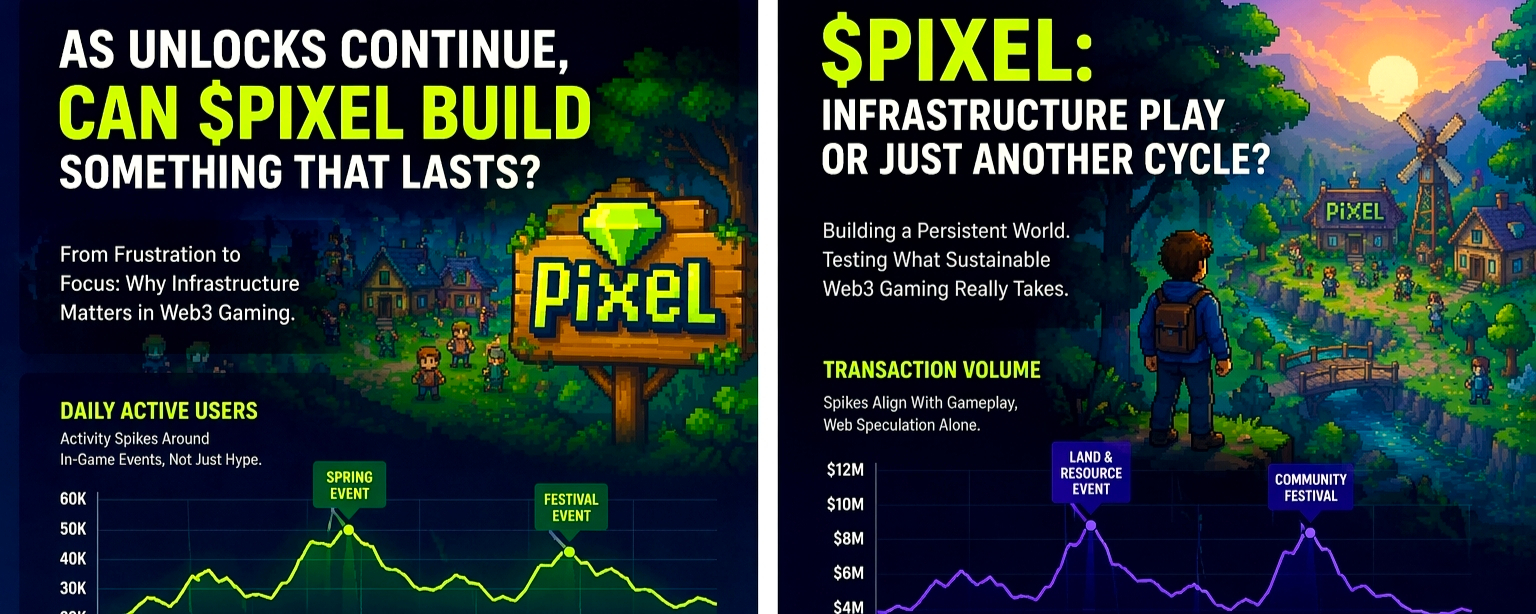

Tôi không nhận ra PIXEL vì những chu kỳ cường điệu. Nó đến từ một nơi khác của sự thất vọng. Xem những người chơi dành hàng giờ trong các trò chơi Web3, chỉ để nhận ra rằng "quyền sở hữu" thực sự không có nghĩa là kiểm soát hay độ bền. Tài sản có thể di chuyển, về mặt kỹ thuật, nhưng chúng không cảm thấy ổn định. Sự ngắt kết nối đó vẫn cứ tồn tại.
Về cơ bản, vấn đề không phức tạp: hầu hết các trò chơi blockchain không bị giới hạn bởi ý tưởng, mà bởi cơ sở hạ tầng. Việc mint tài sản rất dễ dàng. Tuy nhiên, việc làm cho logic trò chơi, quyền sở hữu và tính thanh khoản hoạt động cùng nhau một cách mượt mà, có khả năng mở rộng thì không dễ. Khi backend gặp khó khăn, mọi thứ được xếp chồng lên trên bắt đầu cảm thấy mong manh.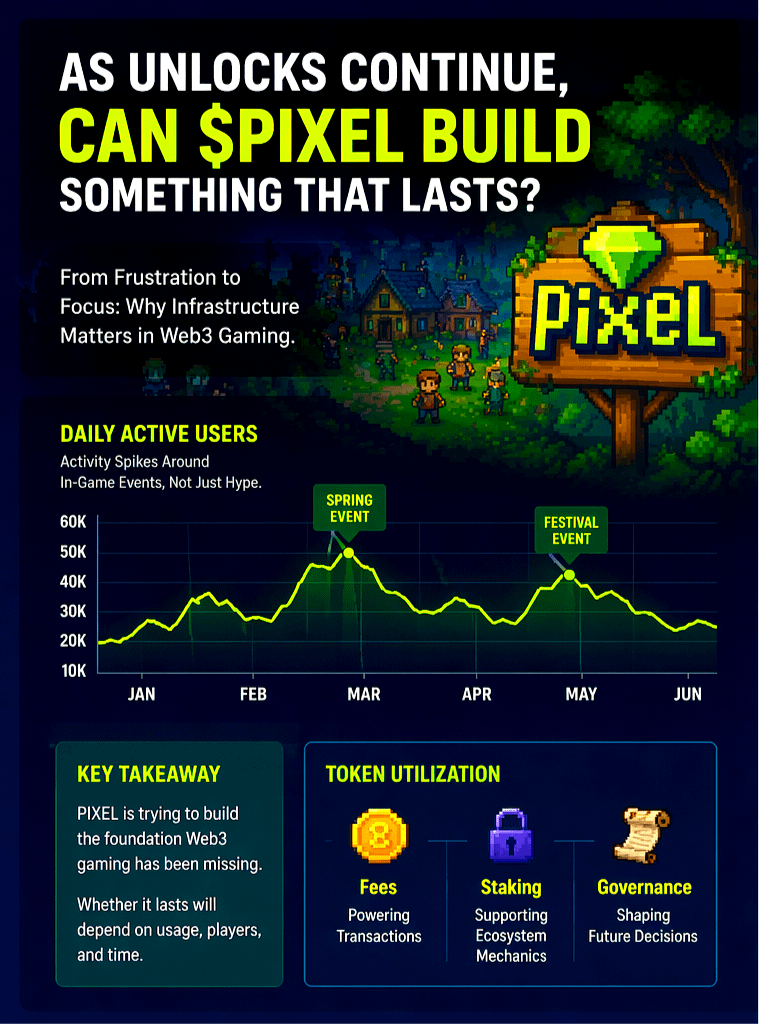
So sánh gần nhất là một công viên giải trí được xây dựng trên mặt đất không ổn định. Từ bên ngoài, mọi thứ trông sống động với những trò chơi, ánh sáng, và chuyển động nhưng bên dưới, cấu trúc không hoàn toàn an toàn. Mọi người có thể thưởng thức trải nghiệm, nhưng lòng tin lâu dài phụ thuộc vào việc nền tảng có giữ vững hay không.
Từ góc độ cơ sở hạ tầng, PIXEL dường như đang làm việc trên nền tảng đó. Nó nghiêng về một thế giới trò chơi liên tục nơi các tài sản không chỉ là NFT tĩnh, mà là một phần của nền kinh tế sống động. Một chi tiết triển khai đáng chú ý là cách logic trò chơi ngoài chuỗi đồng bộ với quyền sở hữu trong chuỗi nhằm giảm ma sát mà không mất đi tính khả thi. Một điều khác là việc sử dụng các vòng tạo ra tài nguyên liên kết với đất đai và hoạt động của người chơi, điều này cố gắng khuyến khích sự tham gia liên tục thay vì những đợt đầu cơ ngắn hạn.
Nói đơn giản, mục tiêu dường như là chuyển đổi trò chơi blockchain ra khỏi "thị trường có gameplay gắn liền" sang các trò chơi thực tế nơi quyền sở hữu hoạt động lặng lẽ ở phía sau.
Token đóng một vai trò chức năng trong hệ thống này được sử dụng cho phí, cơ chế staking, và tín hiệu quản trị. Không có gì đặc biệt mới mẻ trong cấu trúc đó, và nó không tự tạo ra giá trị. Tầm quan trọng của nó phụ thuộc vào việc người dùng có tiếp tục tương tác với hệ sinh thái hay không.
Nhìn vào hành vi thị trường, hoạt động đã trở nên đáng chú ý nhưng không đồng nhất. Người dùng hàng ngày đã, vào những thời điểm, đạt hàng chục nghìn, và các đợt giao dịch tăng thường liên quan nhiều hơn đến các sự kiện trong trò chơi hơn là đầu cơ thuần túy. Điều đó cho thấy ít nhất một mức độ tham gia được thúc đẩy bởi gameplay chứ không chỉ giao dịch đơn thuần.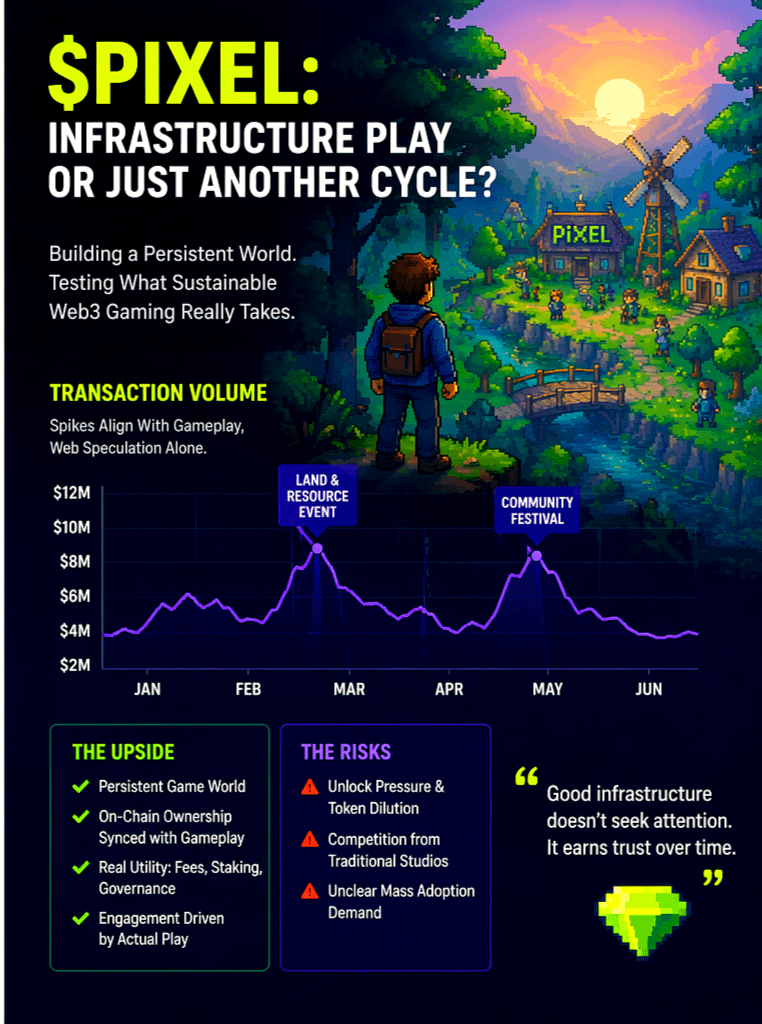
Trong ngắn hạn, tuy nhiên, nó hoạt động giống như hầu hết các token. Lịch trình mở khóa tạo ra áp lực, thanh khoản thay đổi nhanh chóng, và cảm xúc thường chiếm ưu thế hơn các yếu tố cơ bản. Nó giao dịch như một tài sản điển hình. Nhưng nếu tầm nhìn dài hạn giữ vững, nó sẽ cần phải hoạt động giống như cơ sở hạ tầng hỗ trợ hoạt động mà không liên tục thu hút sự chú ý.
Có những rủi ro thực sự. Nếu sự tăng trưởng người dùng chậm lại trong khi việc phát hành token tiếp tục, nền kinh tế trong trò chơi có thể tự làm loãng. Cạnh tranh là một yếu tố khác từ cả các studio truyền thống tham gia Web3 với kinh nghiệm thiết kế mạnh hơn, và từ các trò chơi không blockchain khám phá các mô hình sở hữu thay thế. Và vẫn còn một câu hỏi mở: liệu người chơi chính thống có thực sự muốn mức độ tích hợp blockchain này hay không?
Nó quay trở lại một ý tưởng đơn giản. Cơ sở hạ tầng tốt thì vô hình khi nó hoạt động. Nhưng để đạt đến điểm đó cần thời gian, lặp đi lặp lại, và khả năng kiên trì qua những khoảng thời gian mà thị trường không chú ý.
Hiện tại, PIXEL nằm ở đâu đó ở giữa. Nó đã qua giai đoạn bị bỏ qua, nhưng vẫn chưa đủ được thiết lập để kiếm được sự tin tưởng hoàn toàn. Liệu nó có phát triển thành một thứ bền vững hay mờ dần vào một chu kỳ khác có lẽ sẽ không được quyết định trong thời gian sớm.
Bởi vì cuối cùng, thời gian không được điều khiển bởi biểu đồ, mà được xác định bởi việc liệu nền tảng có thể thực sự giữ vững hay không.
