
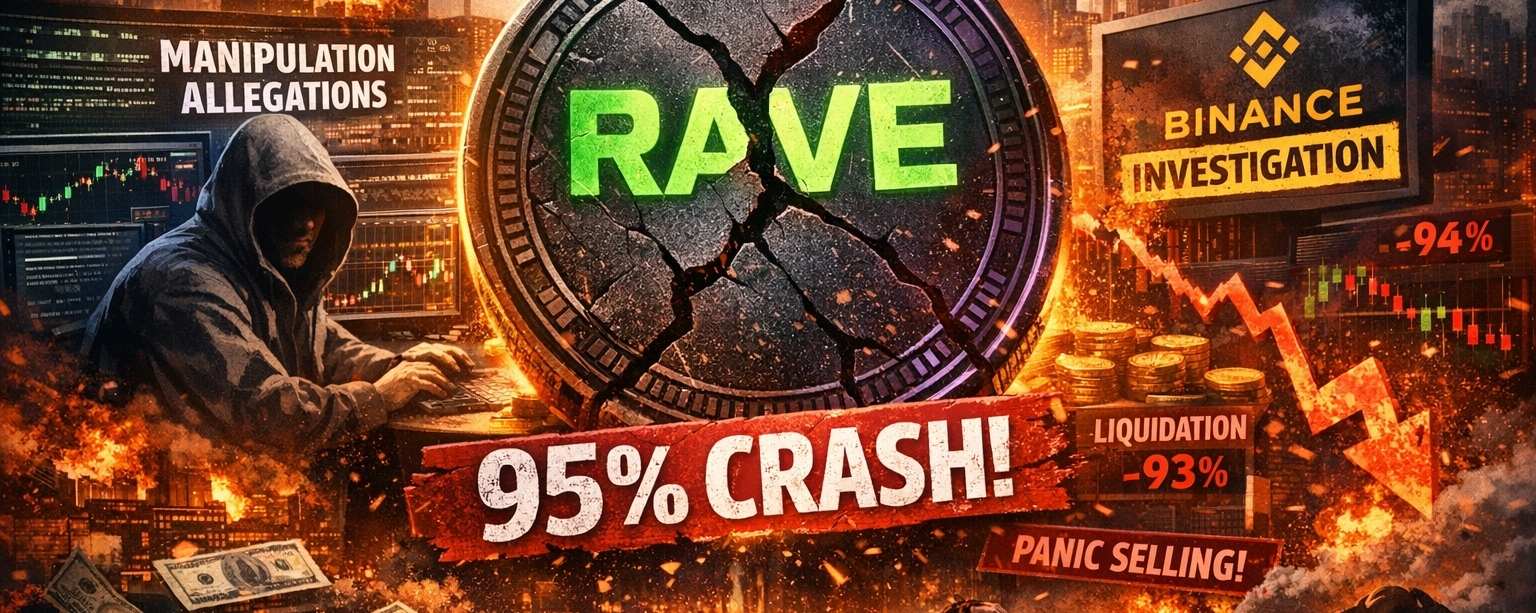
The crypto market saw a very shocking moment when the RAVE token suddenly crashed by almost 95%. What started as a strong and fast-growing project turned into one of the most talked-about collapses of the year. Many traders were surprised, confused, and in some cases heavily affected by the rapid fall.
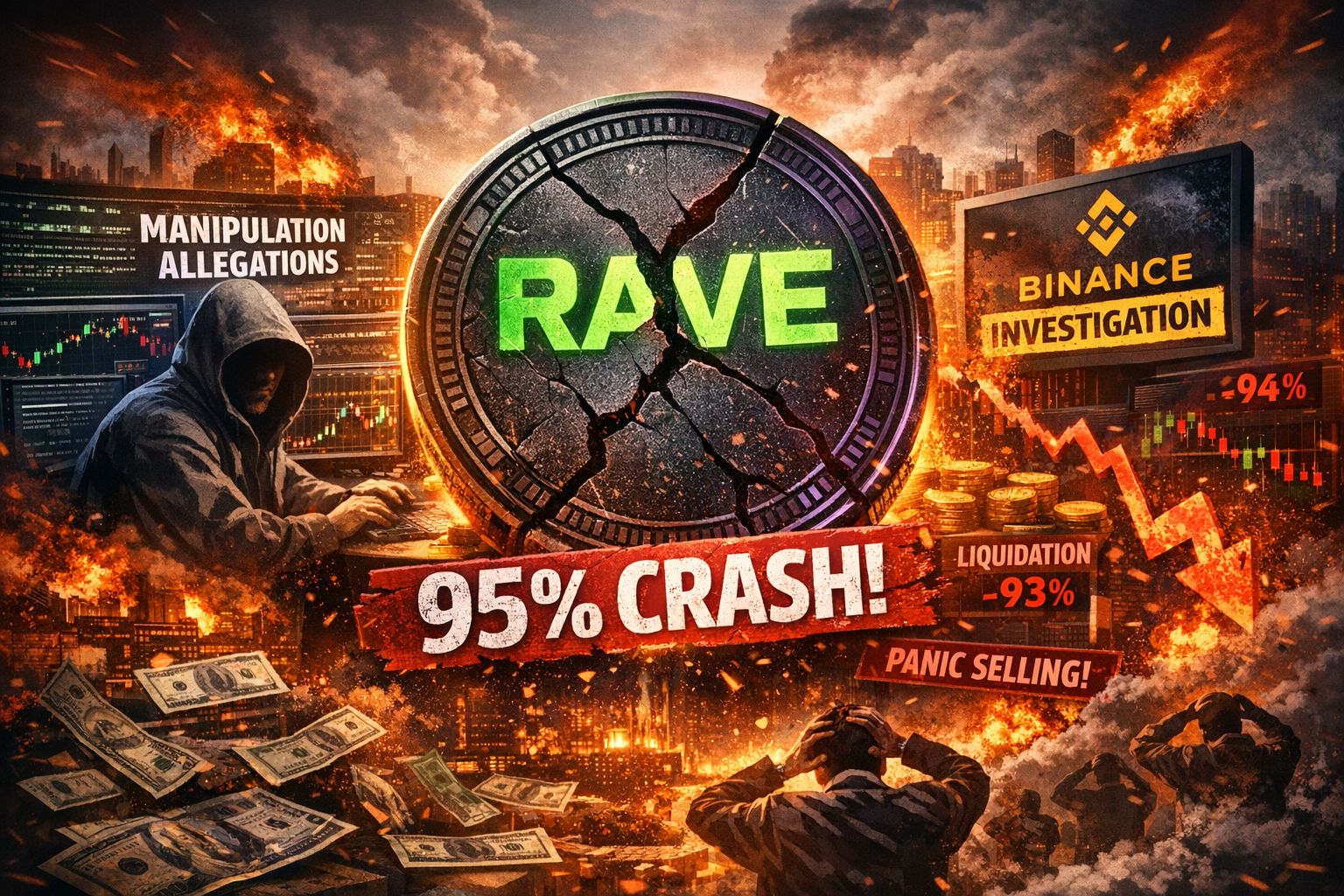
This is what actually happened, based on information gathered from multiple reports, on-chain data, and community discussions.
A Fast Rise That Caught Everyone’s Attention
Before the crash, RAVE was moving like a rocket.
The price jumped from very low levels to extremely high values in a short time. At its peak, the token gained thousands of percent, which created huge excitement in the market.
Many traders joined in because they saw fast profits. Social media also played a big role in building hype. People started talking about it everywhere, and the fear of missing out pushed even more buyers into the market.
But behind this fast rise, there were already concerns about how the token supply was structured and how concentrated it might be in a few wallets.
The First Signs of Trouble
Things started changing when blockchain analysts and crypto investigators began pointing out unusual activity.
One of the biggest concerns was that a large portion of the token supply seemed to be controlled by a small number of wallets. This raised questions about whether the market was truly decentralized or not.
At the same time, some trading patterns looked unusual. Large buy and sell movements appeared in short time frames, which made observers suspect possible coordinated activity.
Once these concerns started spreading, confidence in the token began to weaken quickly.
The Sudden 95% Crash
After the doubts spread across the community, the market reaction was extremely fast.
The price of RAVE dropped sharply within hours. What had been a strong uptrend turned into a deep collapse.
The token lost around 95% of its value
Heavy selling pressure entered the market
Liquidations from leveraged traders made the fall even worse
Liquidity disappeared quickly as panic spread
Many traders who entered during the hype phase saw their positions wiped out in a very short time.
This kind of movement is often described as a liquidation chain reaction, where falling prices trigger more forced selling, which pushes the price even lower.
Manipulation Allegations Start Spreading
As the crash continued, discussions around possible manipulation became louder.
Some blockchain data trackers suggested that:
A small group of wallets controlled a large share of supply
Large transfers happened before the price drop
Some early holders may have sold at high levels
Market activity looked unusually coordinated
These points led to strong speculation that the crash was not just natural market behavior, but possibly influenced by insiders or large holders.
However, these claims are still under investigation and have not been officially confirmed.
Exchange Reactions and Investigations
After the sharp fall, some exchanges and tracking platforms started reviewing the situation.
Reports indicate that trading platforms began:
Monitoring wallet movements more closely
Reviewing trading patterns linked to RAVE
Investigating abnormal volume spikes
Assessing whether market manipulation occurred
These steps added more uncertainty in the market, which kept pressure on the token price.
Why the Crash Was So Extreme
Experts believe several factors combined to create such a deep collapse:
First, the token supply was heavily concentrated. When ownership is not spread out, price stability becomes very weak.
Second, many traders were using leverage. This means even small price drops can trigger large forced liquidations.
Third, the project did not have strong real-world usage at the time. The price movement was mostly driven by hype and speculation.
Finally, once trust broke, panic selling took over the entire market.
What the Community Learned
The RAVE crash became another reminder of how risky fast-moving crypto tokens can be.
It showed that:
Hype alone cannot support long-term price stability
Concentrated supply can create serious risks
Leverage can amplify losses during crashes
Market sentiment can change in minutes
For many traders, it was a painful experience, but also a strong lesson in risk management.
Final Thoughts
The fall of RAVE is still being discussed across the crypto community. Some believe it was a normal collapse caused by over-speculation, while others think deeper manipulation may have played a role.
Investigations are still ongoing, and the full truth may take time to uncover.
But one thing is clear: in crypto, fast gains often come with equally fast risks, and projects without strong balance can collapse just as quickly as they rise.