
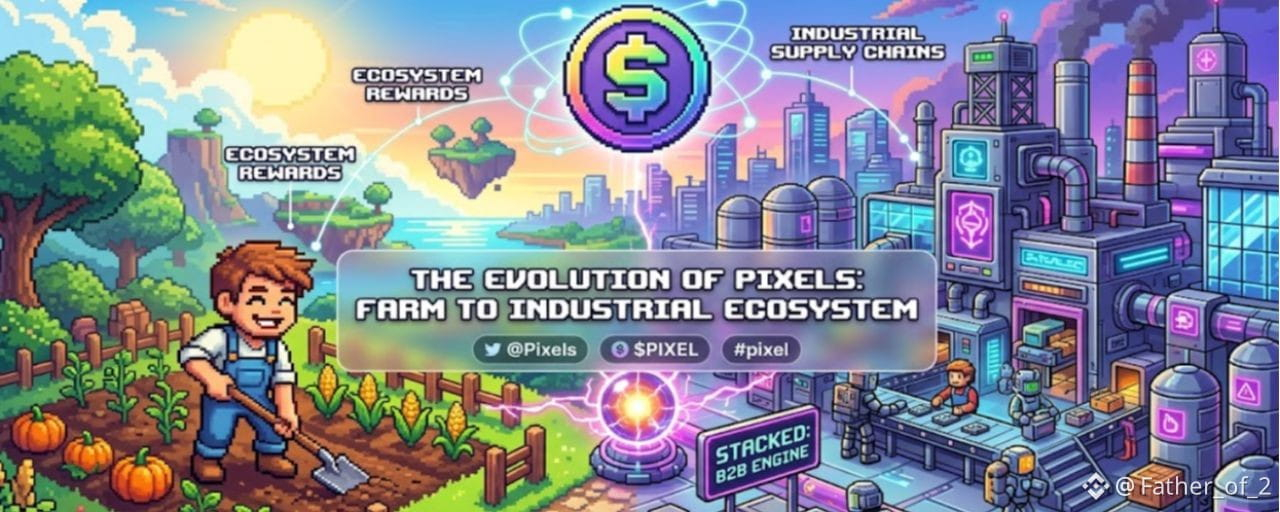
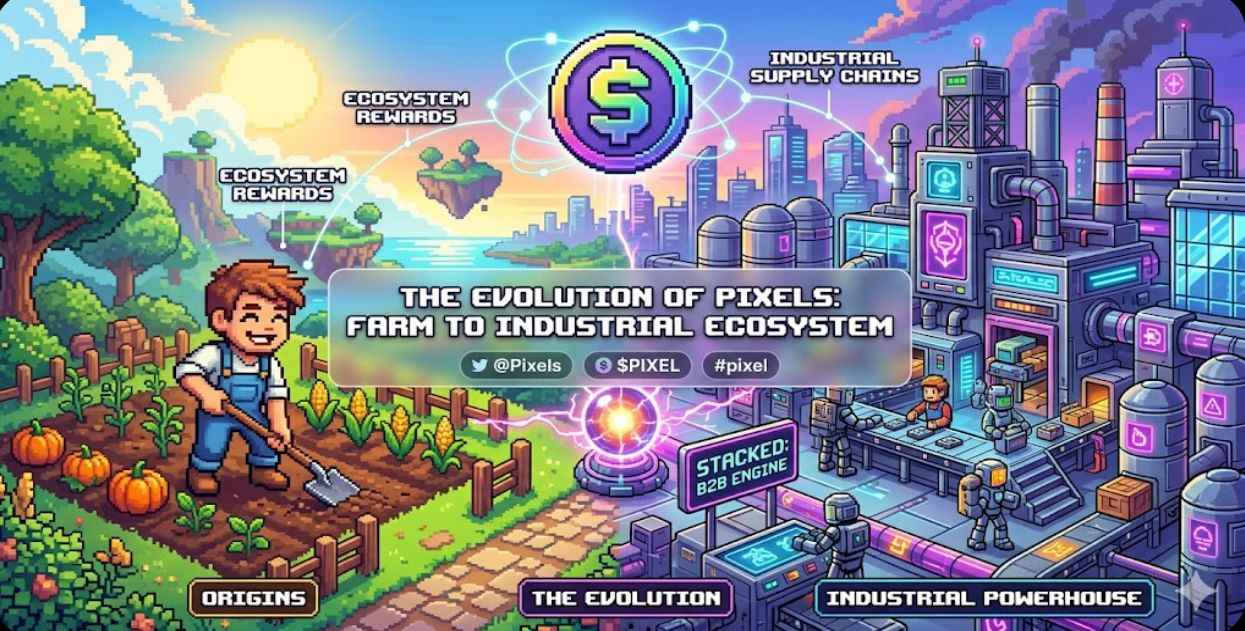
In the fast-moving world of Web3 gaming, few projects have shown the resilience and adaptability of @Pixels . As we move deeper into 2026, it’s clear that Pixels has transcended its origins as a cozy farming simulator on the Ronin Network to become a sophisticated industrial ecosystem.
The Stacked Revolution
The real "alpha" for the project this year is the Stacked infrastructure. For those who haven't been following closely, Stacked is Pixels’ AI-driven B2B reward and retention engine. It has successfully turned @Pixels into more than just a single game; it is now a commercial backbone for the entire GameFi sector.
By integrating with external studios, Stacked allows other games to plug into the Pixels ecosystem. This creates a massive "cross-ecosystem flywheel" where PIXEL acts as a universal reward token. Imagine earning rewards in one game and having them fuel your industrial supply chain in another—that is the reality Stacked is building.
Chapter 3: Bountyfall and Industrial Growth
With the launch of Chapter 3, the gameplay has shifted from simple harvesting to complex resource management. We now see:
Union Factions: Groups like the Wildgroves and Reapers competing for dominance.
Industrial Supply Chains: Managing rare resources from Space and Arctic lands.
Staking Utility: $PIXEL staking now provides AI-powered boosts across your farm, making the token a productive asset rather than just a speculative one.
Why PIXEL Matters in 2026
The tokenomics have matured significantly. With the transition from $BERRY to a more sustainable $PIXEL-centric model, the economy is built for longevity. The "Farmer Fee" and in-game sinking mechanisms ensure that value stays within the ecosystem, rewarding long-term holders and active players.
Whether you’re a casual farmer or a guild leader managing a massive industrial empire, the message is clear: the PIXEL ecosystem is just getting started.
