

What if the real problem with blockchain games isn’t that they failed, but that they tried to solve the wrong thing from the beginning? For years, the focus has been on ownership, liquidity, and token design, as if turning in-game actions into financial assets would naturally make games more meaningful. But most players were never asking for that. They were asking for worlds that feel alive, systems that reward time without exploiting it, and experiences that don’t collapse the moment growth slows. The disconnect between what was built and what was actually needed is where most GameFi experiments quietly broke down.
Before projects like Pixels started gaining traction, the dominant assumption in Web3 gaming was that better economics would fix weak gameplay. Developers engineered complex reward loops, introduced governance tokens, and layered in staking mechanisms, believing that if players could earn, they would stay. What happened instead was a kind of behavioral distortion. Players stopped acting like players. They became short-term strategists, constantly calculating output versus input, looking for the fastest path to extraction. The game itself became secondary, almost incidental.
This problem persisted because it wasn’t obvious at first. Early growth masked structural weaknesses. As long as new participants entered the system, rewards could be sustained. But once expansion slowed, the imbalance between value creation and value extraction became visible. Economies that depended on continuous inflow started to contract. Rewards lost meaning, and with them, player interest. The issue wasn’t just inflation or token mismanagement. It was the absence of a stable reason to stay once earning stopped being attractive.
Attempts to address this often went deeper into financial design rather than stepping back from it. More tokens were introduced, more sinks were added, more rules were layered on top. But these solutions tended to treat symptoms rather than causes. They assumed that better calibration could fix fundamentally unstable behavior. What they didn’t fully account for was that once a system teaches players to optimize for profit, it becomes very difficult to reverse that mindset.
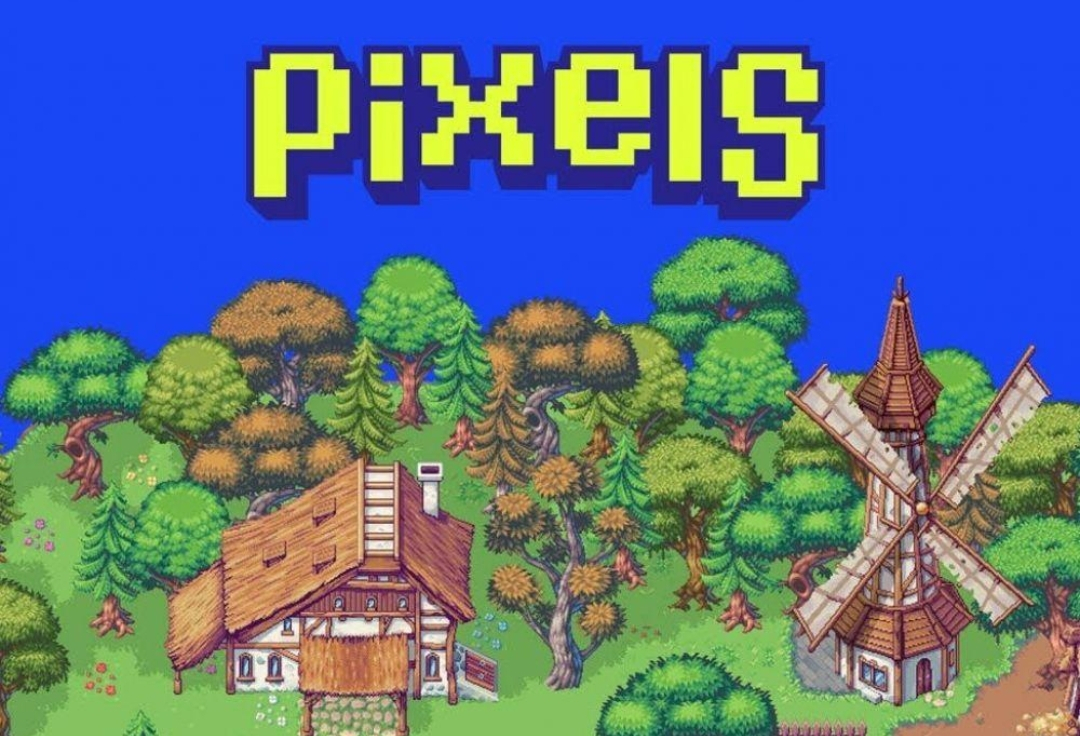
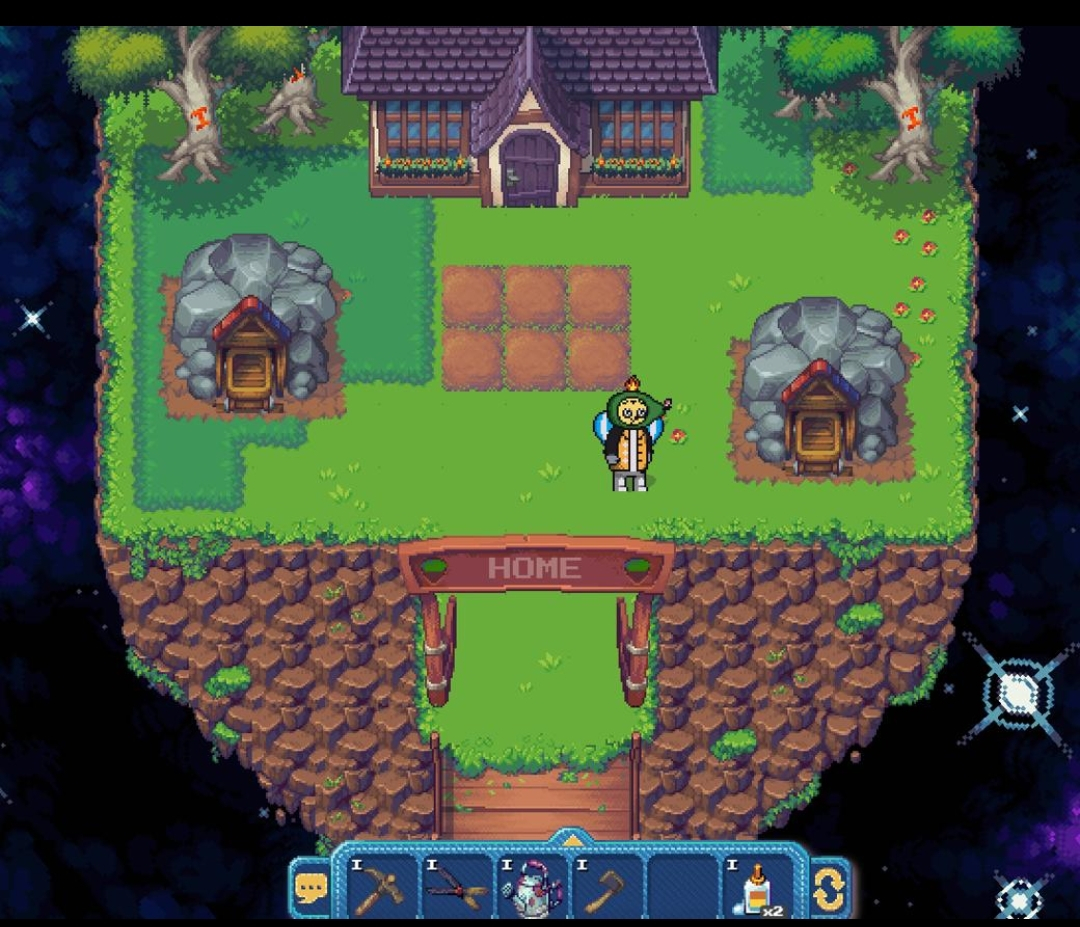
Pixels approaches this from a slightly different direction, though not in a way that claims to rewrite the rules entirely. Built on the Ronin Network, it presents itself less as a financial system disguised as a game and more as a game that happens to include financial elements. The distinction may seem subtle, but it has implications for how players interact with the environment. Instead of pushing users immediately into token mechanics, the game introduces familiar loops—farming, crafting, exploration—that can stand on their own, at least initially.
The project suggests that if players find intrinsic value in the activity itself, the economic layer can remain secondary rather than dominant. In practical terms, this means structuring progression around in-game resources while reserving tokenized elements for specific interactions. The use of a dual-currency system reflects this thinking. Everyday actions are handled through standard gameplay loops, while the PIXEL token operates at a higher level, tied to premium features or more significant transactions. It is an attempt to separate routine engagement from financial pressure.
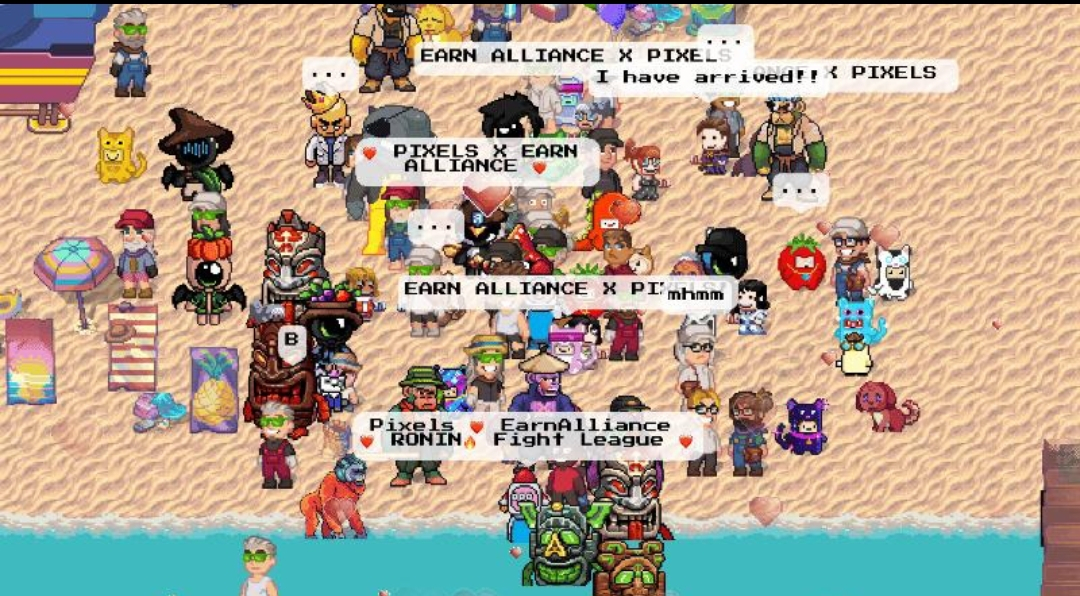
Another aspect worth noting is the emphasis on social structure. Pixels leans into the idea that communities, not just rewards, can anchor long-term participation. Guilds, shared spaces, and collaborative tasks are framed as central to the experience. The assumption is that coordination creates a different kind of value, one that is harder to abandon because it is tied to relationships rather than returns. This is a reasonable hypothesis, but it introduces its own complexity. Social systems can stabilize engagement, but they can also concentrate power and accelerate optimization if groups begin to act collectively with economic intent.
Some elements of this approach feel grounded. Lower transaction costs on Ronin reduce friction, making small interactions more viable. The familiar design lowers the barrier for players who are not already embedded in crypto ecosystems. These choices suggest an awareness that accessibility matters as much as innovation. In a space that often prioritizes novelty, returning to proven game design patterns could be seen as a form of restraint rather than a limitation.
Still, there are open questions that the design does not fully resolve. The idea that gameplay can remain primary depends heavily on how the economy evolves over time. Even if the system starts with a balanced structure, external markets have a way of reshaping internal behavior. Once assets gain real-world value, the incentive to optimize becomes difficult to contain. The challenge is not just in designing the system, but in maintaining its intended dynamics as conditions change.
There is also the question of scale. Systems that function well with a smaller, more engaged player base may behave differently under rapid growth. Resource distribution, land ownership, and access to progression can shift in ways that are hard to predict. Early participants may gain advantages that compound over time, creating imbalances that are difficult to correct without disrupting the experience. Whether Pixels can adapt to these pressures without undermining its own structure remains uncertain.
At a broader level, the project reflects a shift in how developers are thinking about Web3 gaming. Instead of asking how to maximize economic output, there is a growing focus on how to sustain engagement without over-relying on financial incentives. Pixels is one expression of that shift, but it is not insulated from the same forces that affected earlier projects. The balance it is trying to achieve is inherently unstable, not because of poor design, but because of the nature of systems where play and value intersect.
If the next phase of blockchain games is defined less by innovation in tokens and more by restraint in how they are used, then the real question becomes harder to answer: can a system that offers real economic value ever truly remain a game first, or does the presence of that value inevitably reshape it into something else over time?
