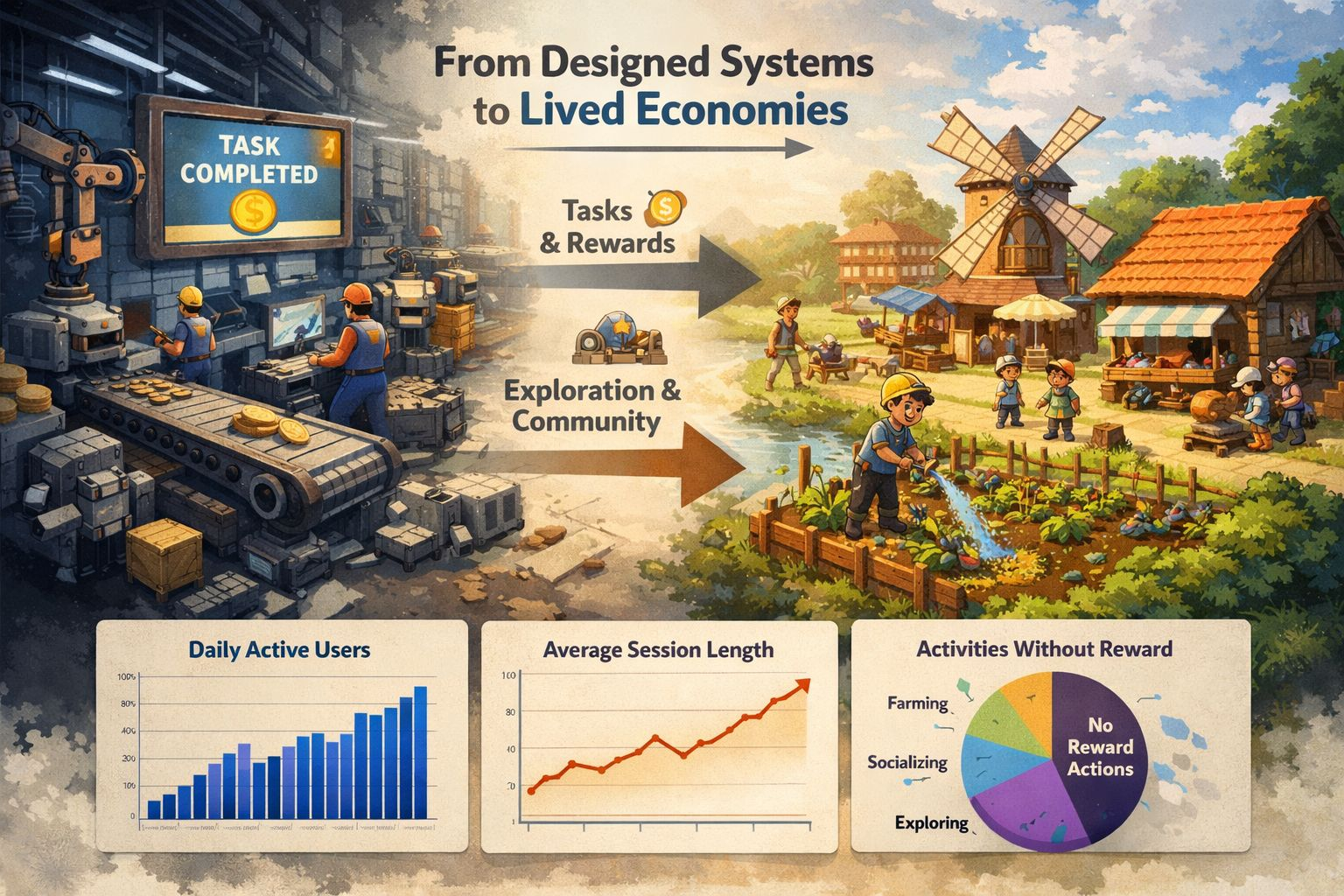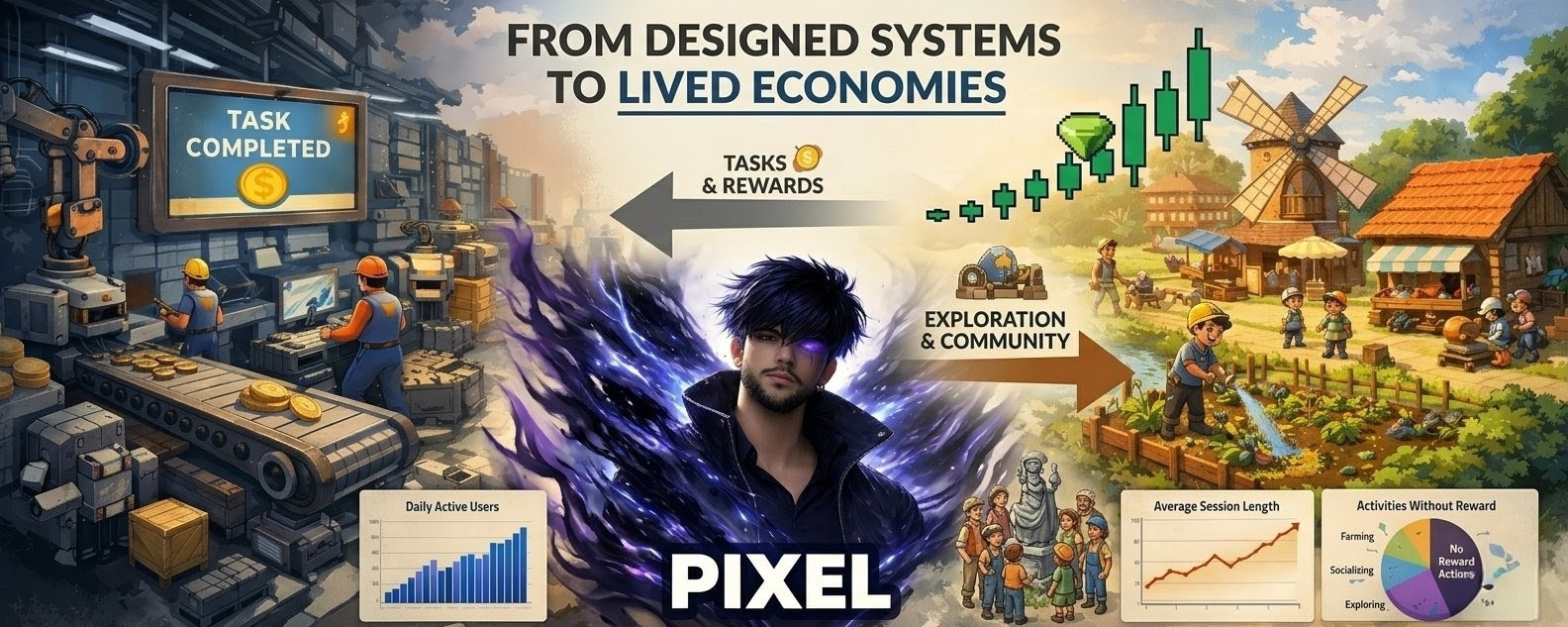
There was a time when every digital system felt like a machine you had to figure out. You would enter, learn the rules do what you had to do and get the result you could. It was a way to get things done but it did not feel very natural. A better way to think about what's changing now is this: instead of building machines some projects are starting to build places. Not places you can master in a time but places you can get used to over time. Pixels is right in the middle of that change.
If you think of GameFi as a factory everything makes sense. You are given tasks you do them. You get something in return. The system is designed to be clear and easy to use.. Factories have limits. They are good at getting things done. They are not good at keeping people interested. This is what early play to earn models showed us. When the rewards were good people came quickly. When the rewards were not as good they left as fast. The data from cycles showed the same thing. People were not staying because they wanted to they were staying because it was worth it.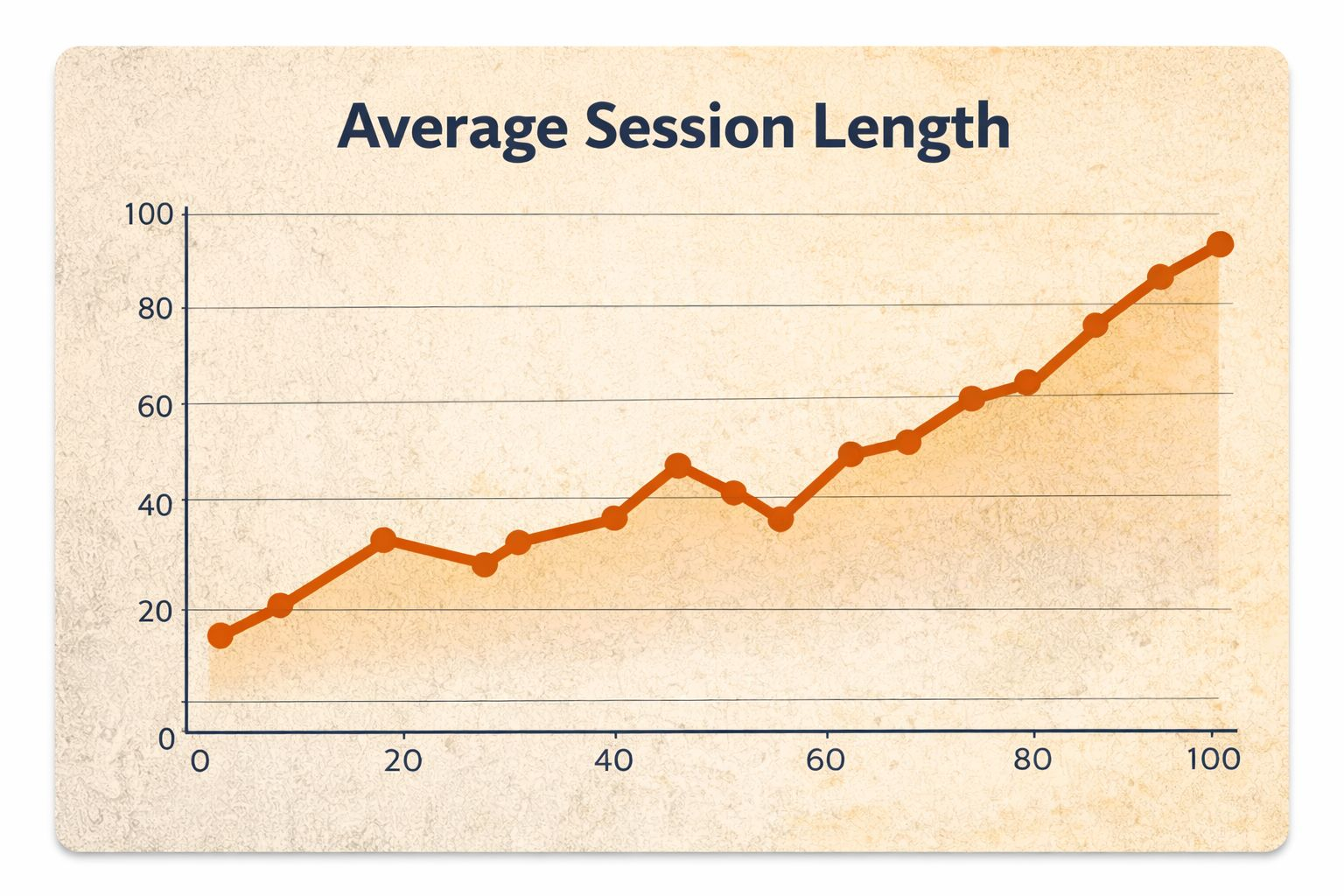
Pixels looks at this problem in a way. Of making rewards the main thing it makes them just one part of a bigger environment. The game does not always push you to do the efficient thing. You can do things like farm, explore, trade or just move around without feeling like you have to justify every action. Over time this changes how you interact with the system. You stop thinking about what you can get now and start doing things out of habit. That change may seem small. It is what makes a system that people visit into a system that people come back to.
This is where data becomes more interesting. In Web3 systems data is just about what people do and what they get. In Pixels data starts to show how people behave in a sense. It shows how often players come back how long they stay and what they choose to do when there is no reward. These patterns are harder to see. They are more valuable. They show if the system is becoming a part of a players routine or something they do sometimes.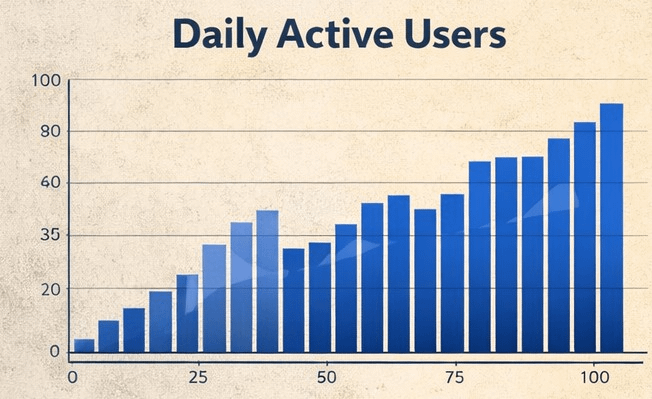
The Ronin Network helps this change in a important way. It makes sure that interactions are smooth and do not stop. When systems are not smooth, people. Start thinking about the cost. When systems are smooth people forget about the technology. Focus on what they are doing. This is important because people only behave naturally when the system does not remind them it is there.
Rewards are still a part of the design. In GameFi projects rewards tell players exactly what to do and reward them for doing it well. Pixels takes an approach. Rewards are there. They do not tell you what to do all the time. This allows people to do things, including things that are not immediately worth it. While this may seem inefficient in the term it makes the system more interesting and stable in the long term.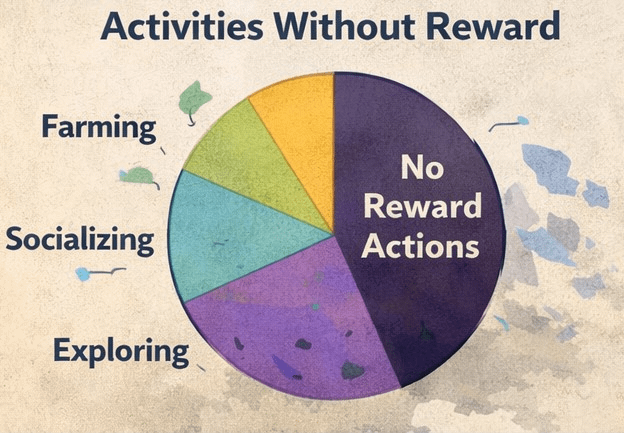
This combination of data, technology and rewards starts to make something that looks like a traditional economy and more like a real one. A real economy is not perfect all the time. It allows for differences, experiments and even things that are not efficient. Over time these things make the system deeper. Players are not just doing tasks they are part of an environment that changes with their behavior. This is a different model from one where every action is designed to get a specific result.
At the time this approach introduces new challenges. One of the risks is that players may start to optimize again if the economic part becomes too strong. In a system designed for flexibility strong rewards can quickly change behavior. Another challenge is how people see it. Many users coming to Web3 are still looking for returns. When those returns are not visible they may think the system is not worth it. Balancing term interest with short term expectations is not easy and requires careful design.
The timing of this change is not accidental. The industry has already tested the limits of speed and rewards. Faster transactions and higher rewards can attract users. They do not keep them. What is still not solved is how to make systems that people want to come to even when the excitement fades. Pixels offers one direction by focusing less on what you get right now and more on keeping people interested over time.
If this model keeps developing it could change how we understand ownership. Of being tied to specific actions ownership may start to reflect how consistently you participate over time. Value would not come from what you do at one moment but from how you keep engaging over time. This creates a connection between the user and the system one that is not easily broken by short term changes.
Pixels is still. It does not fully solve every challenge it introduces. There are still questions about how its economy will grow how rewards will be balanced and how user behavior will change as the system gets bigger.. What it shows is important. It shows that digital environments do not have to be designed to get things done. They can also be spaces where behavior develops naturally and value forms over time.
In the end the biggest change is not technical. How we think about it. It is the move, from systems that tell users what to do to systems that let users decide how they want to be part of them. That difference may seem small. It has big implications. Because the systems that last are not always the ones that're the most efficient but the ones that make you want to come back without being told.