
Most Web3 games don’t fail because they lack technology—they fail because they forget something simple: people play games to feel something, not just to earn something. When every action is tied to profit, play starts to feel like work. That’s been the pattern for a while now.
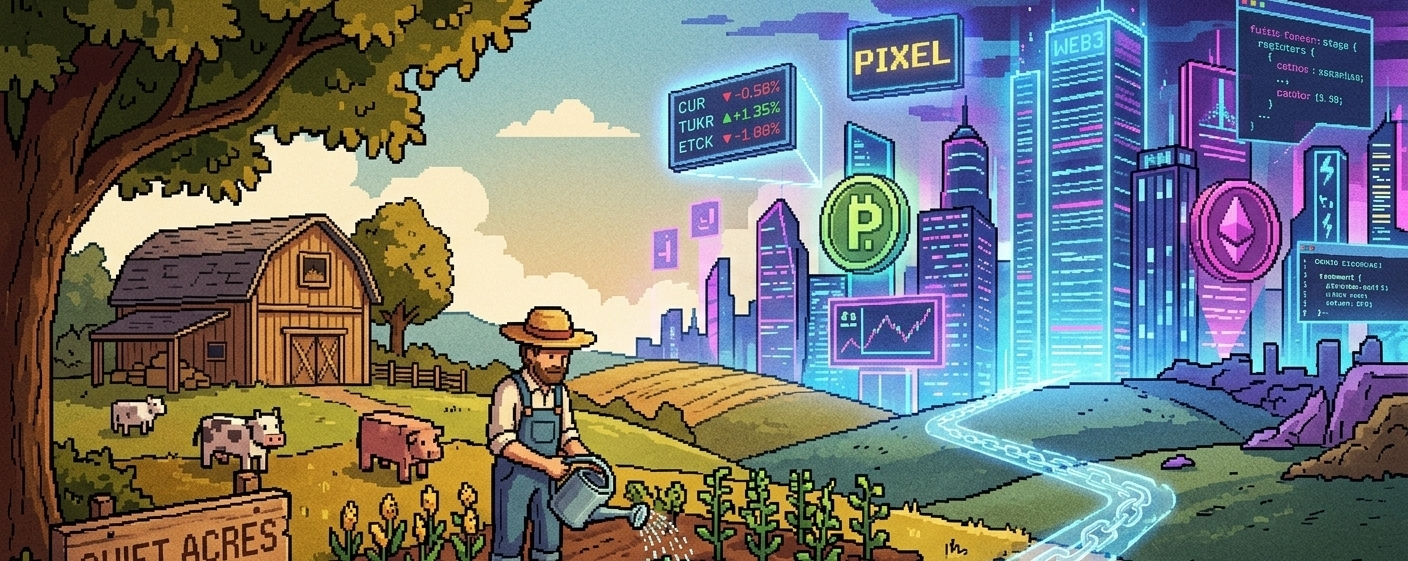
Pixels takes a slightly different path. It doesn’t completely escape that tension, but it doesn’t rush into it either. When you first step into the game, it doesn’t ask you to think about tokens or returns. It just gives you a space. You plant crops, gather materials, walk around, interact with others. It feels familiar, almost like the kind of slow, routine-based games people have been playing for years.
That familiarity is important. It lowers the barrier. You don’t need to understand crypto to get started. You don’t even need to care about it at first. The game builds a rhythm instead—log in, do a few tasks, come back later. It’s simple, maybe even repetitive, but in a calm way. The kind of repetition that can turn into a habit if it feels meaningful.
Underneath that simplicity, though, there’s a second layer waiting. As you spend more time in the game, the token economy begins to appear. PIXEL isn’t forced on you right away, but it becomes more relevant as you go deeper—unlocking upgrades, ownership, and more advanced parts of the system. This gradual introduction is one of the more thoughtful choices in the design. It gives players time to engage before they’re asked to invest.
Still, once the token enters the picture, the tone can shift. Not immediately, but subtly. Players start to think about efficiency. About what actions are “worth it.” About how to get more out of their time. This isn’t unique to Pixels—it’s something almost every Web3 game struggles with. The challenge is keeping the experience feeling like a game instead of turning it into a system to optimize.
What makes Pixels interesting is that it hasn’t fully tipped in either direction yet. It still feels like it’s trying to be a place first, and an economy second. There’s a sense of presence in it. You’re not just clicking for rewards—you’re maintaining something, even if it’s just a small digital farm. The social elements, the idea of land, the slow progression—they all hint at something more grounded, more human.
But that balance is fragile. The same loop that feels relaxing can start to feel like a chore if rewards become the main focus. If players begin to measure everything in terms of tokens, the atmosphere changes. What once felt like a shared space can start to feel like a quiet production line.
There are also bigger questions that haven’t been answered yet. Can the game keep players engaged without constantly relying on financial incentives? Will the gameplay deepen over time, or stay too simple? And how will it handle the gap between early players—who often hold more valuable assets—and newcomers trying to find their place?
These aren’t small challenges. They’re the same ones that have shaped the rise and fall of many projects in this space.
But Pixels doesn’t feel like it’s pretending to have all the answers. It feels more like an experiment—one that’s trying to find a middle ground between play and profit without rushing to either extreme. That alone makes it worth paying attention to.
It may grow into something lasting, or it may struggle under the same pressures as others before it. For now, it sits in an interesting position: not as a finished success, but as a quiet attempt to make Web3 gaming feel a little more like… just playing a game again.