
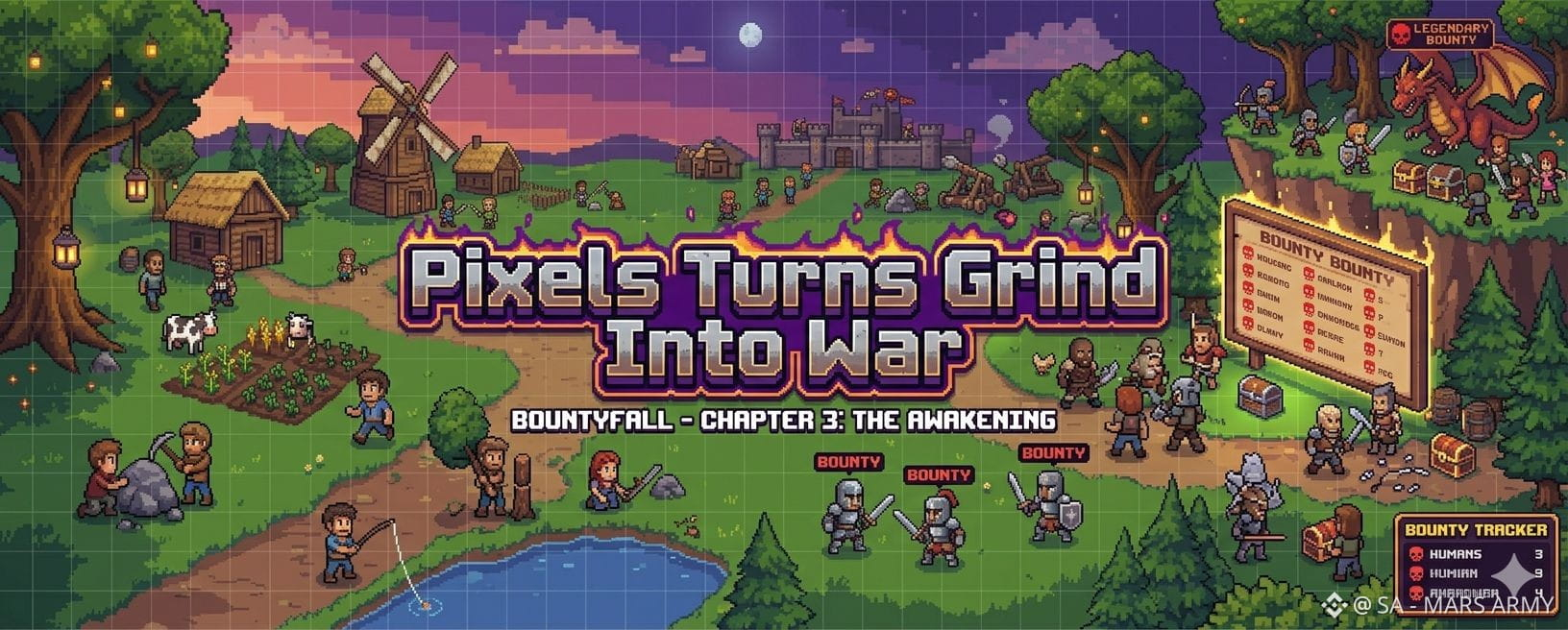
When I first looked at @Pixels Chapter 3: Bountyfall, it didn’t feel like just another seasonal update. It felt like the moment the game stopped being about individual loops and started testing what happens when thousands of small decisions collide at scale.
On the surface, it’s simple enough. You pick a Union. Wildgroves, Seedwrights, or Reapers. You farm, craft, and play like you always have, but now you’re earning Yieldstones in three types, each tied to your faction’s identity. You deposit those stones into your Union’s Hearth, pushing it toward 100% health. The first to get there takes 70% of the prize pool, which is paid out in $PIXEL and other rewards.
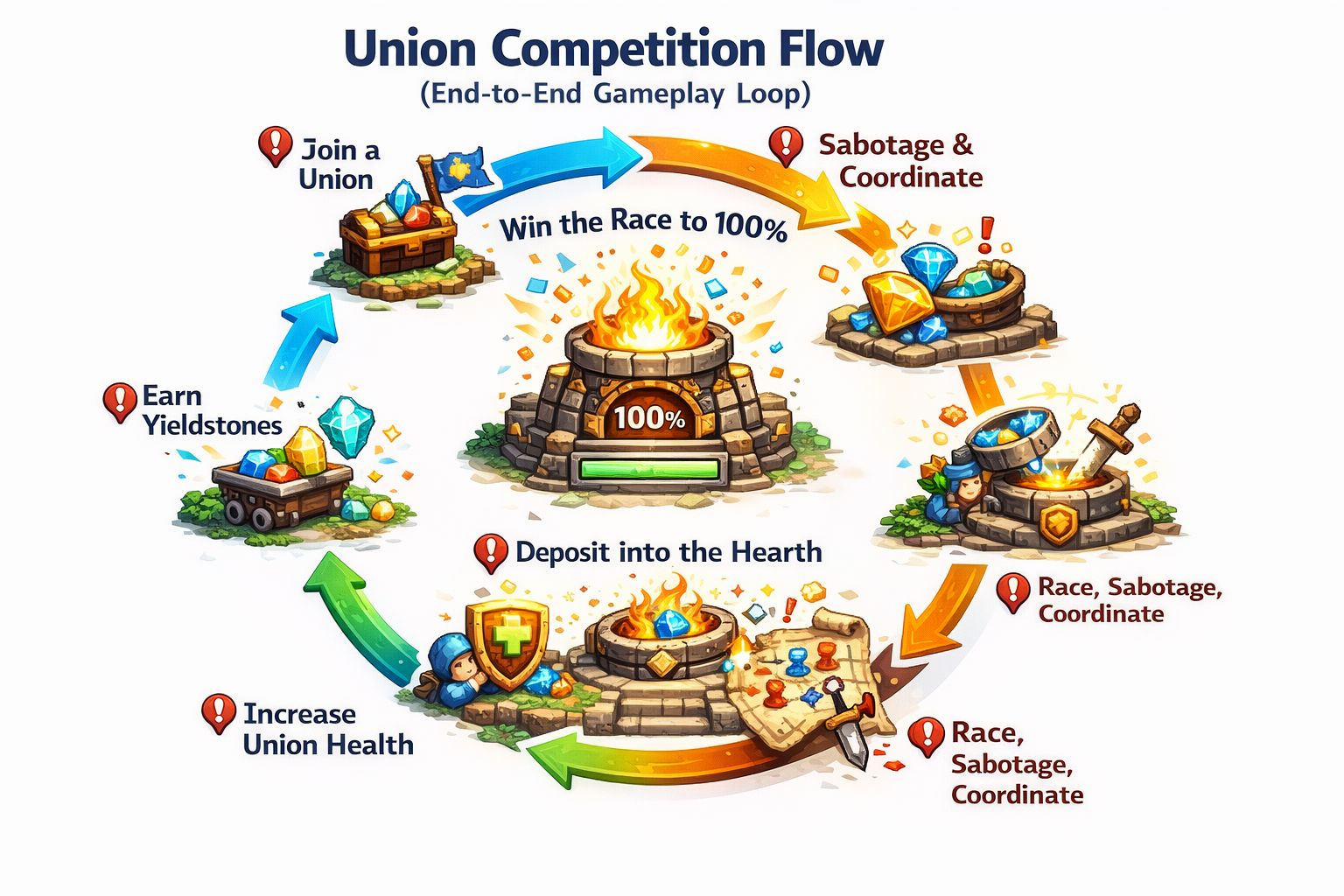
But that surface loop hides something more interesting. The system quietly turns every routine action into a strategic choice. Farming carrots isn’t just farming anymore. It’s a contribution to a faction-wide race where thousands of players are pushing the same meter forward. And because prize pools scale with participation, every additional player doesn’t just add activity, they increase the stakes for everyone.
That scaling matters. A static reward is predictable. A dynamic pool that grows with engagement creates a feedback loop. More players mean more value, which attracts more players, which raises the value again. It’s a familiar pattern in crypto right now, especially in GameFi, where attention itself is becoming a measurable asset.
Underneath that loop is where Bountyfall gets more nuanced. Yieldstones exist in five tiers, which introduces friction. Not all contributions are equal. A high-tier Yieldstone represents more time, more coordination, or better optimization. That creates a quiet hierarchy inside each Union. Some players are casual contributors, others are effectively carrying weight.
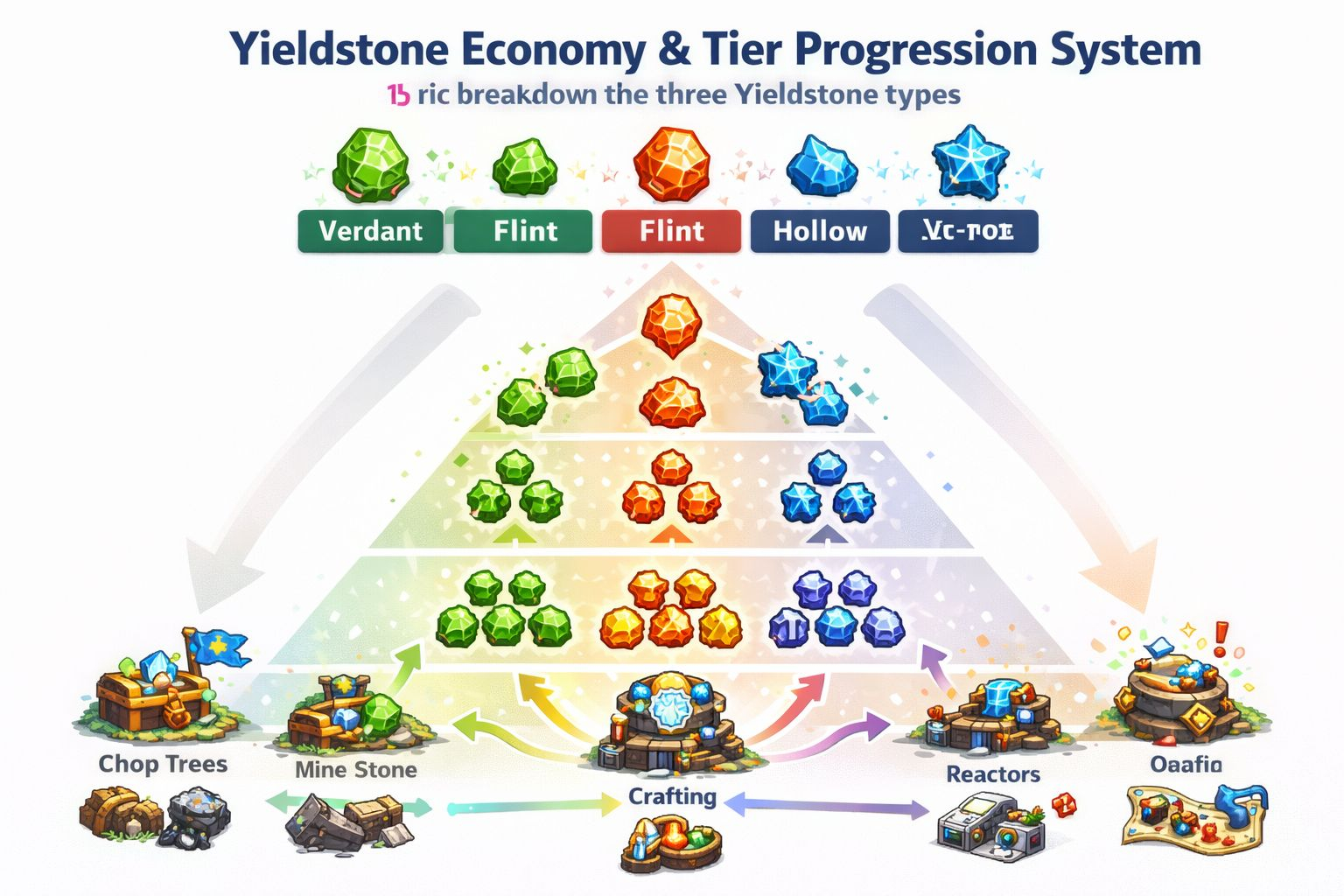
That imbalance could fracture a system, but Pixels adds just enough structure to manage it. Leaderboards track contributions, which gives visibility to effort. Reactors and crafting systems allow players to refine lower-tier resources into something more impactful. It’s not pure meritocracy, but it’s close enough to feel earned.
Then there’s sabotage. Light PvP, but not in the traditional sense. You’re not directly fighting another player in combat. Instead, you’re interfering with their progress. That shift is subtle but important. It lowers the barrier to entry for competitive play while still introducing tension.
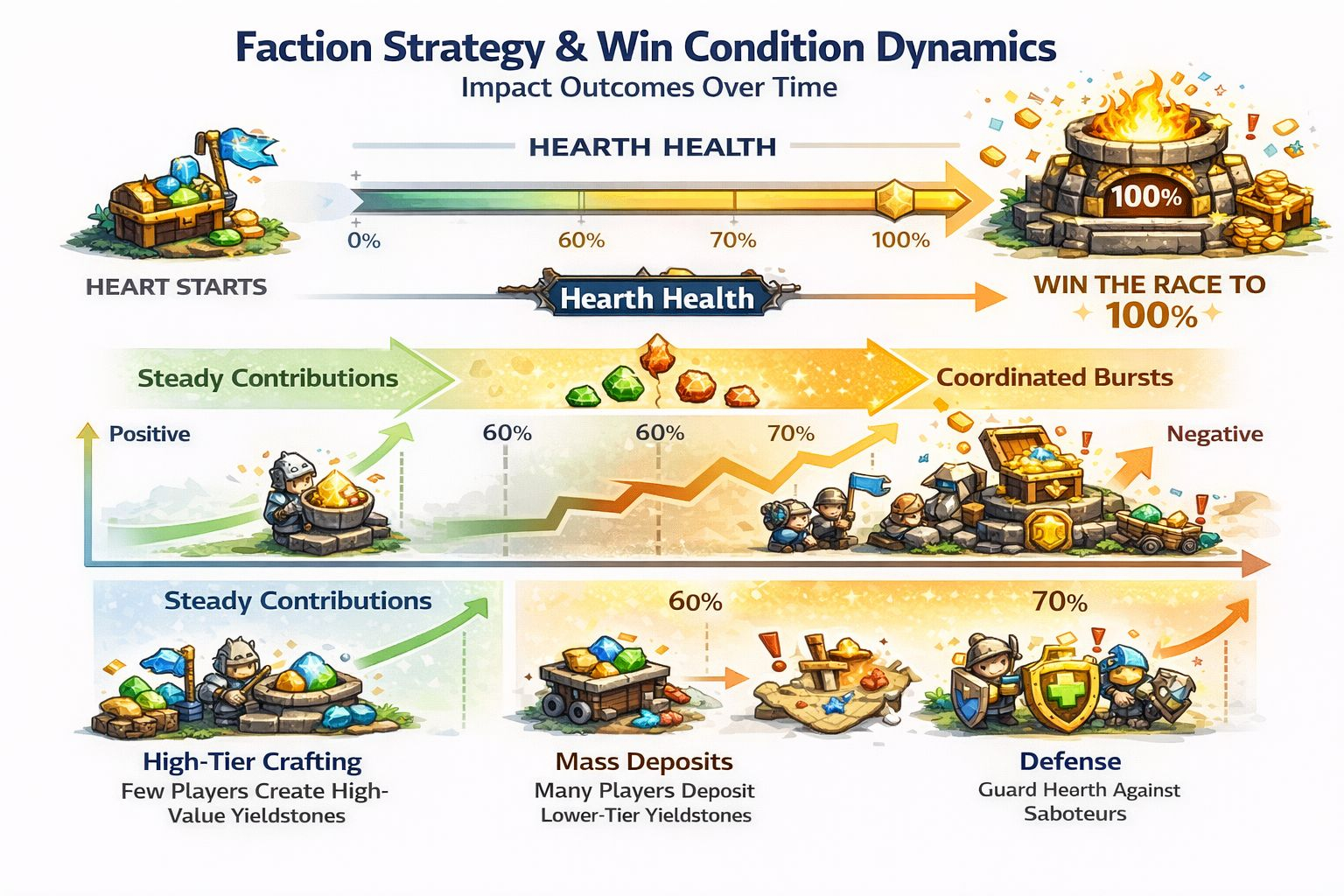
What struck me is how this changes player psychology. In most farming games, efficiency is personal. Here, efficiency becomes political. Do you deposit your Yieldstones now to secure steady progress, or hold them for a coordinated push with your Union? Do you focus on crafting higher tiers, or disrupt a rival faction’s momentum?
That momentum creates another effect. Temporal strategy starts to matter. Early in the season, broad participation likely matters more than optimization. Later, when Hearth health percentages are tight, coordinated bursts of high-tier deposits could swing the outcome. It’s no longer just about how much you contribute, but when.
Of course, there are risks baked into this. A system where one Union takes 70% of the pool can create runaway leaders. If one faction gains an early edge, network effects could lock in that advantage. Players tend to gravitate toward winners, especially when rewards are visible and immediate. That could hollow out competition over time if not balanced carefully.
There’s also the question of sustainability. Prize pools tied to participation work well when attention is rising. But if engagement dips, the system has to stand on its own without inflated incentives. Early signs in the broader market suggest that players are becoming more selective. They’re not just chasing rewards anymore, they’re looking for systems that feel fair and repeatable.
Understanding that helps explain why Bountyfall leans so heavily into cooperation. It’s not just about winning a season. It’s about building a sense of shared progress that keeps players invested even when rewards fluctuate. If that holds, it gives Pixels something many GameFi projects struggle with, a foundation that isn’t purely financial.
Meanwhile, the timing of this release is telling. Late 2025 into 2026 has been defined by a shift toward social coordination in crypto games. We’re seeing more systems where value is created collectively rather than individually. Bountyfall fits directly into that pattern, but with a lighter touch that keeps it accessible.
What this really reveals is a change in design philosophy. Games like Pixels are no longer just trying to reward activity. They’re trying to shape behavior at scale. Every mechanic in Bountyfall nudges players toward thinking not just about what they’re doing, but how it fits into a larger group effort.
If that direction continues, the line between game systems and economic systems will keep blurring. And the projects that succeed won’t be the ones with the biggest rewards, but the ones that make participation feel meaningful even when the numbers fluctuate.
The quiet shift here is that winning isn’t just about grinding harder. It’s about aligning with thousands of others at the right moment, and that’s a very different kind of game.
