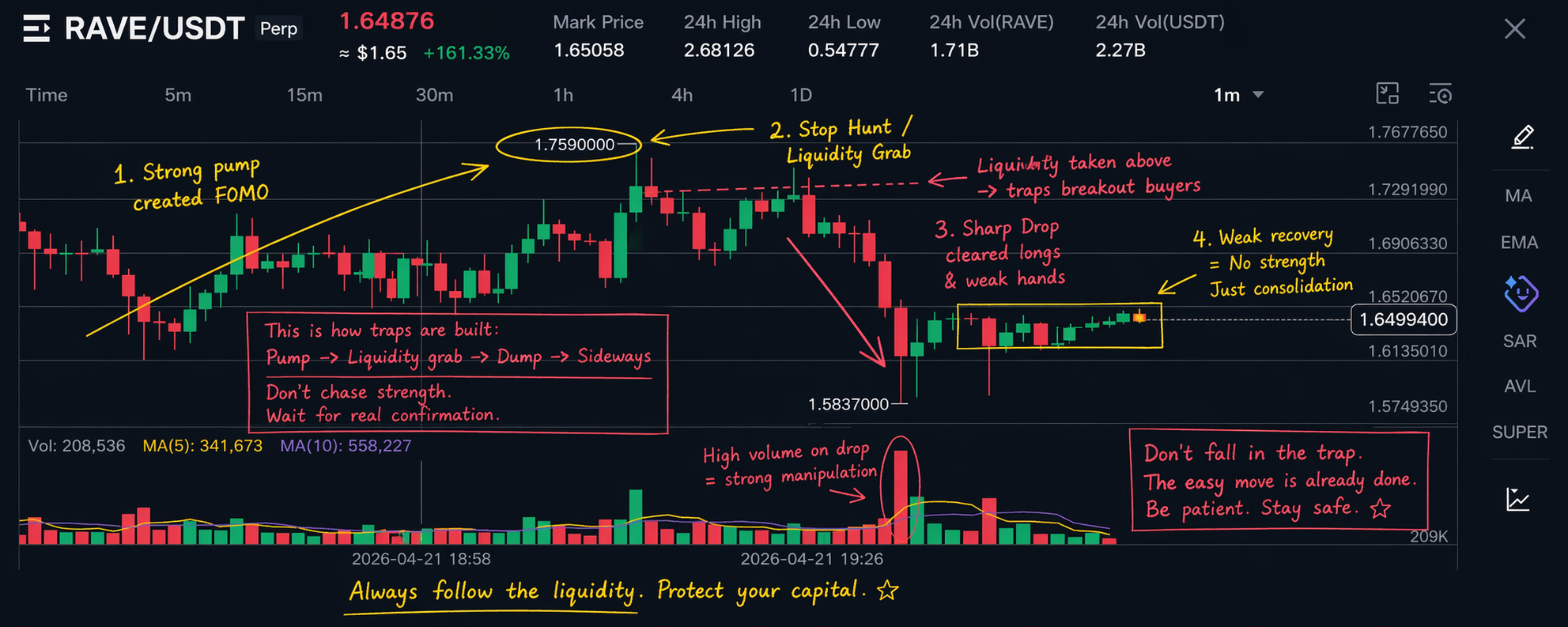
Price pushed hard, printed a strong high around 1.75, and pulled in momentum traders chasing the breakout. On the surface, it looked like continuation. Strong trend, strong volume, clean structure.
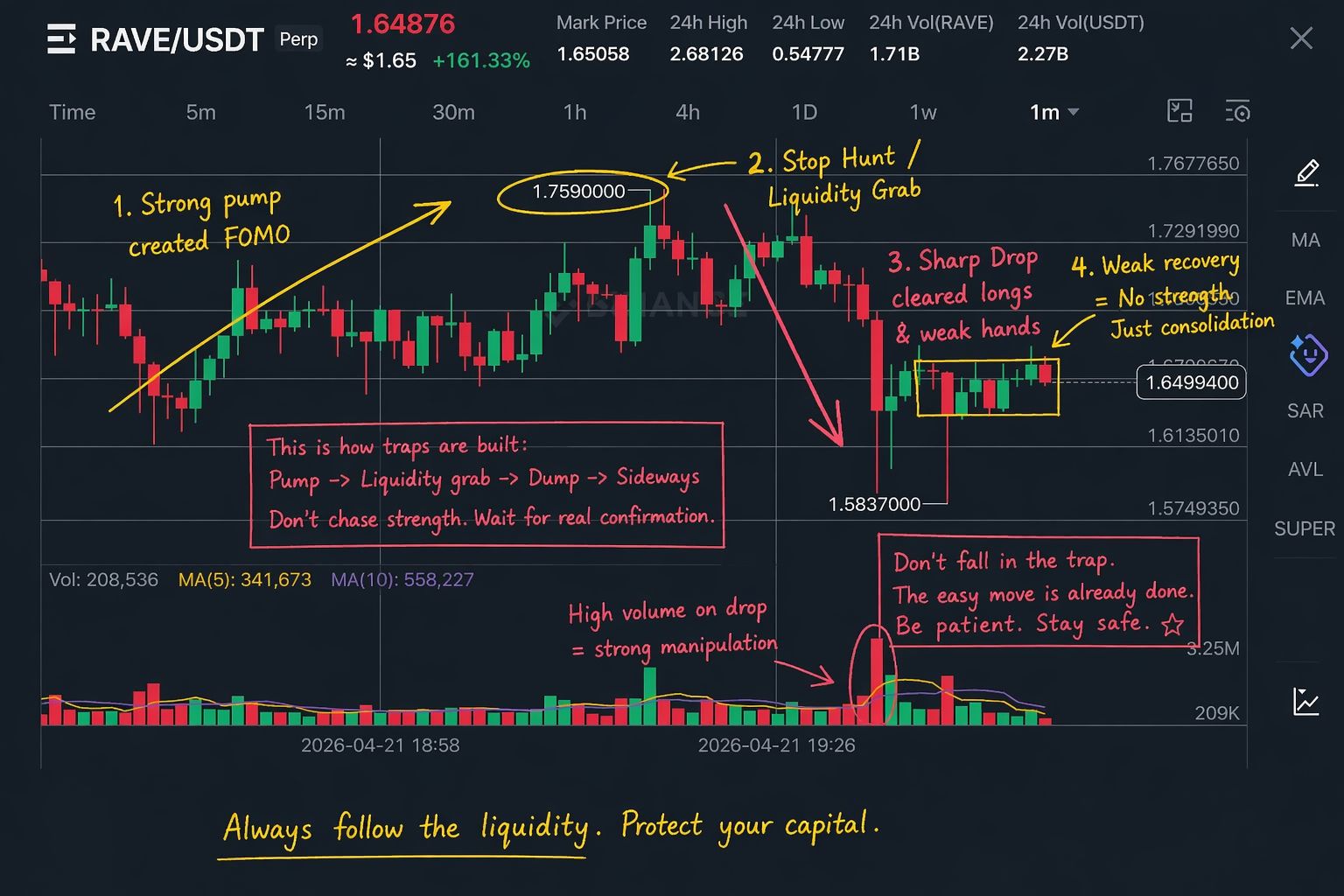
But then came the shift.
A sharp drop to ~1.58, fast and aggressive. That kind of move usually isn’t random. It clears late longs, triggers stops, and resets positioning. After that, price didn’t recover strongly. It just drifted sideways around 1.64.
That’s the part people underestimate.
When price doesn’t bounce properly after a flush, it often means the strength wasn’t real to begin with. It was distribution, not accumulation.
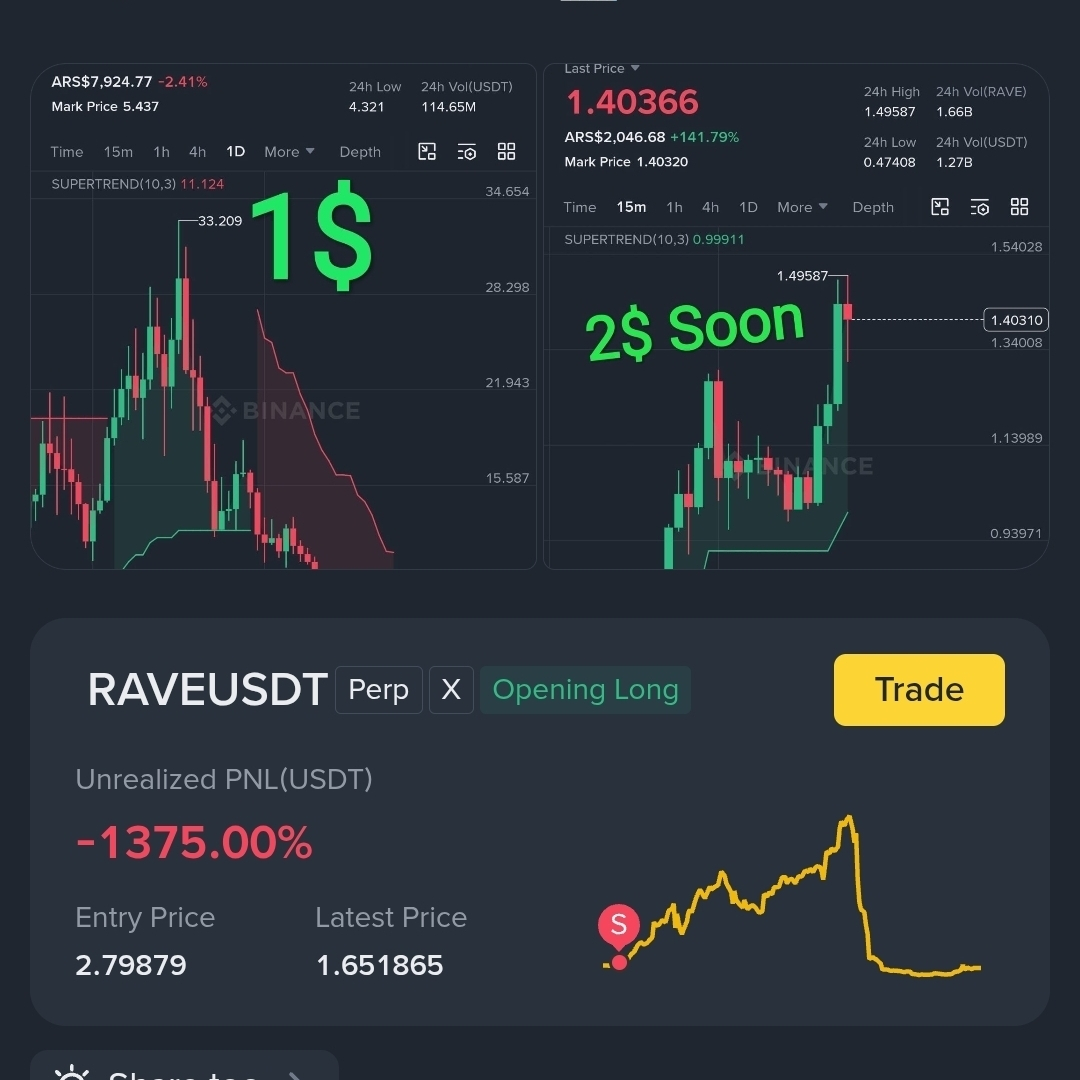
This is how traps form: Price runs up → attracts breakout traders → liquidity builds → sharp drop → slow, weak consolidation
A very similar pattern played out recently on PIEVERSE. Clean move down, almost no resistance, and once it started, it didn’t really look back. Those who chased late got caught on the wrong side of momentum.
The lesson here is simple, but not easy to follow in real time.
Don’t chase strength after extended moves.
Don’t assume every breakout holds.
And most importantly, watch how price reacts after a strong move.
The reaction tells you more than the move itself.
This kind of structure doesn’t always mean immediate downside, but it does mean one thing. The easy trade is already gone.
What comes next is usually where most people get trapped.$RAVE