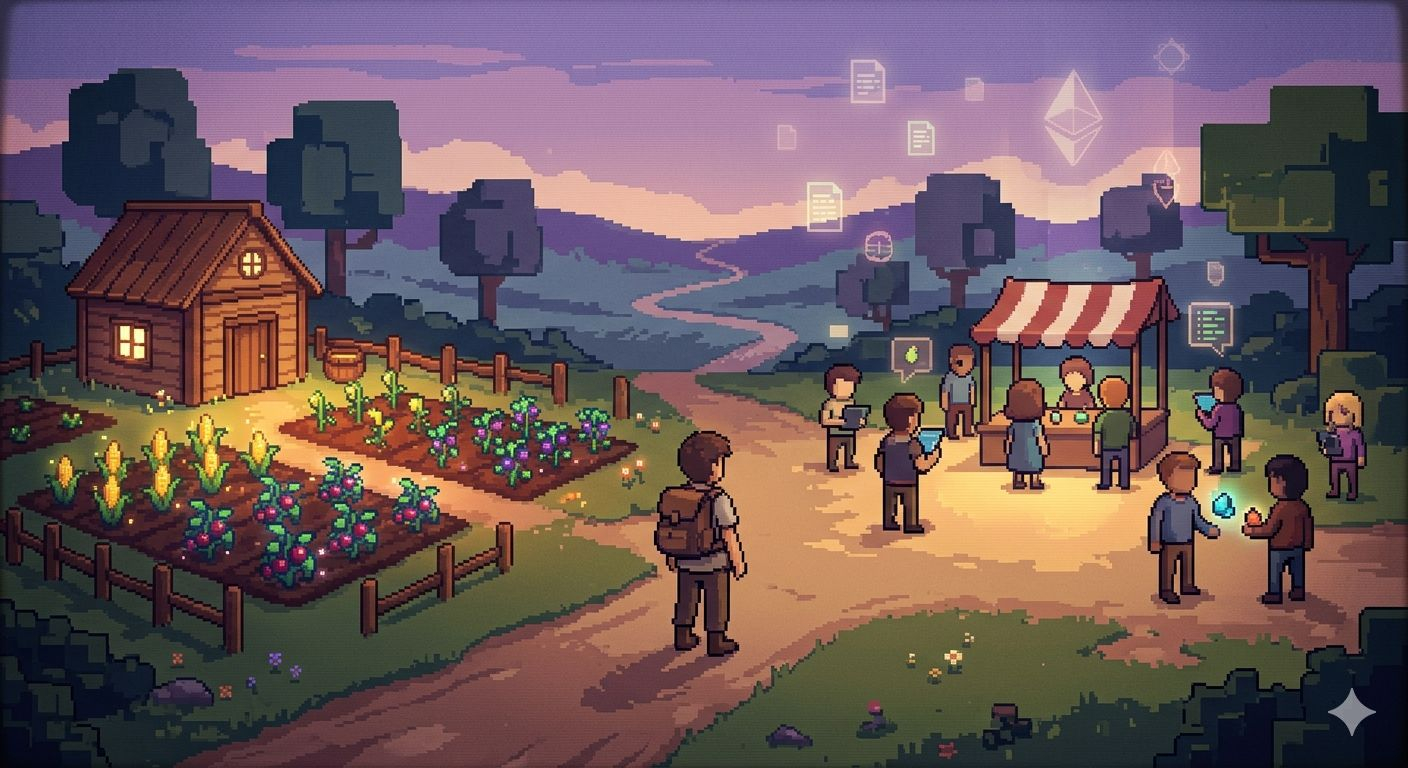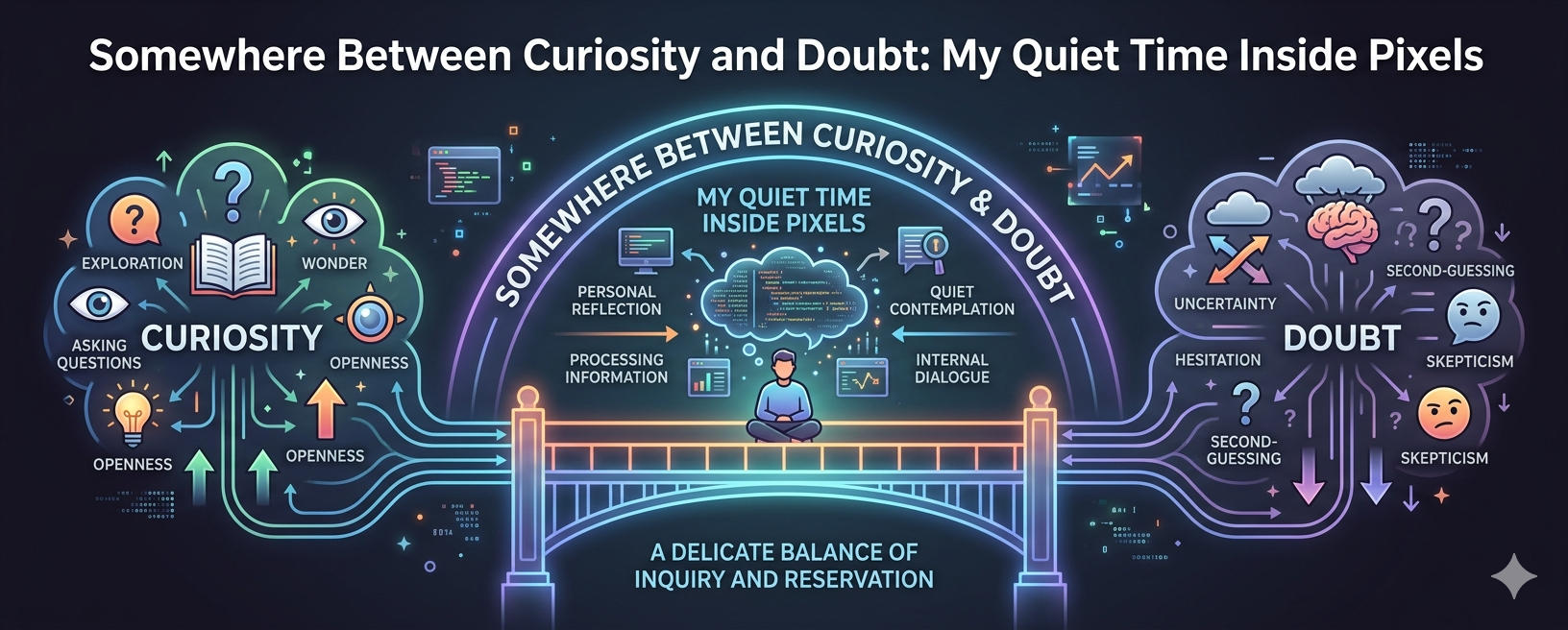

I didn’t expect much when I first came across Pixels, to be honest. Another Web3 game, another promise of ownership and community and “living worlds”—I’ve heard that pitch before, and usually it collapses under its own ambition. But something about this one felt quieter. Less like it was trying to convince me, and more like it was just… there, waiting to be explored.
What struck me first wasn’t the tech or the token or even the Ronin connection. It was the pace. Pixels doesn’t rush you. You log in, and instead of being thrown into some high-stakes loop, you’re just… farming. Walking around. Picking things up. Talking to people. It almost feels outdated in a strange way, like it belongs to an earlier era of games where not everything had to be optimized for retention or monetization.
And yet, underneath that simplicity, there’s this persistent awareness that it’s built on blockchain rails. That everything you do—every crop, every item, every bit of progress—has this layer of permanence and ownership attached to it. I find myself going back and forth on whether that actually enhances the experience or just sits there as a conceptual bonus I don’t fully engage with.
Some days, I think it adds a subtle kind of weight. Like, when I plant something or craft something, there’s a small voice in my head saying, “This is yours in a way most game items aren’t.” Other days, I completely forget about it and just treat the game like any other cozy, low-pressure farming sim. And maybe that’s the point. Maybe the best version of Web3 gaming isn’t the one constantly reminding you it’s Web3.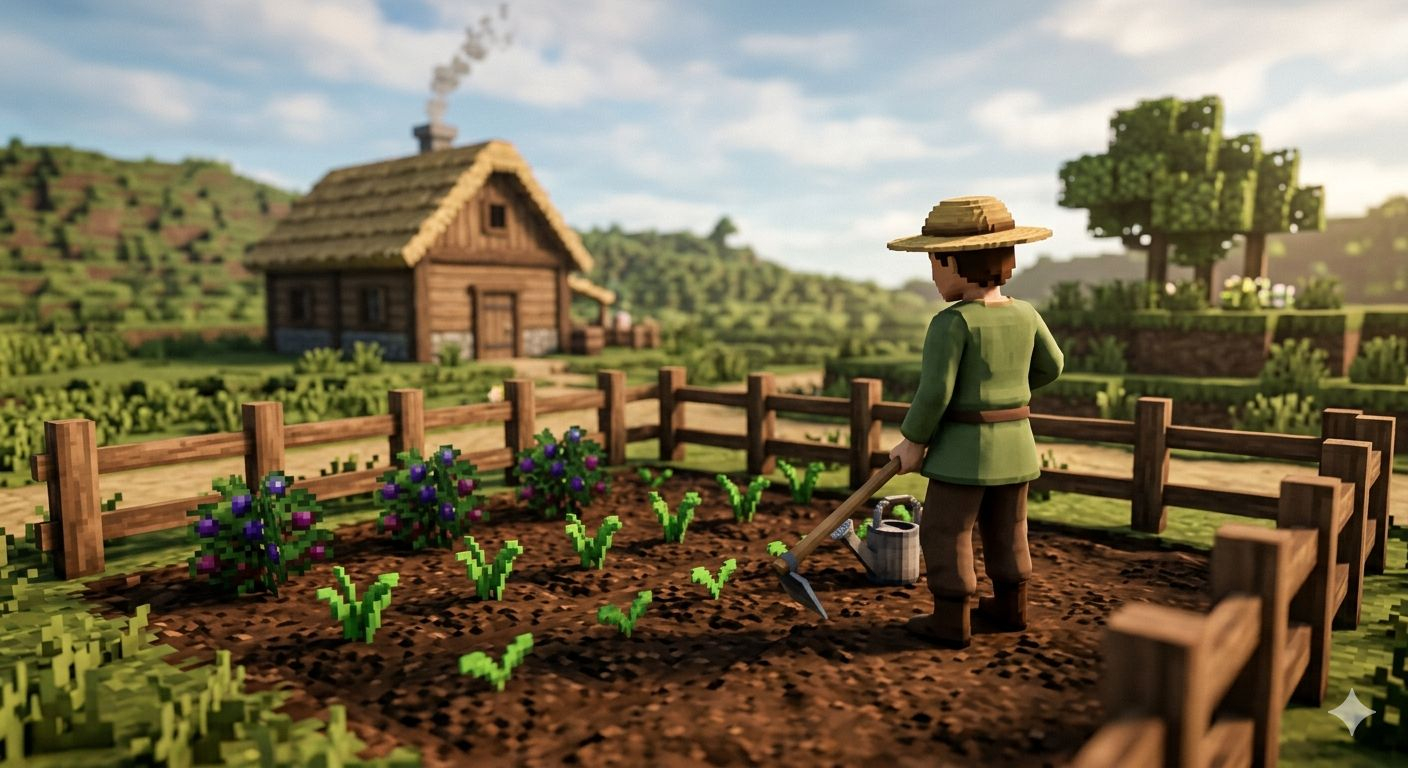
The social aspect is another thing I keep noticing, though not always in obvious ways. It’s not loud or chaotic like a typical multiplayer space. It’s more ambient. People exist around you. They’re doing their own thing. Occasionally you interact, trade, or just observe. It feels less like a “community feature” and more like a shared environment that you dip into without obligation.
I guess what I keep circling back to is how unassuming it all is. Pixels doesn’t feel like it’s trying to be revolutionary, even though, technically, it kind of is. It’s experimenting with ownership, economies, and player-driven systems, but it wraps all of that in something soft and familiar. Farming, exploring, creating—these are not new ideas. And maybe that’s why it works.
Still, I can’t shake a bit of skepticism. I wonder how sustainable this kind of experience is once the novelty fades. Will players stick around for the world itself, or are they here because of the underlying economics? And if the latter shifts, does the whole thing lose its gravity?
At the same time, I catch myself logging back in without really thinking about it. Not because I’m chasing rewards or optimizing anything, but because I’m curious. I want to see how the world feels today. That’s not something I say about most blockchain-based games, or even most games in general.
So I’m left in this in-between state. Not fully convinced, not dismissive either. Just observing, participating, and trying to understand what this kind of game is actually becoming. Pixels feels less like a finished product and more like an ongoing thought—one that I’m somehow a part of, even if I haven’t decided what I really think about it yet.