
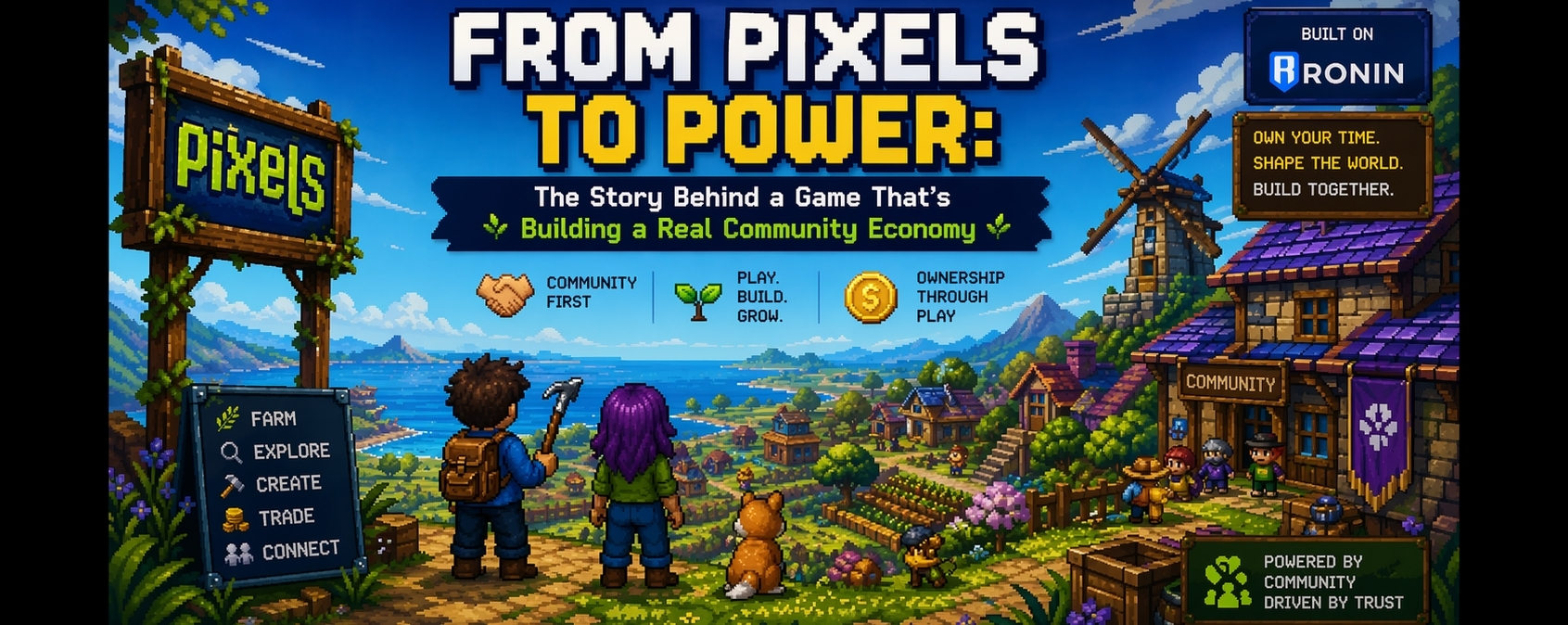
Pixels is not just another Web3 game that appeared with hype and faded into noise. It represents a quieter but more intentional shift in how gaming communities are being built, managed, and sustained in the blockchain era. At the center of this project is Luke Barwikowski, the founder and driving force behind Pixels, who has taken a notably open and community-first approach to development.
Instead of building in isolation and revealing a finished product, the Pixels team has chosen transparency as a strategy. Updates are shared publicly, decisions are discussed with the community, and feedback is treated as part of the development loop rather than an afterthought. This approach has gradually created something that many projects struggle to achieve: trust.
What makes Pixels stand out is not just its gameplay loop of farming, exploration, and creation, but the way it connects players to a living economy. Every action feels like part of a larger system where time, consistency, and participation matter more than quick wins. Over time, this design has encouraged players to stay engaged not because they are chasing short-term rewards, but because they are building within a shared world.
Luke Barwikowski’s leadership style plays a major role in this direction. By maintaining an open dialogue with players and allowing the community to influence development choices, Pixels has developed a strong sense of ownership among its users. Players don’t feel like outsiders consuming a product-they feel like participants shaping it.
This has also contributed to a loyal and steadily growing user base. In the Web3 space, where many projects struggle to maintain long-term engagement, Pixels has managed to build retention through routine rather than hype. The experience is designed in a way that encourages players to return naturally, not because they are forced to, but because the world continues even when they are away.
As the game evolves, its integration with blockchain infrastructure like Ronin Network adds another layer of accessibility and performance. It positions Pixels within a broader ecosystem of gaming economies that are becoming more interconnected and scalable.
What’s important to understand is that Pixels is not trying to reinvent gaming overnight. Instead, it is slowly reshaping how digital economies can feel more human, more stable, and more community-driven.
If this trajectory continues, Pixels may not just be remembered as a game-but as an example of how open development and community trust can reshape the future of Web3 gaming.