
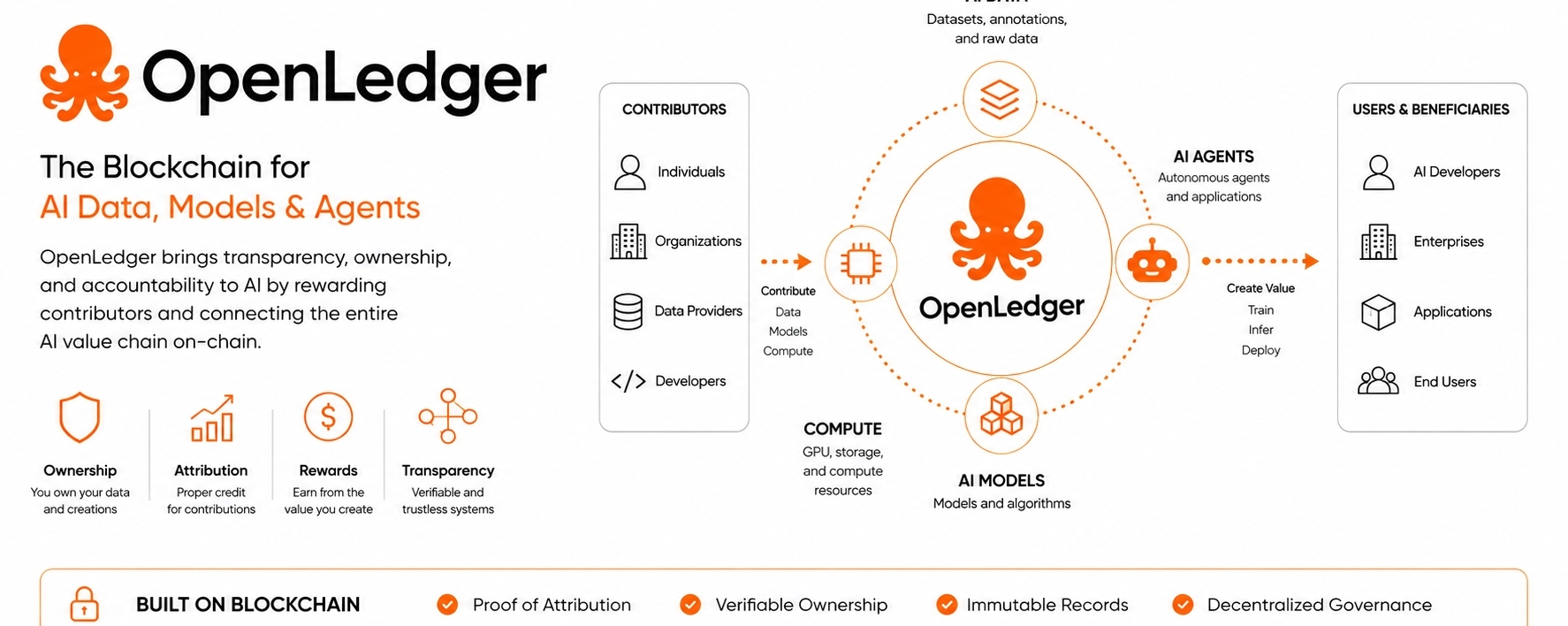

OpenLedger is one of those projects I keep circling back to late at night when the market noise dies down and the bigger questions start becoming harder to ignore. Not because I’m convinced it has solved anything yet, and not because I think decentralized AI suddenly fixes the structural problems that have followed crypto for years. It’s more that the project seems to sit directly on top of a tension that already exists in the real world, whether crypto is attached to it or not.
I’ve been watching the AI space long enough to notice how quickly people stopped asking where all this intelligence actually comes from. The conversation moved almost overnight from curiosity to inevitability. Bigger models. Faster inference. Smarter agents. Entire industries reorganizing themselves around systems trained on information gathered quietly over decades from millions of people who were never really participants in the economics of it.
That part keeps bothering me.
Not in some dramatic way. Just as a quiet observation that becomes harder to shake the more AI expands into everything else.
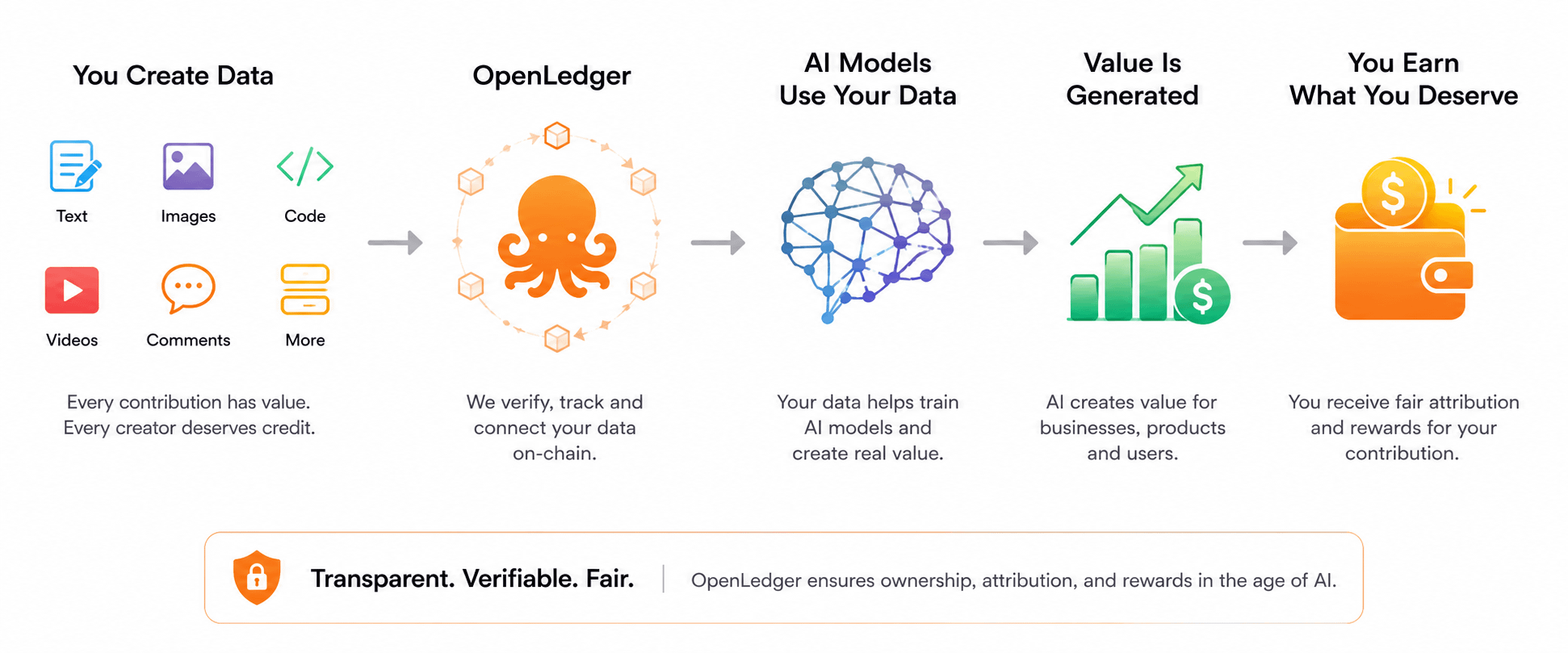
The internet spent years turning human behavior into raw material. Every post, correction, argument, review, tutorial, and conversation became data for platforms long before most people understood the scale of what was happening. AI simply accelerated that extraction model to an uncomfortable level. Suddenly the collective output of ordinary people became fuel for systems worth billions, maybe trillions eventually, while the people supplying that value remained mostly invisible.
OpenLedger seems to be looking directly at that imbalance.
And honestly, I can understand why that idea attracts attention now. Crypto has always been strangely sensitive to systems where value flows upward while contribution disappears underneath the surface. Sometimes that sensitivity produces useful infrastructure. Other times it produces narratives that sound revolutionary until incentives start breaking them apart. The difficult thing is telling the difference early enough.
That’s why I find myself watching this project carefully rather than enthusiastically.
The idea behind OpenLedger sounds simple when you first hear it. Contributors provide data, datasets become traceable, and AI systems built on top of that data create some kind of measurable attribution back to the people who helped train them. In theory, it introduces accountability into an industry that currently operates like the internet is an infinite free resource.
But crypto veterans learn very quickly that simple ideas become messy the moment rewards appear.
The second people realize contribution can generate income, behavior changes. It always changes.
I’ve watched enough cycles now to know how quickly systems drift away from their original intentions once incentives start shaping participation. DeFi protocols were supposed to create open financial coordination until liquidity mining turned entire ecosystems into short-term extraction games. NFTs started as digital ownership experiments before speculation swallowed almost everything else around them. Even governance systems eventually became dominated by whoever had enough capital to influence outcomes consistently.
Markets teach people how to optimize rewards faster than almost any system can adapt.
That’s the part I keep thinking about with OpenLedger.
Not whether people deserve ownership over the data they contribute. That question already feels reasonable. The harder question is what happens once contribution itself becomes financialized. Does the system reward meaningful information, or does it slowly incentivize endless floods of synthetic participation designed to game attribution mechanisms?
Because that’s where crypto systems usually start revealing their weaknesses.
The internet already struggles with low-quality content generated purely for visibility. SEO farms, engagement bait, AI-generated spam, recycled opinions repeated endlessly because algorithms reward volume over insight. If data becomes directly monetizable inside decentralized AI systems, that pressure probably intensifies.
And AI itself complicates attribution in ways most people still don’t fully understand.
Models don’t memorize information neatly. They absorb patterns across enormous datasets, blending signals together until influence becomes difficult to isolate precisely. So when projects talk about proving contribution and measuring impact inside AI systems, I find myself wondering how stable those mechanisms remain once adversarial behavior enters the equation.
Because adversarial behavior always enters eventually.
Somebody always searches for the shortest path between participation and extraction.
Still, I don’t think that makes the underlying problem less real. If anything, it makes the situation more interesting. The AI industry genuinely seems built on top of an unresolved contradiction. Massive value is being created from collective human output, but almost none of the ownership structures around that value reflect where the intelligence originally came from.
Maybe society ignores that imbalance permanently. Maybe convenience wins and people stop caring. That happens sometimes too.
But history usually shows that when industries become large enough, the invisible layers underneath them eventually become political, economic, or cultural pressure points. People start asking who benefits. Who contributes. Who controls access. Who captures value from systems built on top of everyone else’s participation.
Crypto tends to appear around those moments.
Not always successfully. But consistently.
What I find interesting about OpenLedger is that it doesn’t feel entirely dependent on speculative excitement alone. The tension it’s addressing already exists outside crypto. AI companies really are facing growing scrutiny around training data, attribution, ownership, and transparency. Creators are questioning how their work gets absorbed into these systems. Governments are beginning to notice. Courts are beginning to notice. Even ordinary users are slowly realizing that the AI economy didn’t appear from nowhere.
It was trained into existence by human activity spread across the internet for decades.
That realization changes how projects like OpenLedger are perceived. Suddenly the conversation becomes less about futuristic decentralization and more about economic accountability.
But accountability itself is complicated.
Because even if decentralized attribution systems work technically, social power still tends to centralize somewhere. Someone decides quality standards. Someone validates datasets. Someone determines what counts as meaningful contribution versus noise. Authority rarely disappears completely from systems no matter how decentralized they appear architecturally.
I think crypto still underestimates that reality sometimes.
The market often treats decentralization like a permanent condition when it’s usually more of a constant negotiation between incentives, influence, and coordination. Over time, hierarchies quietly reform around expertise, infrastructure, reputation, and capital concentration.
AI may intensify those dynamics even more because the technical complexity creates natural asymmetries between builders and contributors.
Most people supplying data to AI systems will probably never fully understand how the models monetizing that data actually function underneath the surface. That imbalance matters because opacity tends to create trust problems eventually, especially when money becomes large enough.
And the money around AI is becoming enormous very quickly.
Maybe that’s why OpenLedger keeps staying in my mind while so many other AI-related crypto projects blur together. It feels less like a product searching for a narrative and more like a project orbiting a genuine fracture in the emerging AI economy.
Whether it can actually solve that fracture is another question entirely.
I’m still not sure anyone fully understands what sustainable incentive structures around AI data even look like yet. We may discover that attribution markets become impossible to manage cleanly. We may discover that centralized AI companies remain dominant simply because coordination at scale favors efficiency over fairness. Or we may discover that people eventually demand ownership layers around AI systems the same way they demanded transparency around finance and digital privacy before.
Right now it’s still early enough that most of the industry is operating on assumptions rather than proven models.
And honestly, that uncertainty feels healthier than the certainty crypto usually sells during bullish periods.
The projects that worry me most are always the ones pretending complexity has already been solved. OpenLedger, at least from where I’m standing, feels more like an experiment unfolding in real time around a question nobody has fully answered yet.
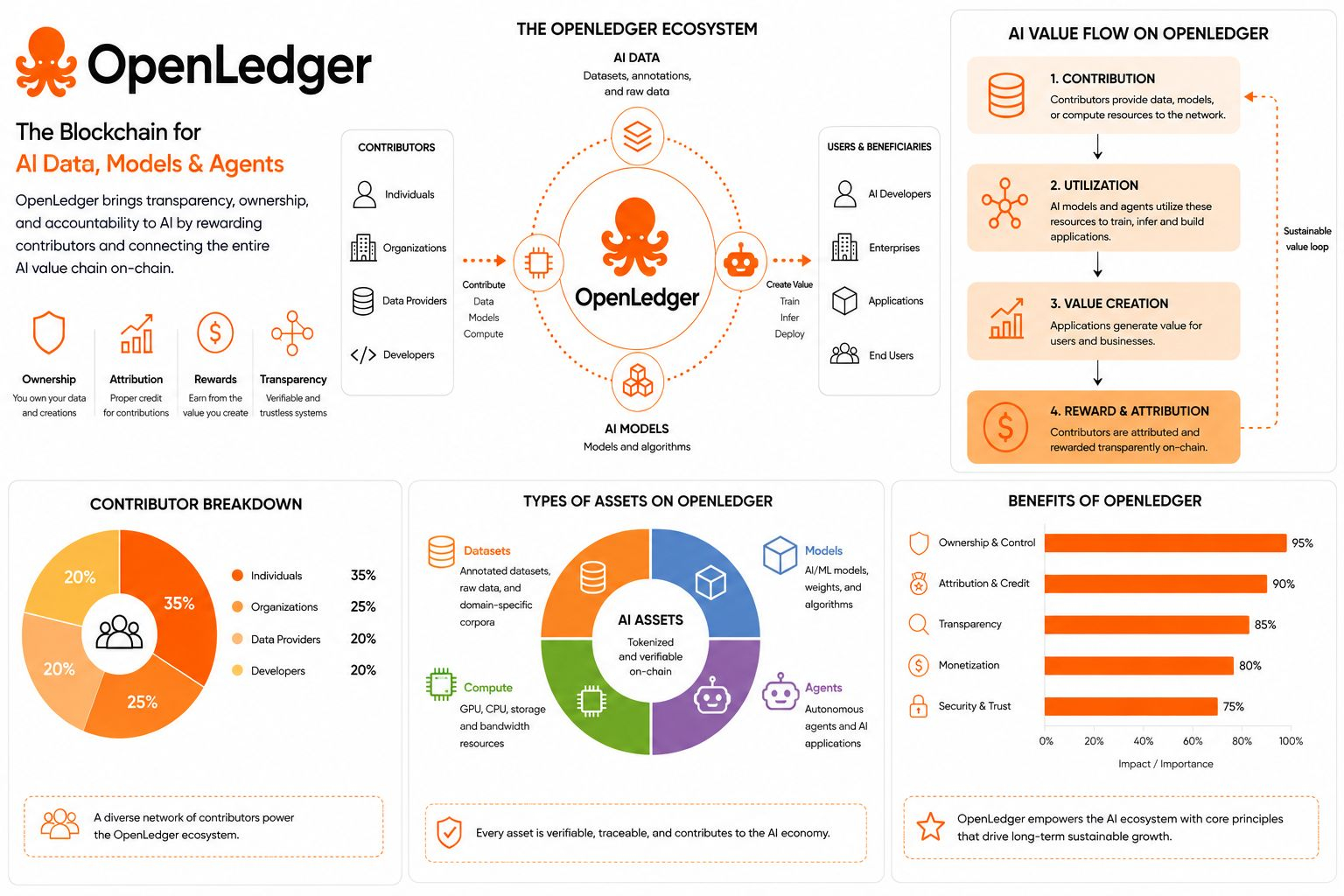
Who owns intelligence once it becomes collective, trainable, and economically valuable?
I don’t think the market knows yet.
I’m not sure the builders know either.
But I suspect that question is going to keep getting louder from here.