
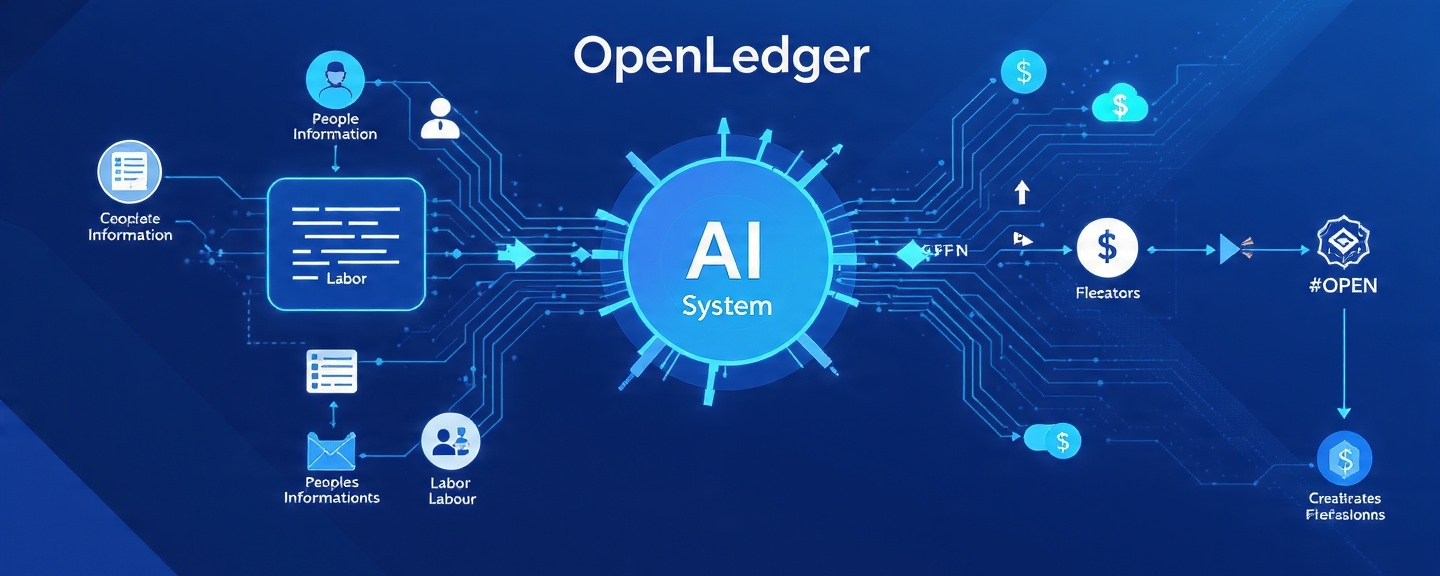
Spending days deep in research about Open Ledger pulled me into places I hadn’t expected. Noticing the name pop up across crypto chats, first reactions might lean toward skepticism. after all, so much noise lately hides behind AI buzz.
Yet here’s something different, quietly building where others shout. Peel one layer, then another, uncovering focus on a crisis few dare touch.
stolen data, eroded creator rights, vanishing control over what people make.
Understanding this means facing today's digital reality head on the systems now in place thrive by hoarding work without consent. Giant platforms vacuum writings, visuals, health details, shopping habits, anything flowing through screens.
That flood of human effort feeds secret algorithms, shaping powerful tools owned by a handful while those who contributed get nothing. Those building the core value get nothing back zero rewards, invisible names, left out entirely. What happens when data becomes something you can truly own, trade, move freely.
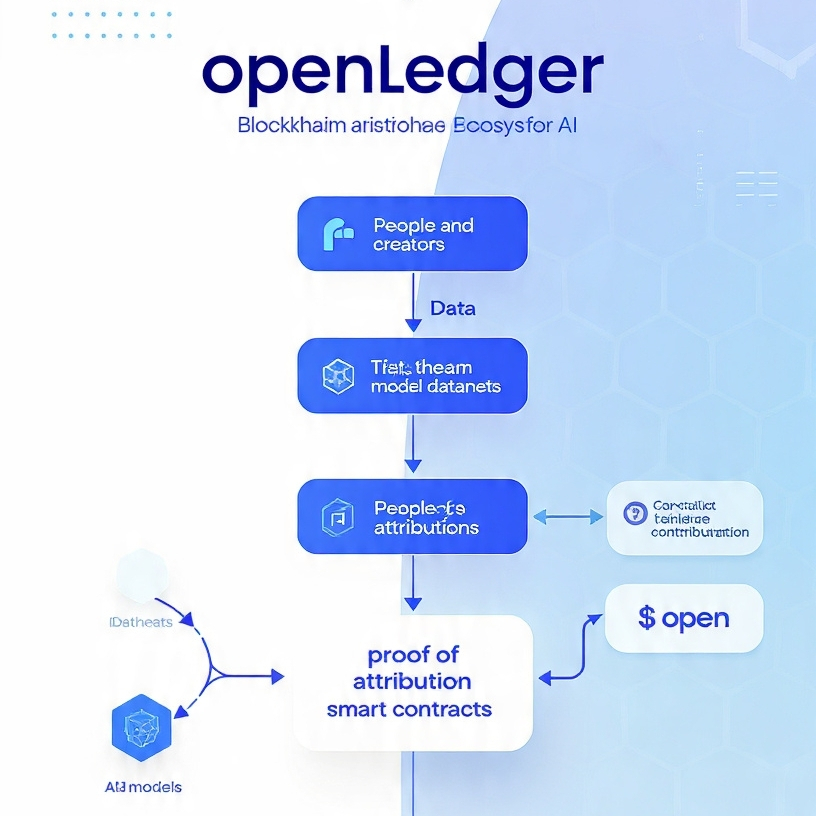
that’s where Open Ledger begins. Running beneath it all sits a blockchain layer built just for AI models, works with existing tools, handles every phase from gathering raw facts to launching self running programs.
At its heart lies Proof of Attribution. a system ensuring each piece of data isn’t lost inside algorithms but traced clearly using code based agreements. These links form across shared collections known as Datanets, shaped by groups focused on precise knowledge areas such as uncommon law documents, tight market finance shifts, or isolated health study findings.
one after another, folks and groups toss their data into these Datanets while coders tap into a no code space named ModelFactory to shape or tweak big language tools. Should one of these models catch fire beyond the lab, raking in real cash, then Proof of Attribution quietly funnels part of that income straight back to those who fed the initial knowledge.
Enter OpenLoRA an elegant machine built so thousands of personalized model tweaks can live together on just one graphics processor. This shift eases access dramatically, letting regular inventors, tiny firms, even solo scientists craft something they label Payable AI minus the need for stacks of servers funded by huge checks.
In spirit, it paints a rare picture one where fairness isn’t shouted but wired into design. Yet step past ideals for a breath and face the core currency humming beneath the OPEN token, here's where skepticism leans in close. Early support came fast, pulling in big names from EigenLabs plus leaders in decentralized computing and data tracking fields. Legal groundwork matters too they’re working with IP-specific protocols to create enforceable data licenses.
After listing on top exchanges, demand spiked sharply among individual buyers, pushing prices near $1.80 before settling lower again. Right now, the price lingers near twenty two cents, weighed down by a steady clash short term traders chasing quick moves face off against slow moving forces like live infrastructure builds.
Take token distribution. That part slows me down.
Anyone looking closely should see it clearly, nothing softened.
One billion tokens exist, set in stone.
About 215 million circulate today.
That is just over one fifth. Most remain held back.
Team shares, investor holdings, grants for builders, rewards yet to come these make up nearly eight-tenths.
They are frozen first, then drip out slowly year after year after an initial wait period. So here lies the quiet danger tons more will flood exchanges long before usage catches up. Unless big companies clinics, lawtech startups, banks, bots that act alone begin using this thing regularly, demand won’t match what's coming.
Without that, prices bend under sheer volume. Simple math. Out of nowhere, price spikes show up when traders bet big on exchanges. Yet those moments fade fast, never strong enough to carry a token built for scale over years. Without real world use cases pulling demand, the weight of new tokens hitting the market will press down hard.
a constant flow of users actually relying on the system?
That’s what keeps things balanced. Hard truth, nothing else fills that gap.
Yet when viewed through how things are built and how society functions, they’re laying down the kind of foundation the online world actually requires so people aren’t endlessly scraped for data without reward. This isn’t just another experiment it stakes everything on who gets to own digital value moving forward. True, the roadblocks around technology rules and incentive design are enormous.
Still, something about it feels essential, impossible to ignore.
Should someone judge OPEN only as a trading vehicle, its path will likely swing wildly, tied completely to whether AI remains a magnet for crypto cash flow. OpenLedger tries working around limits by running intense AI tasks outside the chain while anchoring proof results onto it. Yet expanding that model worldwide?
Going toe to toe with polished behemoths like AWS or Google Cloud makes progress feel nearly impossible.
Then there's the constant threat aimed at open networks floods of fake inputs, stolen content, robotic junk all straining systems meant to filter truth automatically. These defenses must never fail.
By default, blockchains have always struggled with speed, weight, and cost under heavy loads. Artificial intelligence demands crushing computation force and near instant access to information. So even bold ideas face harsh terrain here.
My raw take on OpenLedger?
It’s one of the few approaches putting humans at the core while tackling a broken system head on.
