


Everyone keeps talking about AI agents like they’re just smarter chatbots. Litle asistants. Fancy automation with a prsonality layer slaped on top.
I don’t buy that anymore.
Here’s the thing people don’t talk about enough: once AI agents start making decisions, handling transactions, negotiating with other systems, and paying for services on their own, you don’t just have “AI tools” anymore. You have an economy. A weird one, honestly. But still an economy.
And that’s basically the direction OpenLedger seems obsessed with.
Not just building another AI chain. Not another “AI + crypto” slogan farm. We’ve all seen those. Half of them disappear before the token unlock schedule even finishes. What OpenLedger is trying to do feels bigger than that. Riskier too.
They’re betting that autonomous AI agents will eventually need their own financial layer.
Think about it for a second.
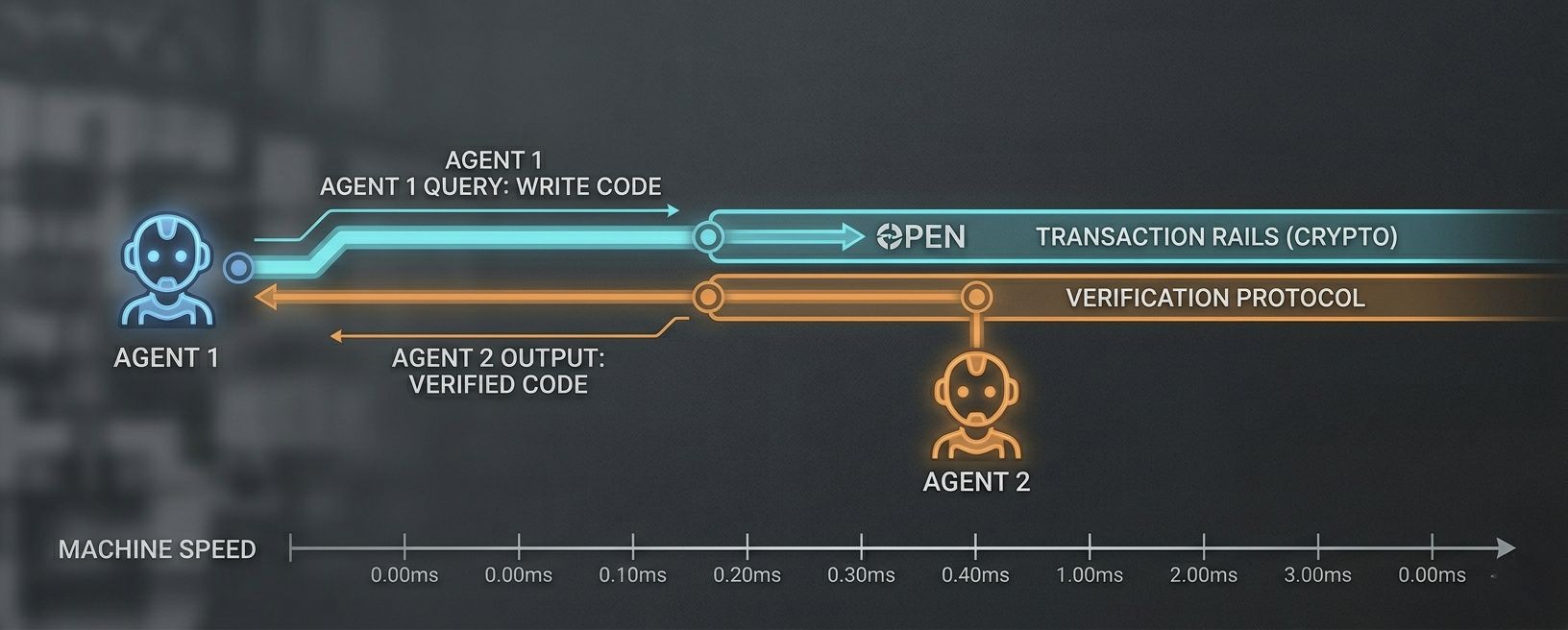
If an AI agent writes code for another agent, who gets paid?
If an agent buys data, rents compute, calls APIs, verifies outputs, or licenses a model… how does value move between all those pieces without humans constantly clicking approve?
That’s the actual problem.
And honestly, crypto fits this better than most people want to admit.
Traditional payment systems move too slow. They assume humans sit in the middle of everything. AI agents don’t wait around for bank approvals or business hours. They execute constantly. Machine speed. Machine frequency. Tiny transactions happening every second.
That’s where OpenLedger gets interesting.
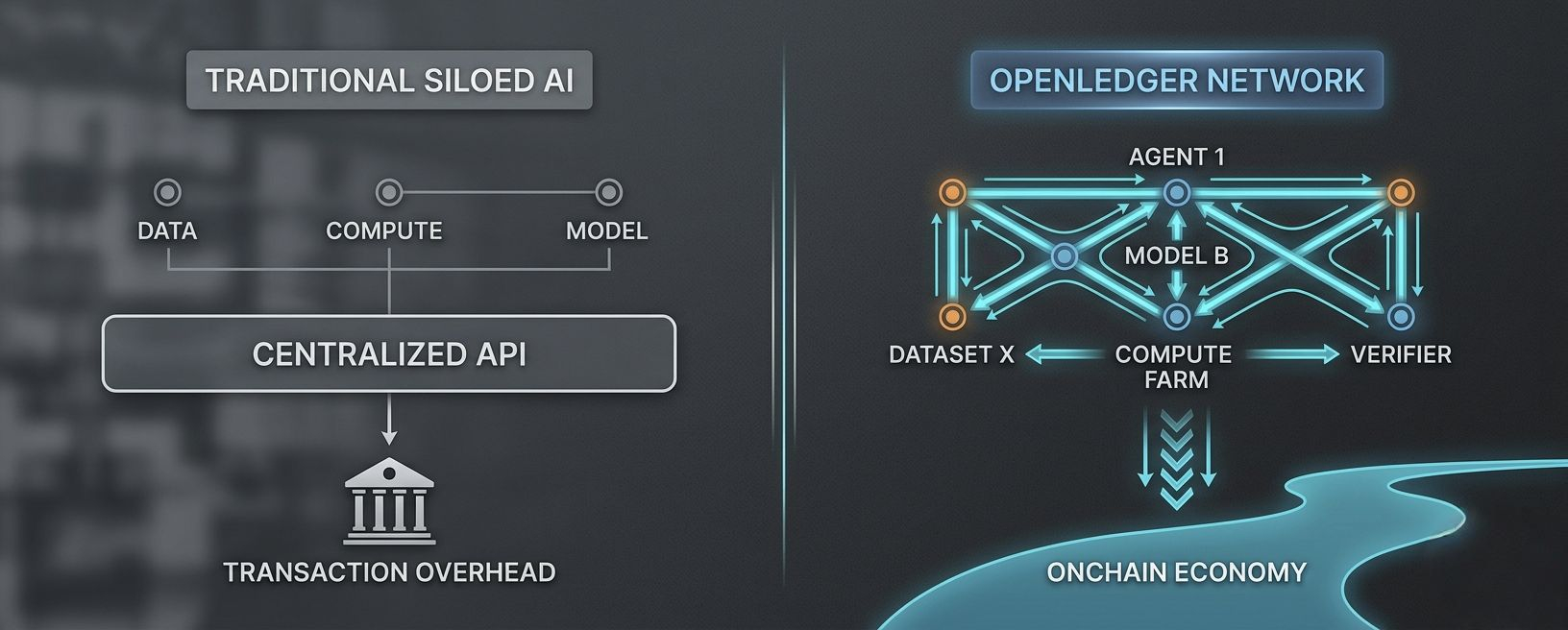
The whole idea seems built around turning AI activity into an onchain economy where agents, models, data providers, and infrastructure layers all interact directly instead of relying on centralized platforms acting like middlemen.
Because let’s be real if OpenAI, Google, or some giant platform controls every AI interaction, then agents don’t really own anything. They’re tenants inside somebody else’s ecosystem.
OpenLedger looks like it wants the opposite.
An open network where AI agents can operate more independently, where contribution actually matters, and where value flows between participants instead of pooling at the top. At least that’s the pitch.
And yeah, the token matters here. A lot.
Most projects treat tokens like fundraising mechanisms with extra steps. OpenLedger seems to treat OPEN more like operational fuel for the agent economy itself. That’s an important difference.
Agents need to pay for execution.
Models need incentives.
Data contributors want rewards.
Validators secure the network.
Liquidity keeps transactions moving.
All of that overlaps.
The token doesn’t sit outside the system watching activity happen. It moves through the system continuously. That changes the dynamic completely.
Honestly, this is where things get tricky though.
Building autonomous AI economies sounds amazing in theory until you realize how messy real incentives become. I’ve seen this before in crypto. People overestimate automation and underestimate coordination problems.
What happens when bad agents flood the network?
What happens when low-quality data farms appear just to chase rewards?
Who verifies whether an AI-generated output actually has value?
That part matters more than the marketing videos.
Because the hard part isn’t creating AI agents anymore. Everyone’s doing that now. The hard part is creating a system where agents can trust economic interactions without constant human oversight.
That’s the real game.
And honestly? Most current AI infrastructure still feels very Web2 underneath the surface. Centralized APIs. Closed models. Platform dependency everywhere. People call it decentralized because there’s a token attached. That doesn’t magically fix architecture.
OpenLedger at least seems aware of the problem.
They keep pushing this idea that AI shouldn’t just scale intelligence it should scale ownership and participation too. That’s a very crypto-native way to think about AI, and whether people realize it or not, it changes how networks evolve long term.
Because if autonomous agents become real economic actors and I think they will then somebody has to build the rails underneath them.
Payments. Coordination. Verification. Incentives. Identity. Data exchange.
The boring infrastructure stuff nobody tweets about.
That’s usually where the real value sits anyway.
And maybe that’s why OpenLedger feels different right now. It’s less focused on making AI look impressive and more focused on making AI economically functional.
Big difference.
Most people still see AI agents as software.
OpenLedger seems to see them as participants.
