


Train larger systems, improve reasoning, increase  inference speed, and eventually the ecosystem becomes intelligent enough to sustain itself.
But the more I look at systems like the one behind $OPEN, the more that assumption starts to feel incomplete.
Because decentralized AI is not just a compute problem.
It is an incentive problem.
Models, agents, and data providers do not coordinate automatically just because they exist inside the same ecosystem. Every participant still responds to incentives. Data owners want compensation. Validators want rewards. Agents optimize toward whatever the system encourages.
Without alignment, the network fragments.
That’s the hidden challenge.
Most AI systems today are still structurally centralized because incentives naturally pull intelligence toward concentrated infrastructure. The models with the most data, the most liquidity, and the strongest execution environments end up dominating coordination.
Decentralization only works if the ecosystem gives participants a reason to contribute without losing ownership of what they create.
What stands out in OpenLedger is that it seems designed around monetization and coordination together.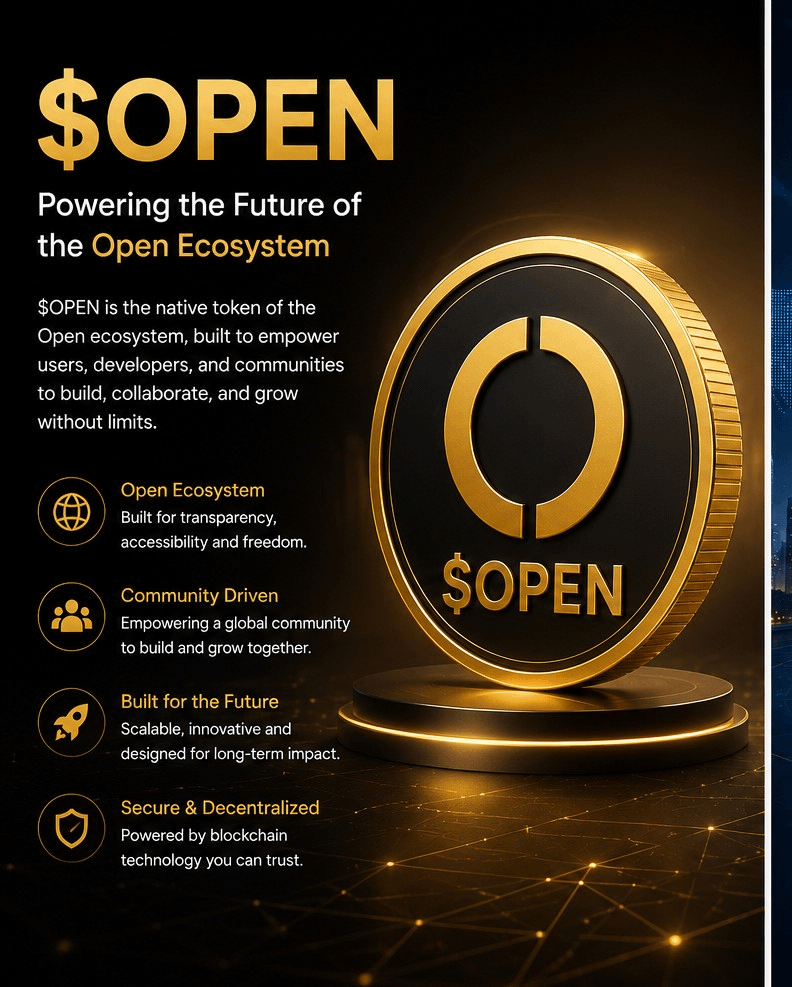
Data, models, and agents are not treated as passive resources sitting inside the network. They become active economic participants. The system creates liquidity around intelligence itself, allowing contributors to monetize data flows, model outputs, and autonomous workflows instead of simply donating them into centralized platforms.
OctoClaw fits inside that direction.
Not just operating as an isolated AI tool, but functioning within an environment where retrieval, orchestration, execution, and value flow are tied together economically. The intelligence layer starts participating in markets instead of existing outside them.
In simple terms, the question shifts.
Not “can decentralized AI exist?”
But “why would participants keep contributing intelligence to the system over time?”
And that is where incentives matter more than compute alone.
Because sustainable decentralized AI requires continuous contribution. Agents need reasons to coordinate. Data providers need ownership guarantees. Liquidity systems need structures that allow value generated by intelligence to circulate back into the ecosystem.
That is also why infrastructure layers like ERC-4626 and composable vault systems matter indirectly.
Standardized financial rails allow AI-driven capital management and reward distribution to operate predictably across the network. The intelligence layer becomes economically connected instead of structurally isolated.
Of course, incentive systems create their own risks.
Poorly designed rewards attract low-quality participation. Over-financialization can distort behavior. Systems can optimize for extraction instead of useful coordination if incentives drift too far from actual value creation.
But the direction feels increasingly important.
The future of decentralized AI may not belong to whoever builds the smartest isolated model…
but to whoever builds the strongest incentive network around intelligence itself.
$OPEN feels aligned with that transition.
Not just scaling AI capability,
but building economic infrastructure where intelligence, liquidity, and participation reinforce each other continuously.
Because in the end, decentralized systems do not sustain themselves through technology alone.
They sustain themselves through aligned incentives.