
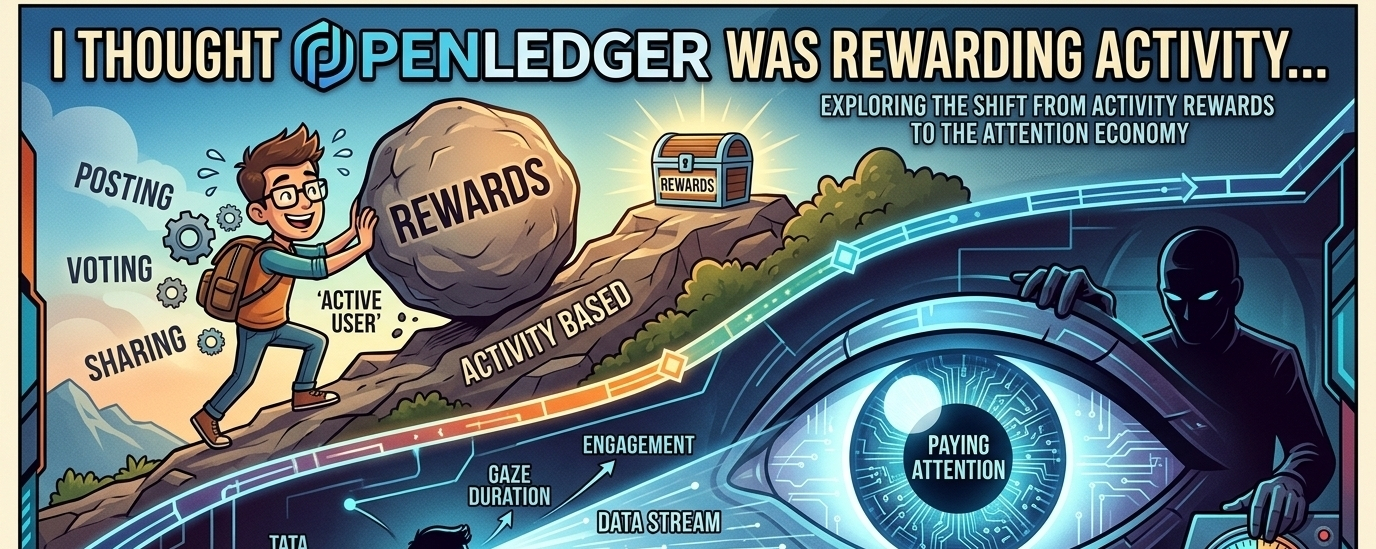
When I first started using OpenLedger, I thought I understood the system pretty quickly.
It felt similar to a lot of other ecosystems I’ve seen before. Stay active, complete tasks, engage consistently, come back tomorrow, repeat. The structure felt familiar enough that I didn’t think too deeply about it in the beginning. Honestly, I assumed the whole idea was simple: the more visible you are, the more value you create inside the network.
And for a while, that belief made sense to me.
Because online systems usually train us to think that activity equals importance. If you post more, interact more, and stay constantly present, eventually the system notices you. That’s how most platforms work now, so naturally I carried the same mindset into OpenLedger too.
But after spending more time inside the ecosystem, I started noticing something that didn’t fully match that idea.
Some of the loudest people inside the network didn’t actually feel important to it. They were everywhere all the time, constantly pushing engagement, constantly trying to stay visible, yet somehow their presence felt temporary. Almost like they were moving around the ecosystem without really becoming part of it.
At the same time, there were quieter people who barely seemed interested in attention at all. They moved slower. More patiently. They didn’t force themselves into every conversation, but somehow they kept becoming more connected to the ecosystem over time. Their presence felt heavier in a strange way. More permanent.
That difference stayed in my mind longer than I expected.
And eventually I realized OpenLedger stopped feeling like a system that simply rewards participation. It started feeling like a system that quietly observes behavior over time. Not just what people do, but how they do it. Whether they stay consistent when excitement slows down. Whether they contribute naturally or only appear when there’s something immediate to gain.
That changed the way I started looking at the ecosystem completely.
Even small actions began feeling different to me. Participation no longer looked like random isolated tasks. It started feeling more like patterns forming slowly in the background. Patterns around consistency, patience, reliability, and intent.
Maybe that sounds dramatic, but I genuinely think decentralized AI systems eventually have to evolve this way.
Because if an ecosystem only rewards short-term activity forever, people eventually learn how to imitate value without actually creating it. They optimize for visibility instead of usefulness. Attention instead of contribution. And over time that weakens the system itself.
That’s why OpenLedger feels interesting to me now.
Not because it looks flashy on the surface, but because underneath the visible mechanics, it feels like something quieter is happening. The campaigns and tasks are still there, obviously. But sometimes it feels like the ecosystem is slowly learning which kinds of behavior actually help the network grow stronger long term.
And honestly, I think that changes the entire meaning of participation.
Maybe the future of decentralized AI economies won’t be built around rewarding whoever shouts the loudest. Maybe they’ll care more about people who stay aligned with the ecosystem over time. People who keep contributing even when nobody is paying attention. People whose behavior becomes dependable instead of performative.
That possibility is what keeps my attention now.
I still use OpenLedger. I still participate. But I don’t think the system is only measuring activity anymore.
I think it’s quietly learning which people become part of the ecosystem… and which people only pass through it.