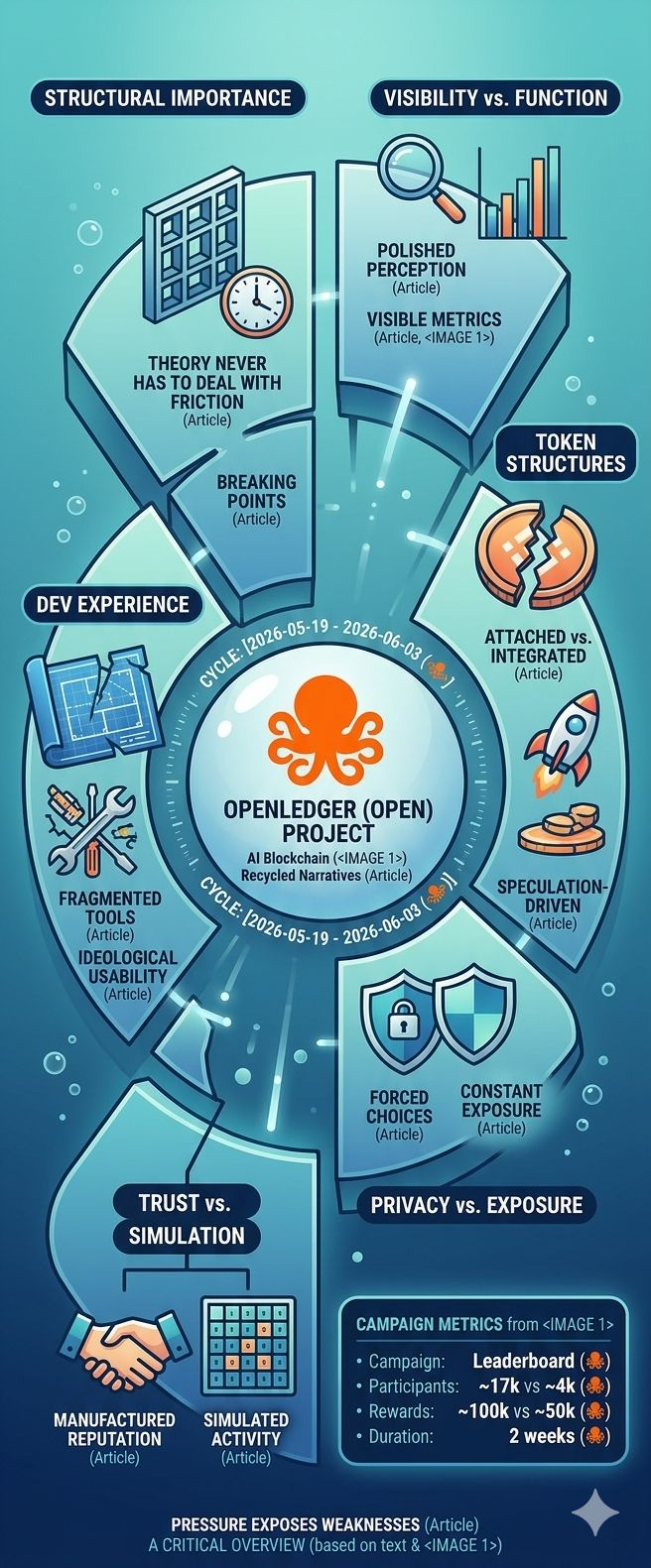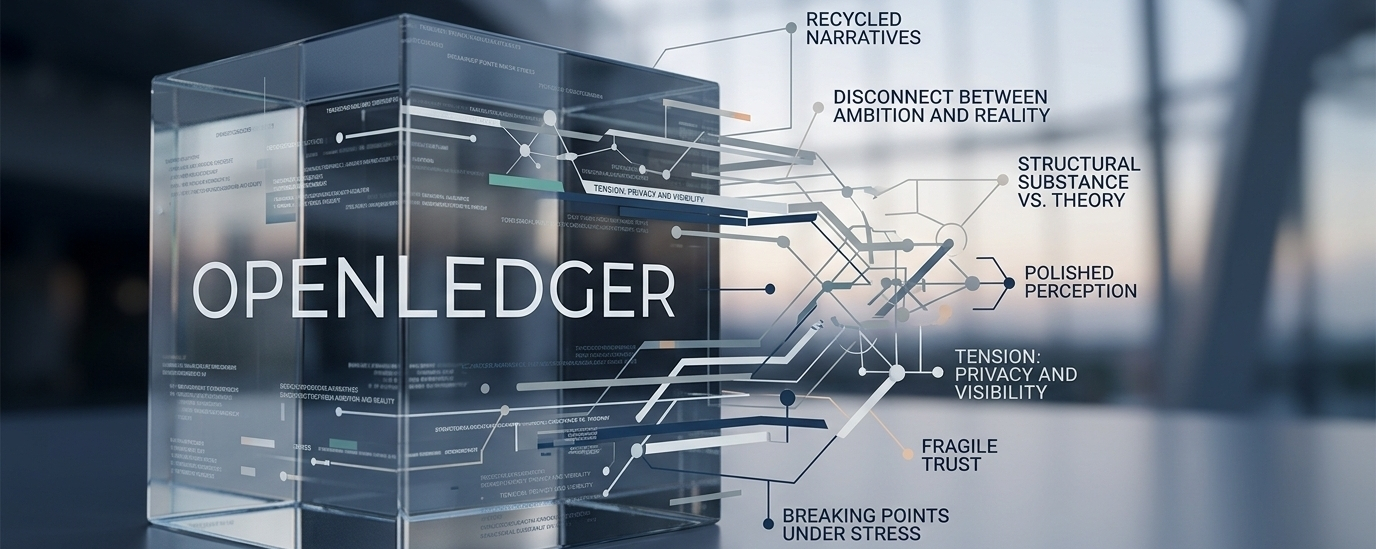
I’ve been thinking a lot lately about how easily this industry falls back into recycled narratives. Every cycle introduces a new vocabulary, a new promise, a new explanation for why this time is different, but after watching enough of them repeat, the patterns become difficult to ignore. OpenLedger has been on my mind because it keeps pulling me toward those patterns instead of away from them. Not in a convincing way. More in a reflective way.
The strange part is that I don’t even feel cynical anymore. Just tired of seeing the same disconnect between ambition and reality. OpenLedger makes me think about how many systems sound structurally important until real usage arrives and exposes how little substance was actually underneath. Infrastructure especially has this problem. It always sounds powerful in theory because theory never has to deal with friction, confusion, or human behavior at scale.
That gap between storytelling and execution feels impossible for me to overlook now. OpenLedger keeps reminding me how often projects are built around narratives first and practical usage second. The market rewards visibility so aggressively that functionality almost becomes optional. Teams polish perception while quietly ignoring the parts that determine whether people can realistically keep using something over time.
I notice this most when it comes to privacy and transparency. Somehow the industry normalized the idea that openness should mean constant exposure. OpenLedger keeps bringing me back to that tension because I still don’t think anyone has solved it properly. Most systems force an exhausting choice between visibility and privacy, as if users have to sacrifice one to access the other. Then the so-called privacy solutions swing too far in the opposite direction and create environments that feel difficult to verify, difficult to trust, and disconnected from normal usability.
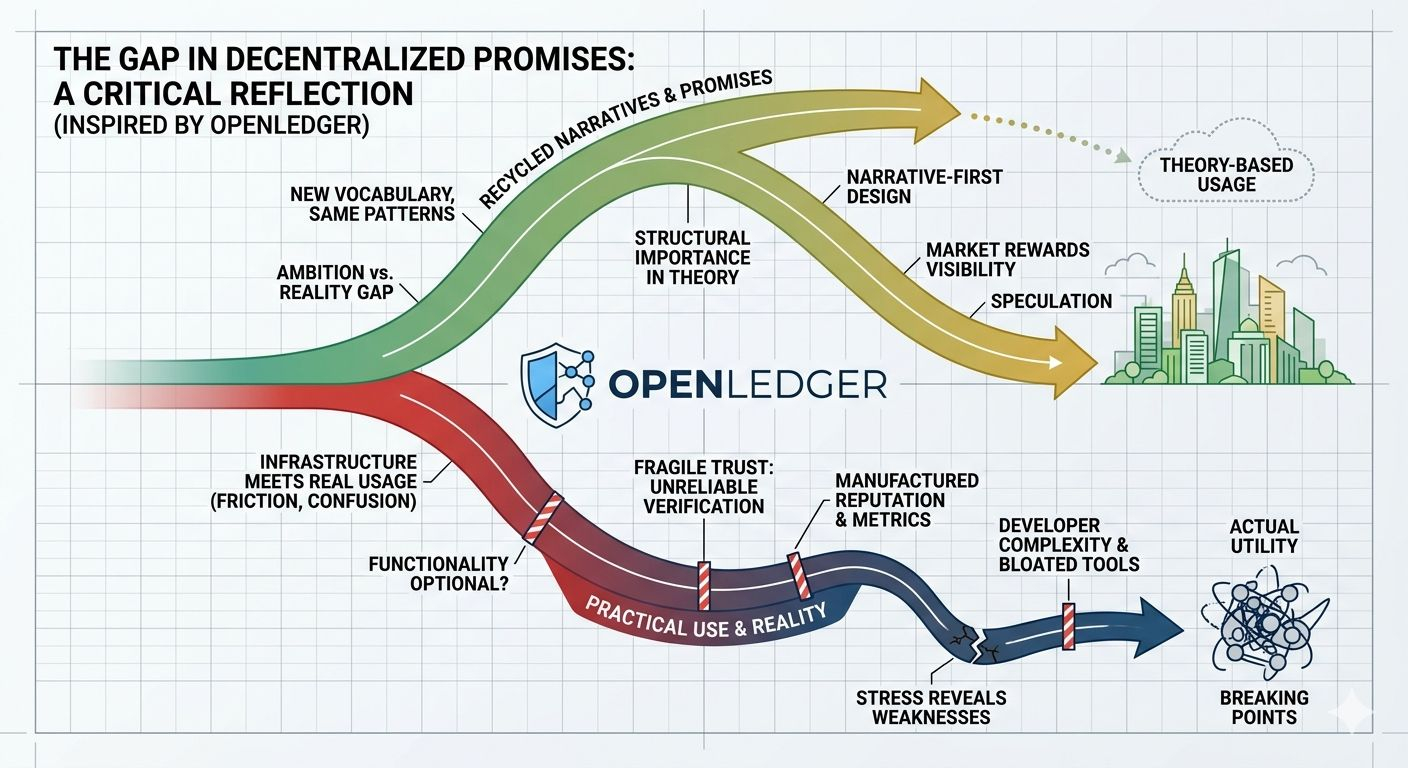
The deeper I look, the more I realize trust itself still feels incredibly fragile everywhere. OpenLedger makes me reflect on how unreliable verification and identity systems continue to be despite years of promises around coordination and credibility. Reputation can still be manufactured. Metrics can still be manipulated. Activity can still be simulated. Once you see how much of the ecosystem depends on perception management, it becomes difficult to fully believe polished numbers or carefully controlled narratives anymore.
Developer experience keeps bothering me too, mostly because almost nobody talks about it honestly. OpenLedger makes me think about how many ecosystems claim to support builders while quietly making participation harder at every layer. Complexity increases. Documentation fragments. Tools become bloated. Usability slowly disappears behind ideology. Then adoption weakens and everyone acts confused about why growth stalled.
I feel similar frustration when I look at token structures now. OpenLedger keeps pushing me toward the question of whether many systems genuinely need them or whether they exist because the market expects them to exist. Too often they feel attached rather than integrated. Speculation becomes the center of gravity while actual utility struggles to justify itself underneath.
Maybe that’s why I keep focusing less on promises and more on breaking points. OpenLedger interests me because evolving systems eventually reveal what they’re really made of once conditions stop being ideal. Pressure exposes weaknesses faster than marketing ever will. Incentives distort behavior. Coordination starts failing in unexpected places. Trust weakens under stress. And after spending years watching the same cycles repeat themselves, those moments tell me far more than polished narratives ever could.