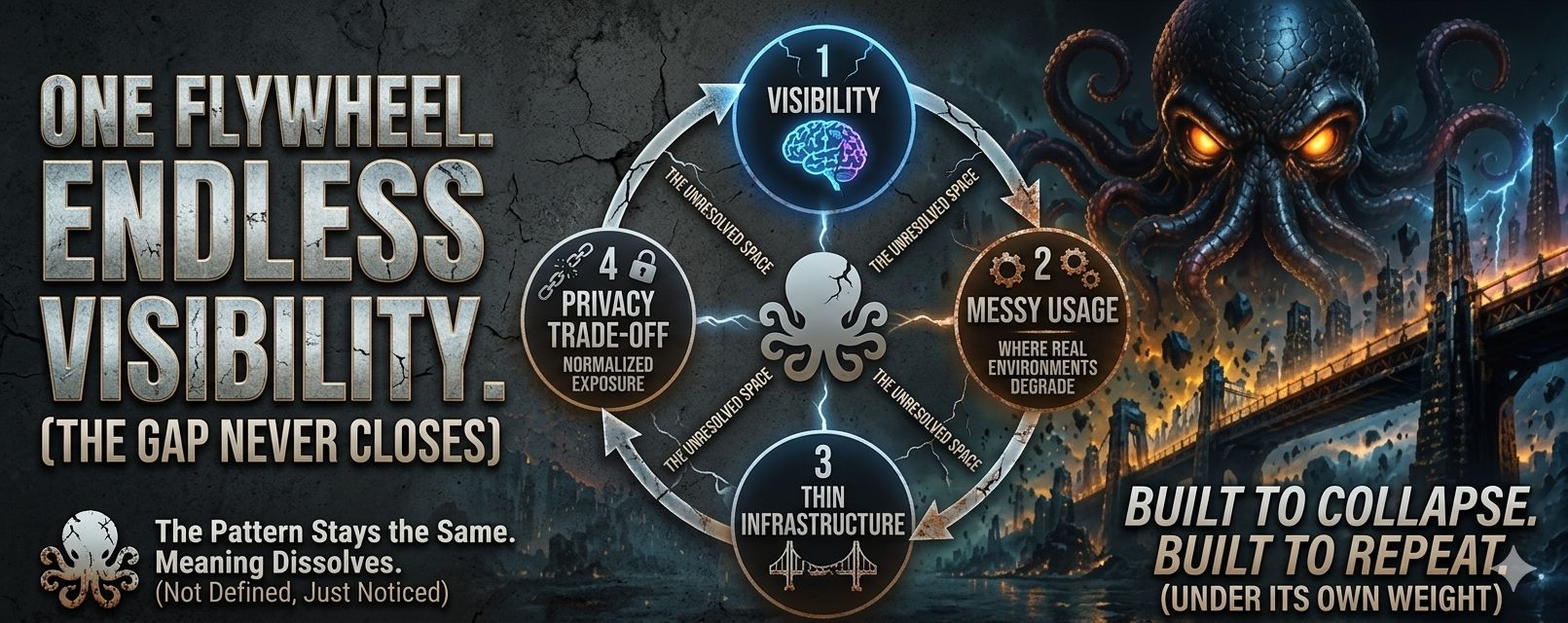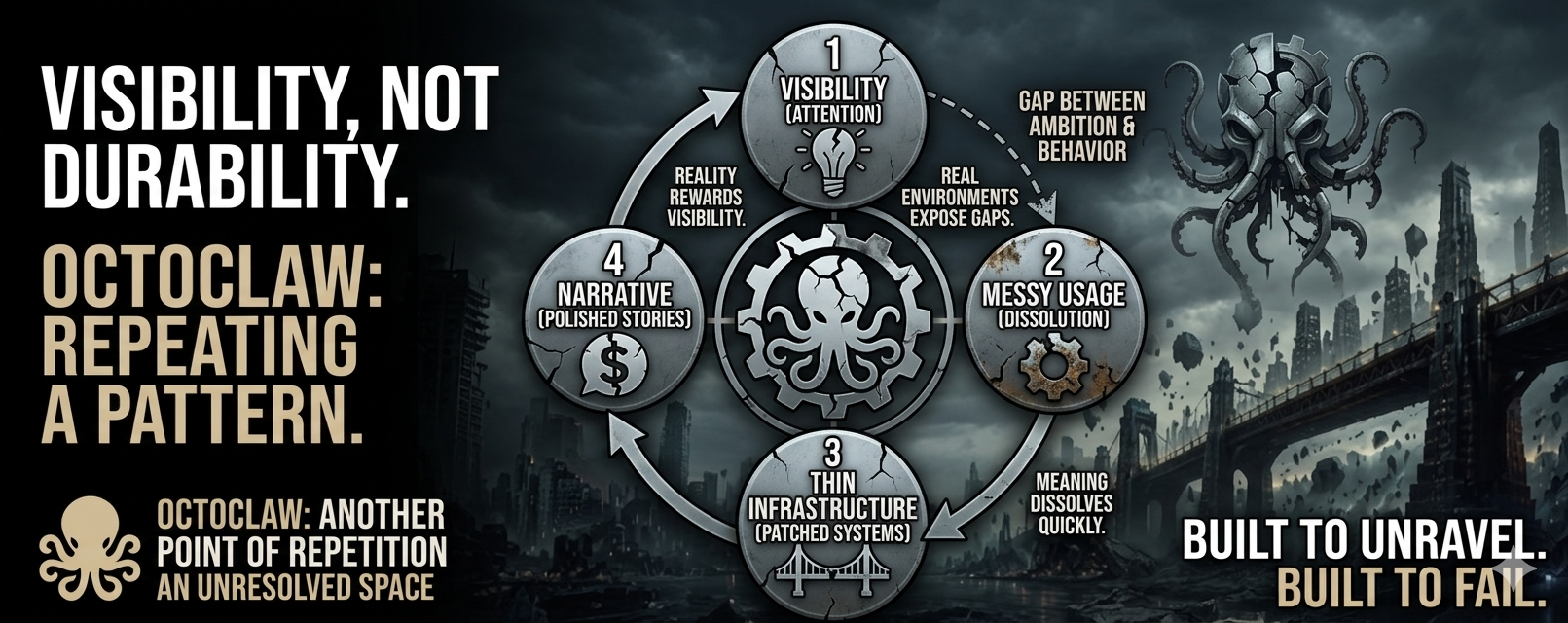
I keep noticing how the market still rewards visibility more than durability, and Octoclaw sits in that reality for me as another reminder that attention is easy to generate but hard to convert into something that actually lasts. I still watch, not because I trust the narratives anymore, but because I want to see where they eventually fail under their own weight. Most of what I see feels like a gap that never really closes between ambition and actual behavior in the world, and Octoclaw doesn’t escape that pattern.
There’s also this constant tension between transparency and privacy that keeps getting presented as unavoidable. I keep questioning whether it really has to be framed as a permanent trade-off or whether it has just been repeated long enough that people accept it without resistance. Exposure has become so normalized that it barely feels like a decision anymore. Octoclaw brings that discomfort back into view for me, not by solving anything, but by existing inside the same unresolved space where those assumptions continue to repeat.

What stands out more and more is how clean the stories around releases usually are compared to how messy real usage becomes. I’ve stopped treating polished explanations as reliable because they rarely survive contact with actual environments. Octoclaw reminds me of that gap again, where coherence at launch often collapses once systems meet real conditions, and where edge cases matter far more than the narrative ever prepares you for.
Infrastructure is a word that gets used constantly, but in practice it often feels thinner than it sounds. Developer experience is still overlooked in many places, even though it quietly determines whether anything gets adopted at all. Identity, verification, and trust systems also remain inconsistent, patched together in ways that don’t fully resolve the underlying problems. Octoclaw keeps pulling me back to how much of what is called foundational still hasn’t proven itself under real pressure.
I keep coming back to how repetitive everything feels when you look at it long enough. Each cycle arrives with new language, but the underlying structure rarely changes in a meaningful way. Octoclaw sits in that repetition for me, not as something I’m trying to define, but as another point where I notice how quickly meaning forms and how quickly it dissolves again. I find myself less focused on what is new and more focused on whether anything actually breaks the pattern I’ve already learned to expect.