I’m waiting. I’m watching. I’m looking. I’ve been seeing the same question over and over again:
Okay, but can it actually handle real activity?
Not the polished demo. Not the carefully selected metrics. Real activity.
That’s what pulled me toward OpenLedger.
The AI narrative is everywhere right now. Every week there’s another project talking about agents, models, automation, or data. Most of them sound impressive for five minutes. Then the conversation fades because there’s nothing underneath the pitch that feels tangible.
OpenLedger feels a little different to me.
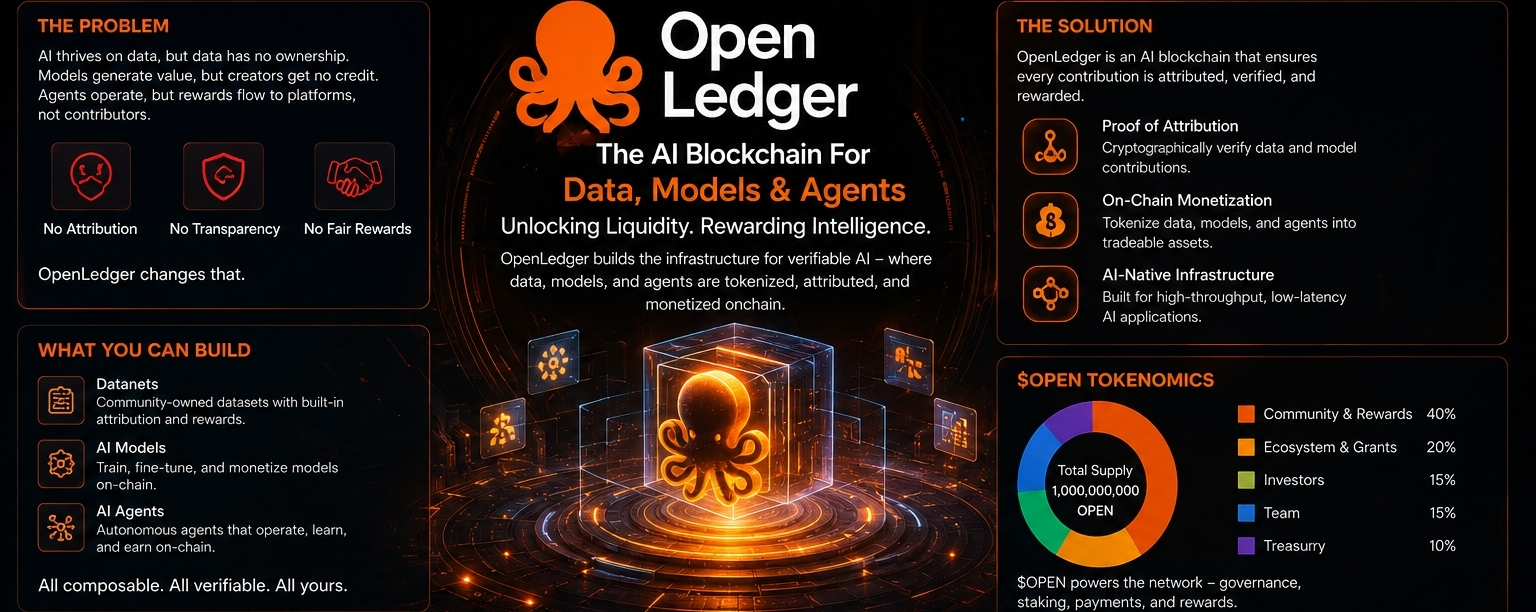
What keeps me interested isn't the AI angle itself. It's the attempt to create an actual economy around data and intelligence. The project is trying to answer a question that most platforms quietly avoid: if data powers AI, who should benefit from that value?
That sounds simple until you think about what it requires behind the scenes.
You’re not just moving tokens from one wallet to another. You're dealing with data contributors, models, agents, rewards, verification, attribution, and constant interactions happening across the network. Suddenly the challenge becomes less about marketing and more about infrastructure.
And infrastructure is where reality usually wins.
I've spent enough time around crypto to know that throughput numbers rarely tell the full story. Networks can look incredibly fast when conditions are perfect. The real test starts when things get crowded.
Users refresh wallets.
Bots compete for the same opportunities.
Transactions arrive in bursts instead of neat, predictable flows.
Services that looked stable during quiet periods suddenly have to handle pressure.
That's when weaknesses appear.
Not always in consensus. Not always in block production.
Sometimes it's the RPC layer.
Sometimes it's indexing.
Sometimes it's execution.
Sometimes it's simply too many participants trying to touch the same state at the same time.
Those are the moments I pay attention to.
Because if OpenLedger succeeds, it won't be because of a headline TPS figure. It will be because the network continues feeling reliable when activity becomes messy.
The AI side of the ecosystem makes this even more interesting.
Humans are relatively slow. Agents aren't.
Agents don't sleep.
They don't get distracted.
They don't wait twenty minutes before making another transaction.
They operate continuously, reacting to data and opportunities as soon as they appear.
That creates a very different workload compared to traditional blockchain activity.
A system might perform perfectly with normal user traffic and still struggle when automated participants begin interacting at scale. The bottlenecks become less obvious. Networking matters. Scheduling matters. State access matters. Small inefficiencies suddenly become visible.
That's why I find myself watching behavior instead of promises.
How responsive are the public endpoints?
Does the network still feel smooth during periods of higher activity?
How often do transactions require retries?
Do wallets feel dependable?
Do things simply work?
Those questions tell me more than any performance graphic ever could.
What I appreciate about OpenLedger is that it seems focused on a specific direction instead of trying to be everything at once. The project isn't positioning itself as the answer to every problem in crypto. It's concentrating on creating infrastructure around data, AI models, and agents.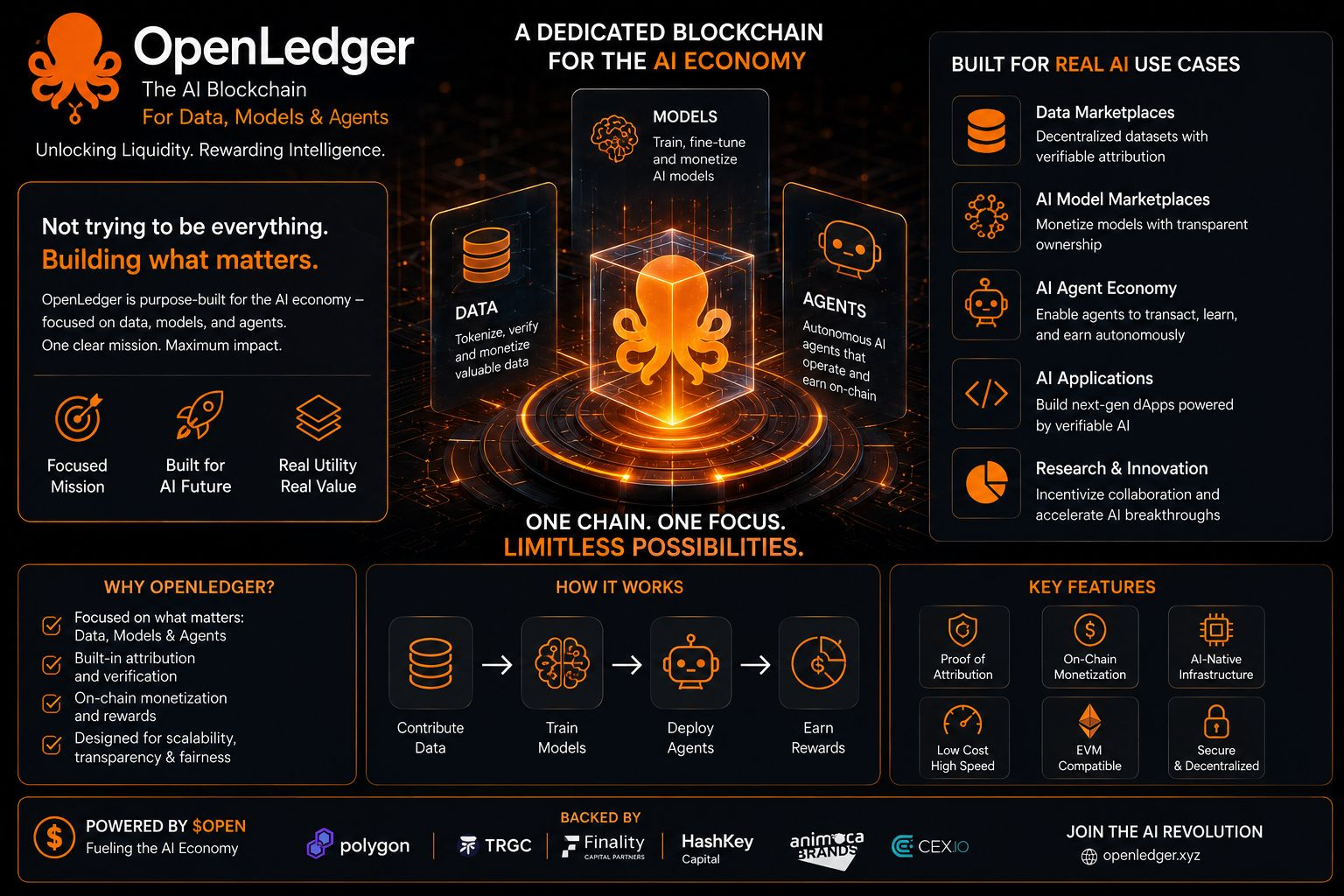
There's something refreshing about that.
Of course, every architectural choice comes with trade-offs.
Faster systems often require tighter coordination.
Lower latency usually doesn't come for free.
Infrastructure decisions affect decentralization, resilience, and operational complexity.
That's not a flaw. That's just reality.
The strongest networks are usually the ones that understand their trade-offs rather than pretending they don't exist.
Right now, OpenLedger still feels like a project that is proving itself in public. And honestly, that's where the most useful information comes from.
Not from announcements.
Not from presentations.
From usage.
From watching how the network behaves when people actually depend on it.
The funny thing is that capacity often breaks at the edges first. Most users never notice consensus. What they notice is when a wallet hangs. When an explorer lags. When an API becomes unreliable. When a transaction takes longer than expected.
Those small moments shape trust far more than technical specifications.
That's why I'm paying attention to the boring things.
Consistency.
Reliability.
Responsiveness.
The things nobody celebrates when they work and everybody notices when they don't.
Over the next few weeks, I'll be watching three things closely: whether infrastructure remains stable as activity grows, whether AI-related workflows feel practical outside controlled environments, and whether user-facing tools continue performing smoothly during busier periods.
A bigger number on a dashboard won't change my opinion.
What will?
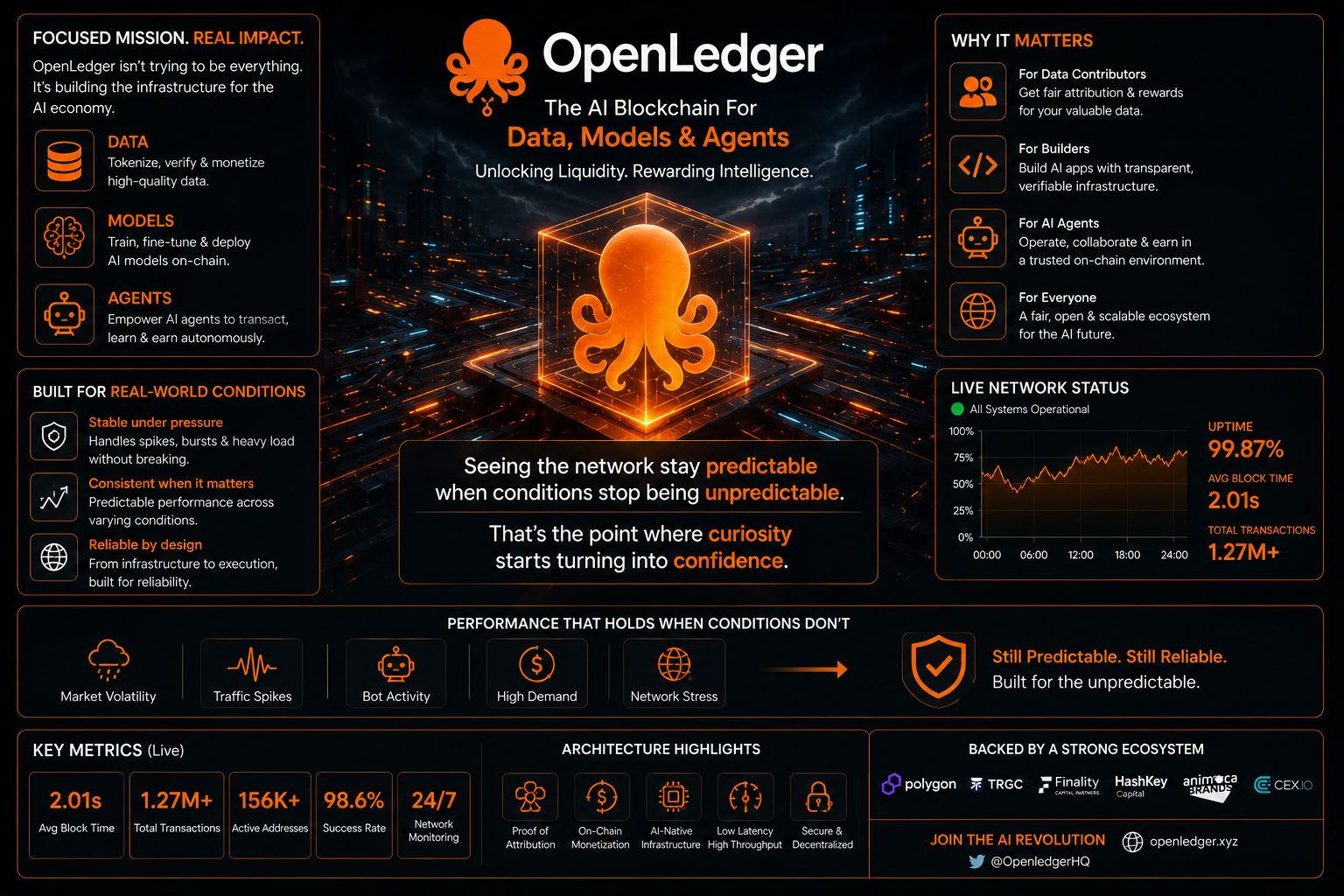
Seeing the network stay predictable when conditions stop being predictable.
That's the point where curiosity starts turning into confidence.#OpenLedger